2025
Links to Two of my Favorite Poems
I am not a huge poetry fan, but I do love Gary Snyder’s work. Snyder went to Reed College here in Portland and for many years taught at my alma mater in Northern California. His poetry blends nature mysticism, Zen Buddhism, and the vast landscapes of North America. As of this post, he is 95 years old and still kicking. Snyder’s poetry came to mind because the biography on Jerry Garcia that I am reading explains the influence of the Beats on San Francisco and Jerry. Snyder was one of the OG Beats. Indeed, he is the inspiration for the character Japhy Ryder in Jack Kerouac’s book Dharma Bums.
Below are links to two of my favorite Snyder poems. Enjoy!

5 Recommendations
-
Kagi Small Web (via Hulry newsletter) This is interesting to me because I just started blogging and this is a way to see what other bloggers are doing.
-
Still Kickin’ Rush videos Still Kickin', whoever he is, stopped making these amazing Rush videos awhile ago. However, there are several to enjoy and they are really well done. If you are a Rush fan, you really should take a look at these.
-
The 74 Million (education website) I discovered this website recently. It is a great resource for educators.
-
Apartmento magazine This is an eclectic magazine that includes long interviews and photos of artists and others and the spaces they live and work in. I’m interested in how people live so this magazine provides a lot of pleasure. This is the opposite of an Instagram feed; the pics are real, not curated, and the people are given the opportunity to express themselves in long form interviews.
-
https://emalias.app/ This app, new to me, allows you to create email aliases when signing up for things online. Helps with privacy and decreasing the detritus that ends up in our inboxes.
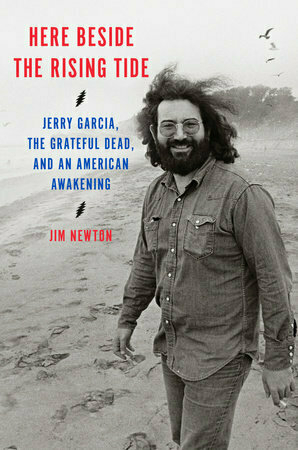
New Read: Here Beside the Rising Tide
I recently started reading the new biography of Jerry Garcia by journalist and biographer Jim Newton. What first intrigued me about the book is that Newton, while a fan, is not an insider. Most of the many books about the Dead that have been published since Garcia’s death were written by insiders of one sort or another. Those sorts of books, especially memoirs by the band members themselves, are obviously great to read for big fans. However, I am now interested in reading a more distanced view.
I just started the book, but there are a few things I have already learned about Jerry.
- Jerry’s dad was a musician, but gave it up to run a bar in San Francisco.
- His father died when Jerry was only 5 years old. They left to go on a fishing trip and his dad drowned, so young Jerry had come home from that trip along with his mother, stunned by the sudden death of the family patriarch. I imagine that would have been an immensely difficult situation for such a young kid.
- Shortly after the passing of Jerry’s dad, he and his older brother moved in with their grandparents and Jerry’s grandfather sounds like a shitty grandparent. Jerry’s memory of his grandfather was apparently pretty negative. Considering the grandparents were taking the boys in after their father had died, it strikes me as particularly pathetic behavior.
- Jerry’s grandmother had other boyfriends while she stayed married to Jerry’s grandfather. Bill, Jerry’s grandfather, beat his wife once and after that she initiated what sounds like a Catholic divorce; essentially separated, but living in the same house.
I am less than ten pages in so I expect there is much more to learn about Garcia. If you are a Deadhead, check it out.
Rush is My Jam Show #5
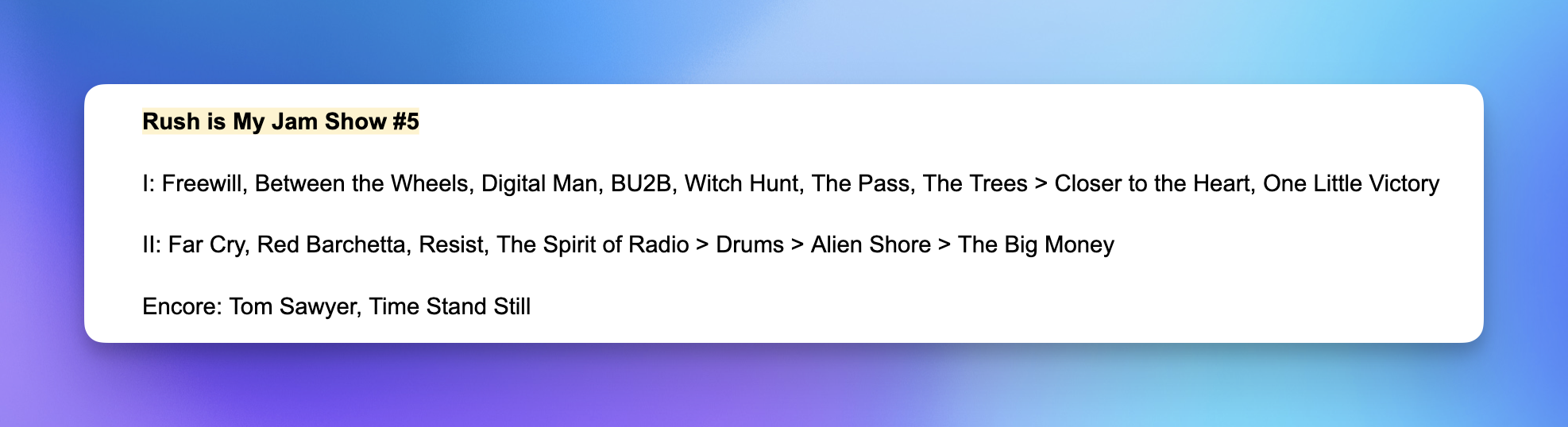
Rush Jam Show #5 has some heavy hitters. Best show yet? I always thought The Trees could be jammed out, and I think this first set combo would please the masses. Alien Shore is a hidden gem within Rush’s catalogue.
Hearing at the End
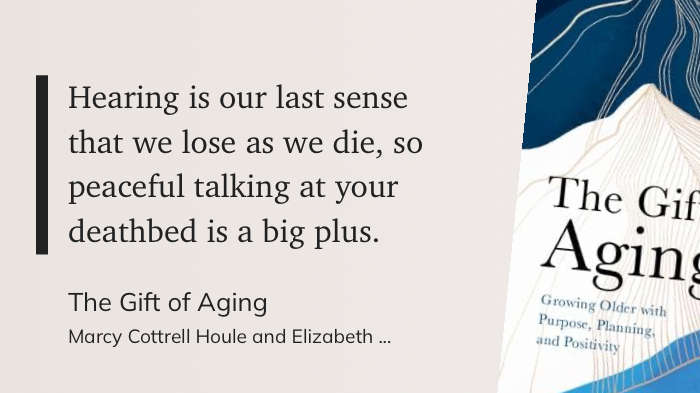
I am reading a book now called The Gift of Aging. In a chapter about the dying process the authors make the statement you can see below, that hearing is the last of the senses to fade during the death process. Digging in a bit, it seems hospice workers frequently notice that people who are dying and who seem unconscious often respond to the voices of their loved ones. This study supports these anecdotes.
My wife, being a devout Buddhist, has very specific instructions I am to follow were she to pass before me. Central to her wishes are keeping people away who are overly emotional, as well as playing Buddhist prayers on repeat.
The quote below got me thinking about what I want to hear if I am lucky enough to die at home with people around me who can carry out my wishes. The conclusion I have come to is that I don’t know and that I need to think about it, then make sure my wishes are known.
In the past I have assumed I would want my favorite music to be playing. But that isn’t an easy ask as I like a wide variety of music, and I would likely want to make sure aggressive tunes were not in the playlist. That means if music is my answer, I’ll need to make a playlist and make sure my spouse knows about.
Another possibility is to simply have my loved ones with me, talking to me so I can pass with their voices in my consciousness. However, like my wife, I wouldn’t want anyone to be too hysterical, as I am Buddhist enough to know that I want a calm mind as much as possible at the very end.
A third possibility is to have mantras that I love playing. There are many beautiful, long mantras available on YouTube that I have discovered over the years that might fit the bill. The ones I like definitely calm my mind and would be familiar to me, which I think would be helpful.
As of now, I still don’t know. However, I now realize this is something I should try and figure out. If I will be able to hear through to the end, ideally I am hearing something that is calming and brings happy memories. If and when I figure this out, I’ll post about it.
Saturday Football
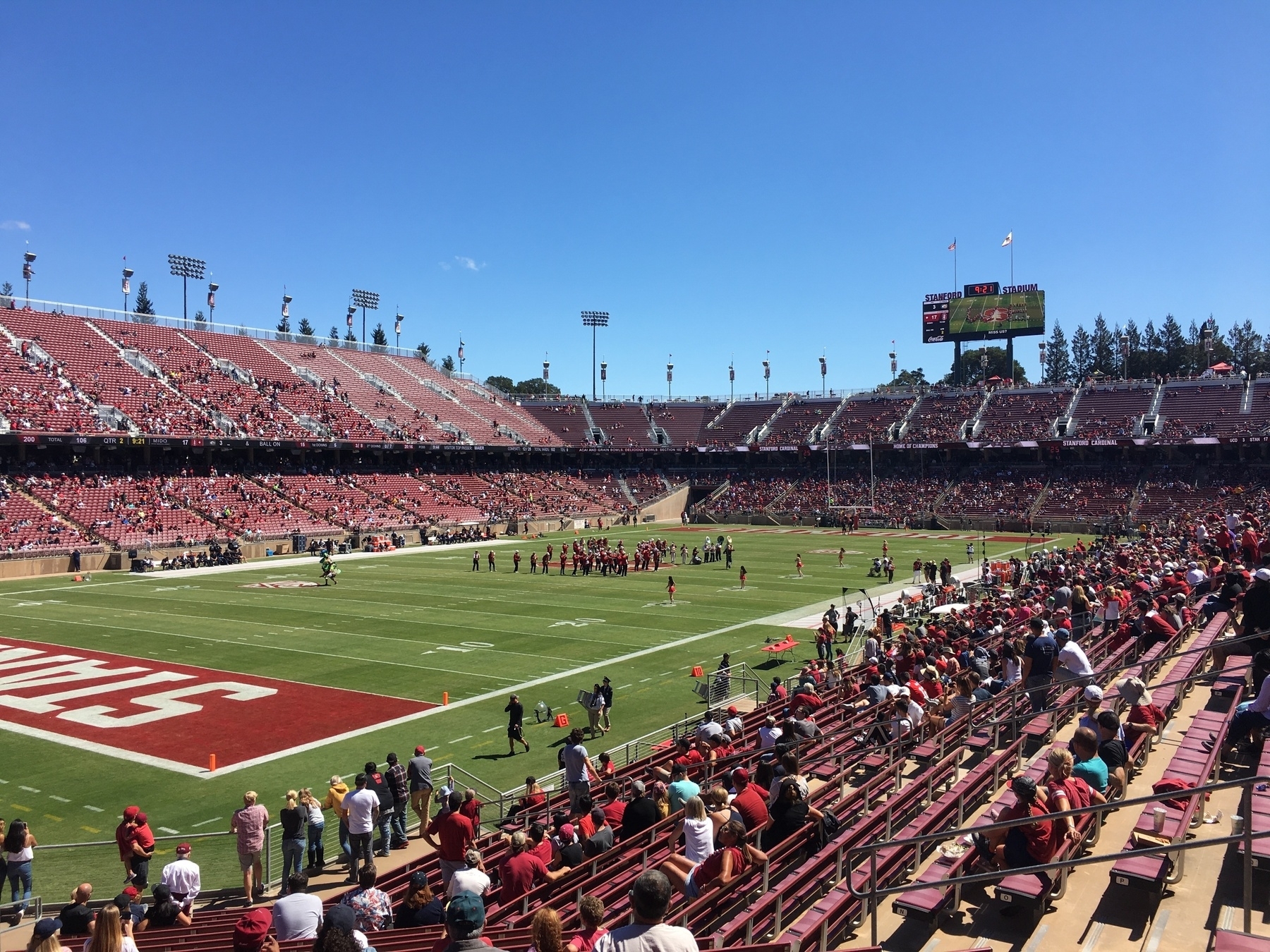
I love college football. Growing up, I was mostly an NFL fan. Nowadays though, I watch football on Saturdays, not Sundays. I’m not sure I know why I love one so much more than the other. I root for a school I didn’t even attend (although I root for my alma mater too, they just aren’t as easy to follow since they are FCS and aren’t on TV very often). I root for Stanford, where my dad went to school, because that was the first team I learned to love as a kid. I think the first in person game I ever saw was the Big Game in either 1978 or 1979 (in Berkeley).
One thing I know is that my love for college football generally evolved over time. Indeed, my growing interest coincided with the rise of cable programming and the ubiquity of college football on TV. It also helps that about 15 years ago, Stanford started winning and for a few years were one of the country’s elite teams. Rooting for a team that wins is really fun and in my case stoked my interest. Now, though they are not very good, my memories of winning are there egging on my interest. “There’s always next week…or next year.”
This time period also coincided with the rise of Oregon football. Oregon State has also had some great teams over the past 25 years. When those schools do well, I found myself rooting for them too. The web of relationships between schools and conferences also played a role because I increasingly found myself rooting for Pac 10/12 teams against teams from other conferences. So, in addition to watching Stanford, I often found I had a rooting interest in a ton of other games every weekend, as well. I suppose this sort of logic could also be applied to the NFL in the sense that a fan would have a rooting interest against their favorite teams' conference rivals. However, for me, it was the college match ups that got me juiced.
That leads to another element of college football I like: the randomness of the match ups. There are so many colleges with Division I football teams that there are some really unique matchups between schools. With the new conference alignment, Stanford’s schedule is filled with schools they don’t have a history of playing. Increases my interest. Better than watching the Chicago Bears and New York Giants play for the 200th time.
Like all sports, college football is also filled with drama. For me, movies and TV shows often lack drama because they are either predictable or for some other reason I am unable to forget that I am watching something that is scripted. Saturday football can still surprise and many games come down to the wire, decided by randomness, amazing athletic ability that is a joy to behold, or something else totally unexpected. The Play comes to mind, as a Stanford fan.
Finally, I also used to make the argument that the players were playing for the love of the game; that they weren’t mercenaries. Sadly, that argument no longer holds. The money sloshing around college football has finally made its way into the pockets of the players and all of college athletics have been changed by the new NIL rules that are in place. I’m not sure I like the changes and I worry about what it will mean for schools like Stanford and Oregon State moving forward. Nevertheless, for better or worse, I’m still happily tuning out the bad craziness in the news and following along.
5 Recommendations
- Dignify textiles
I love me some color and these beautiful Kantha blankets deliver. They are a go to gift and we have many here at home. Blankets are made by women in Bangladesh, so purchases support a great cause.
- Ryan Holiday’s Cardinal Virtues Series of books
Three of these books have already been published and the fourth is due out in October. Holiday’s writing is sharp, filled with great stories about contemporary and historic figures, and leaves a mark. Highly, highly recommended.
- The Number of the Beast by Funky Maiden
Well, with AI loose in the world, it appears people are reimagining great tunes. In this case a song I cranked up a lot as a teenager (and still love) has been given the funk treatment. I love it.
- Bohren and der Club of Gore album Sunset Mission
My student teacher last year introduced this outfit to me. He described it as noir jazz and the description fits. Been listening to this album (and their others) in the evening during reading time.
- https://www.walzr.com/papers (newspaper covers from around the world)
Hit tip to the Rahul from Hulry newsletter for this one. Cool website, especially on days with big news.
Portland, Oregon Tunes
I live in Portland and love music. Here are some songs I like that mention the Rose City or the beautiful state of Oregon.
-
Operator by Grateful Dead This is a Pigpen tune from the timeless American Beauty. The song’s character is riding a bus “out of Portland, talking to the night.”
-
Portland, Oregon by Loretta Lynn and Jack White Strange combo, great song. Apparently Loretta Lynn’s family didn’t like this album so it is a bit hard to find, or at least it was.
-
Cinnamon and Lesbians by Stephen Malkmus & the Jicks The lyrics to this song are pretty wild and the guitar is an ode to the Dead’s St. Stephen. Me likey.
-
Oregon by Clutch This song rules. Grimey, sludgy, and weird. “It wasn’t weird enough, so I went west to Oregon.” Yes, sir!
-
The Portland Water by Neal Casal The late Neal Casal wrote this quirky tune.
-
Don’t Take Me Alive by Steely Dan Why the hell hasn’t Phish covered Steely Dan? That’s what I want to know. ‘Oregon’ isn’t pronounced right, but we’ll let it slide in this case.
-
Oregon by Briston Maroney Catchy alt-rock. “Don’t let this town get ya down.”
-
Portland by The Jauntee Another quirky tune, paying homage to Portland’s ever present rain and weirdness.
The Apps I Use for My QS Tracking
In order to fulfill my personal stat keeping, as a Quantitative Self aficionado, I use a collection of apps to do the heavy lifting.
Exist and Dayone: I’ve already shared these and talked about them. They are great.
Insight Timer: This is my meditation app. I don’t pay for it, but there are paid tiers. What I love about it is the way they gamify keeping daily streaks alive. The free version also enables users to modify the details of their sessions very easily. Of course, they also have tons of guided meditations, virtual retreats, and a variety of teachings (Buddhist and otherwise).
Dr. Greger’s Daily Dozen: Dr. Greger has written a few books that have been very popular, like How Not to Die. He has a free app that allows you to track your daily consumption of what he says are the key ingredients to a healthy (plant based) diet. There are 12 food categories and 1 supplement he recommends (B 12). I love tracking my diet with this easy to use app.
Oura Ring: Oura rings are pretty popular. Not much to say other than it does a great job of tracking sleep and recently it has been updated to allow for food tracking as well (just take a picture). Worth the money if you need any nudge you can get to stay healthy and like swimming in data.
Apple’s Fitness and Health apps: If you have an Apple Watch, I think you’d be silly not to look at the data you have access to. Otherwise, just wear a regular watch, right?
MapMyRun: This app was once owned by UnderArmor but they apparently sold it to the people who publish Outside magazine. App works the same and does a great job of tracking my (too infrequent) runs.
Google Workspace: I keep my QS stats in a Google Sheet and keep things like my daily gratitude list (3 things every day!) in a Google Doc.
Notion: Everything but my calendar is in Notion. I use it as my task manager and I keep all the other digital flotsam I want to keep a hold of.
I used to wear and use a Fitbit and when it worked, it was great. But it didn’t always work and it got worse once it was bought by Google. I am not using it anymore.
Moving Targets
Sam Wineburg is one of the brains behind the amazing website Digital Inquiry Group (which used to be called the Stanford History Education Group). The team behind DIG produces high-quality lesson plans for social studies teachers that focus on inquiry and expose students to a variety of primary and secondary sources. Their lessons also emphasize that there can be multiple views about what has happened in the past. I have happily used their lessons for years.
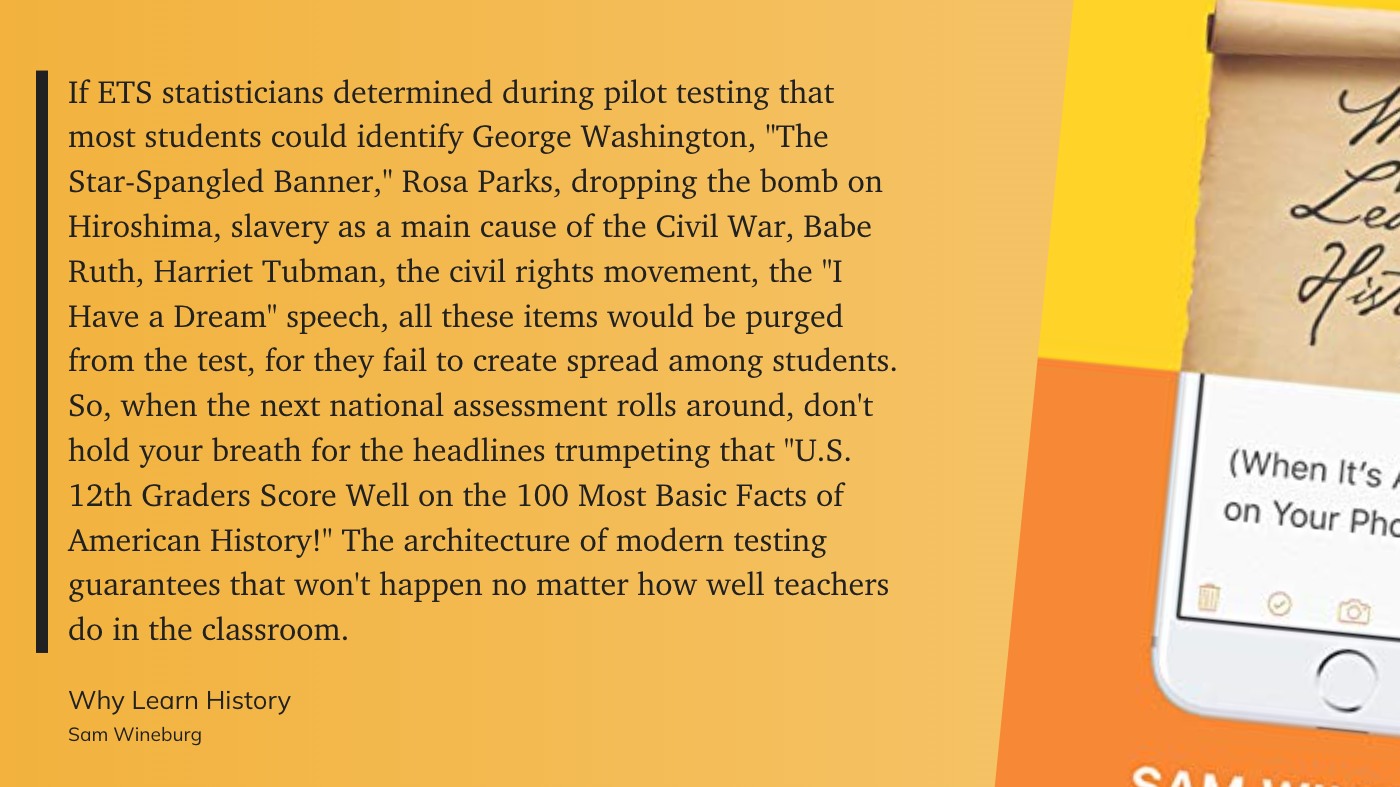
A few years ago I read Wineburg’s excellent book Why Learn History. The quote below resonated because it gets to an issue that the public, and many educators, aren’t familiar with. Namely, that the folks who make the tests are constantly redefining what counts, which makes the tests a bit less helpful than they could be. In Oregon, students’ knowledge of social studies content isn’t really tested. Certainly, if students are taking AP exams, they are taking standardized exams written by the College Board. However, as a veteran educator, I don’t put a lot of trust in their test results. The main reason for this is that test scores can yo-yo from year to year, even though what and how I teach isn’t all that different from year to year.
Moving the goal posts leads to another issue. When students demonstrate mastery of a particular skill or fact, that item might vanish from the test, not because it’s unimportant, but because assessors want to maintain a spread of scores. That practice means success can feel like it gets punished—today’s knowledge may not even register tomorrow. At the same time, it’s worth noting that there are moments when standards are lowered, which is an entirely different problem. Lowering expectations masks gaps rather than addressing them, creating a false sense of progress. Between shifting targets on one end and diluted benchmarks on the other, it’s little wonder that educators, parents, and the public often struggle to trust what standardized scores actually tell us.
On top of that, when I think about my own teaching, it is an absolute fact that I have gotten better as my career has continued. I’d say the quality of teaching generally is better than what one would have found broadly twenty-five years ago. We just know more about good instruction. Yet, the news and ‘scores’ don’t always reflect it.
At the end of the day, as both a teacher and a parent, I don’t put too much weight into test scores. I’m not opposed to standardized tests, but I try to keep in mind Wineburg’s point, that there are reasons, often hidden, that weaken their ability to inform.
Links and Chains
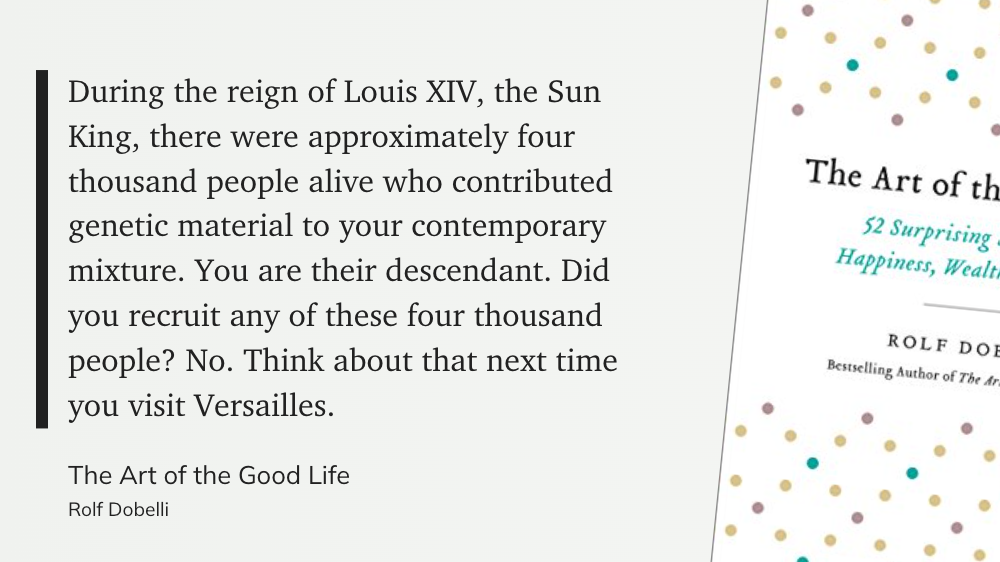
Perhaps this landed hard for me because I am not a scientist. When I came across this quote in Rolf Dobelli’s excellent book The Art of the Good Life I was stunned because it provides a glimpse into our personal history that I hadn’t thought about much before.
King Louis XIV’s reign was from 1643 until his death in 1715. I find it cool to think about the fact that there were approximately 4,000 people walking around then that would give rise to me 300+ years later. Unlike the King of France, they were ordinary people, mostly lost to history. And yet I wouldn’t exist if it weren’t for them. I wonder who they were and what their lives were like. I also wonder (not having submitted my DNA to a company for testing) where exactly they lived? I suspect there were some in Holland, Scotland, England, Wales, Ireland, and Germany, but I’d love to know more about them.
Impermanence also comes to mind when thinking about this quote. Our lives are finite, but they matter to others and their effects ripple into the future.
Indeed, going the other direction, this quote makes me wonder who is walking around today (other than my wife) who will also be an ancestor of our progeny 300s years hence, if my DNA is so lucky.
The metaphor of a chain comes to mind. Each of us is a link in a chain stretching into the past and ahead into the future. A mystery of life is that we won’t know most of the other people in the chain, but they are there, unseen and unknown. And yet, we are still dependent on each other.
Start Today: What Ryan Holiday Reminds Us About Time
As a teacher, I hear students lament the frustrations of procrastination all the time. Just last week I asked some of my classes during a whip around what they want to improve on this semester. The most common answer was beating procrastination. Of course, teenagers aren’t the only ones who battle this problem. Steven Pressfield wrote a beautiful book about it called The War of Art. He called the problem The Resistance.
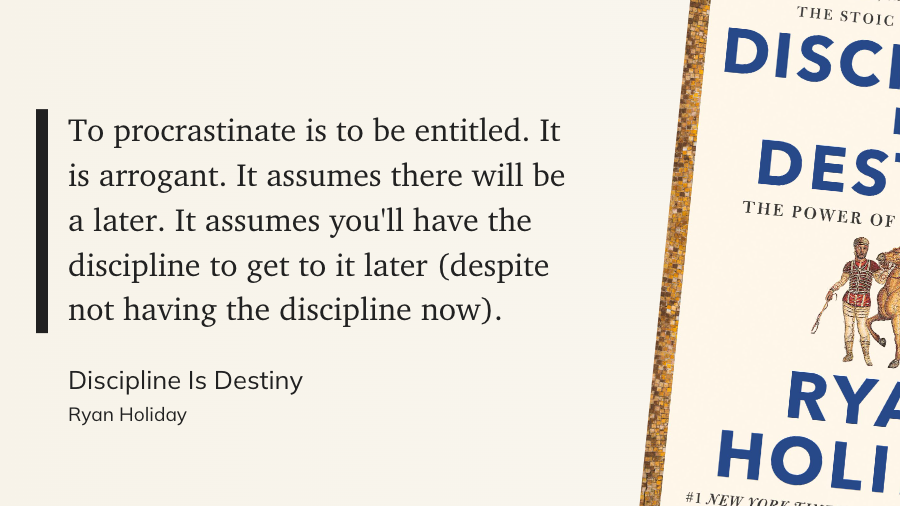
Fellow writer (and Pressfield friend) Ryan Holiday provides a helpful perspective on procrastination in the three sentences shared below. Whereas Pressfield frames procrastination as fear dressed in all of our endless distractions, Holiday goes a bit further and says it is arrogance. Together, they show both the inner and outer faces of the same issue.
I couldn’t save this quote into my second brain fast enough. It gets to the heart of the matter for me because it relates to the core Buddhist idea of impermanence. When I remember that nothing is guaranteed, not even tomorrow, it makes the decision to start today feel less like a burden and more like a responsibility. It is a fact that we could die at any time. Karma can shift on a dime. Most of us don’t think about that fact very often (that’s a whole other topic). Thus, Holiday is spot on; to put something important off because you think you will have time later is arrogant. It’s also true that if you lack the will and the discipline in the present, what’s to say you’ll have it in the future? For me, this shows up most clearly when I put off my short little home weight lifting protocol. I tell myself I’ll do it in an hour, but half the time it never happens that day.
Readwise, the app I use to capture these quotes while I read, allows you to pick favorites that they email to you every Sunday. This is one of those favorited Sunday quotes for me.
Michael Easter's Idea of Misogi
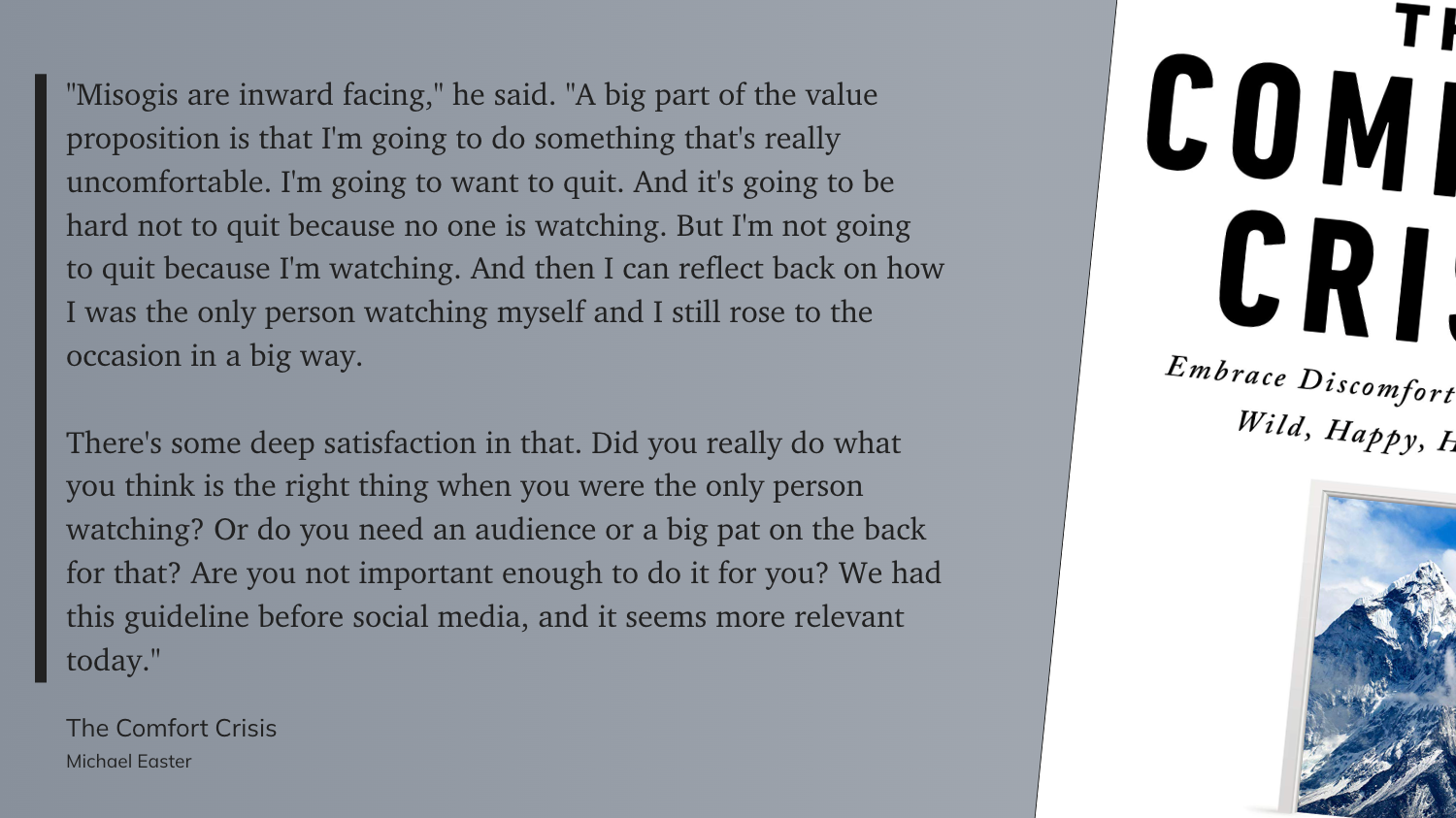
A misogi is a Japanese idea that has roots in Shinto purification practices. The idea is to ritually purify oneself by bathing in rivers, waterfalls, or the ocean. Samurai also adapted the practice to develop discipline, focus, and clarity. Writer Michael Easter wrote a great book called The Comfort Crisis. In it he adapts the idea of misogi to a modern western context. For Easter, a misogi is an epic personal challenge. He talks of scheduling one every so often, say every quarter or twice a year. I had never heard of the idea and can see why it is appealing.
The quote below resonates because of the idea that in the modern era social media has led many people to cultivate an image online. Misogis are personal, and private.
In preparing this blog post I decided to ask my AI of choice, which knows a bit about me, to provide some misogi ideas. I thought they were interesting so I’ll share them. What kind of misogi could you take on?
-
Go on a 7-day silent meditation retreat.
-
Fast for 3 full days (water and electrolytes only).
-
Complete a “no excuses” month: no alcohol, no sugar, no processed foods, daily workouts, daily journaling.
-
Learn a completely new skill (martial art, musical instrument, or language) and perform/demonstrate it publicly.
-
Teach a public seminar or workshop outside your usual classroom—stretching into a new audience.
-
Take P– on a multi-day backcountry trek, just the two of you.
-
Memorize and recite a long text (like the Bhagavad Gita, Gettysburg Address, or Declaration of Independence).
-
Build a “digital sabbath” habit by spending a full week unplugged from screens.
-
Swim across a large open-water stretch (lake, bay, or river).
-
Live abroad for a month with your family, immersing yourselves in a new culture.
-
Go on a 12 hour hike around Portland
5 Recommendations
-
NYT Sunday Routine feature I love this weekly feature in the New York Times. It spotlights a random New Yorker and lets them walk the reader through a typical Sunday. I like that it illuminates the lives of everyday people and I have also found that I enjoy seeing both what people’s the inside of peoples’ homes look like and how they spend their time. It is behind the NYT paywall.
-
Short documentary The Evolving Mind of Neil Peart This video showed up in my feed because I love Rush. It was published in early September 2025 but is evergreen if you are a Rush fan or interested in their amazing drummer. This short documentary takes a look at some the philosophical ideas that are often associated with Peart, especially his early song writing.
-
Ghost Rider book Thinking of The Professor, I immediately thought to recommend his wonderful book Ghost Rider. Peart’s wife and only daughter both died in the same year and in order to cope with the loss he jumped on his BMW motorcycle and drove all over North America, from Alaska to Mexico and all points in between, both east and west. It is part travelogue and part meditation on death. Five out of five stars!
-
Book Developing Curriculum for Deep Thinking This is a recommendation for those in education. For years, the dominant view in teaching is that we should be doing ‘higher level thinking.’ You know, ‘synthesis’ and ‘analysis’ and ‘evaluation.’ Well, yeah, those are practices we want our students to be familiar with and to be comfortable engaging in. However, sometimes students don’t have the foundational knowledge to engage in these ‘higher’ levels of thinking. You can’t connect the dots, if there aren’t any dots. This short book is a breath of fresh air in its advocation for a curriculum that is deeply rooted in factual knowledge.
-
Peps McCrea’s teaching email newsletter Mr. McCrea is a British educator with a great, research-based newsletter for teachers. The emails are short and sweet with links to the research.
Rush is My Jam Show #4
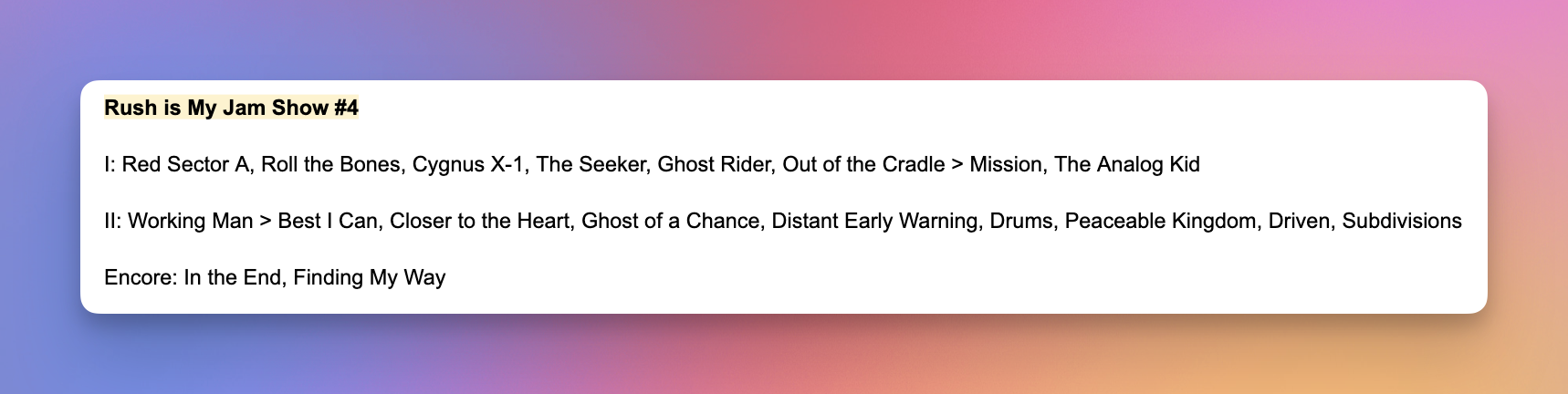
Show #4 contains the first repeats of this infinite fantasy tour. I’m pretty sure Rush never played Out of the Cradle live, even on the Vapor Trails tour. What a shame! The old school encore of this show would have definitely sent me home smiling.
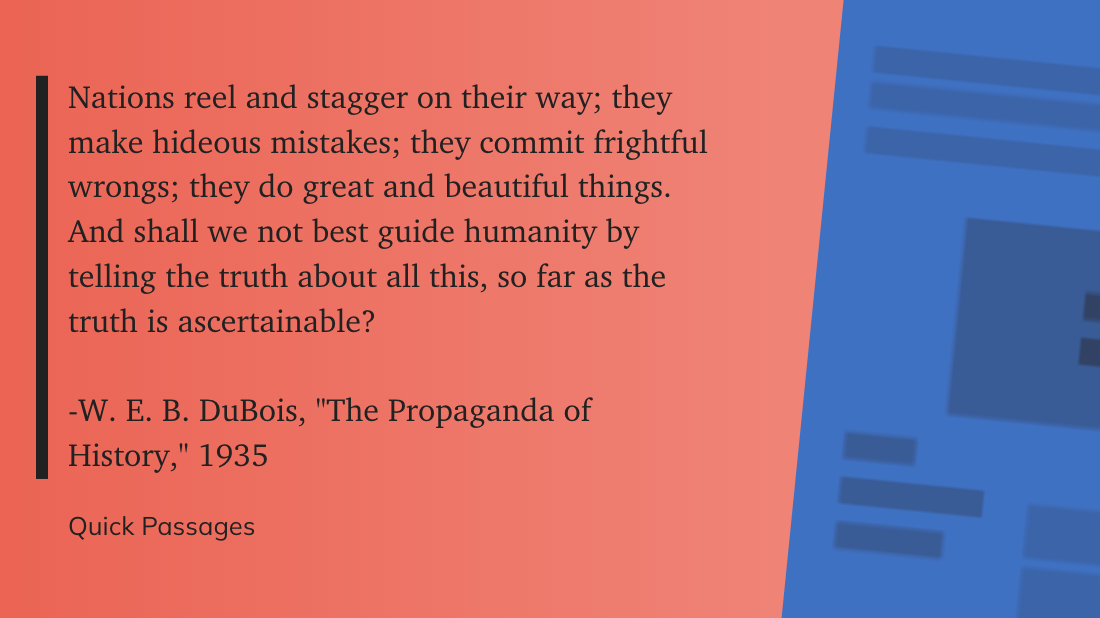
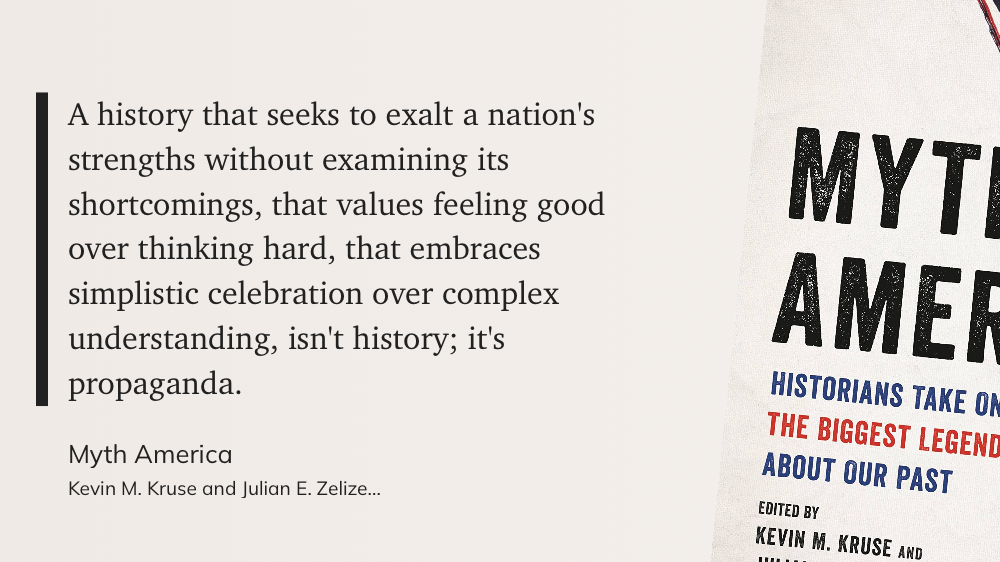
As I embark on my 28th year of being a high school social studies teacher, and in our current political context, I have enjoyed looking through my Readwise collection of quotes about the importance of what I do. Here are a few ideas shared without further commentary.
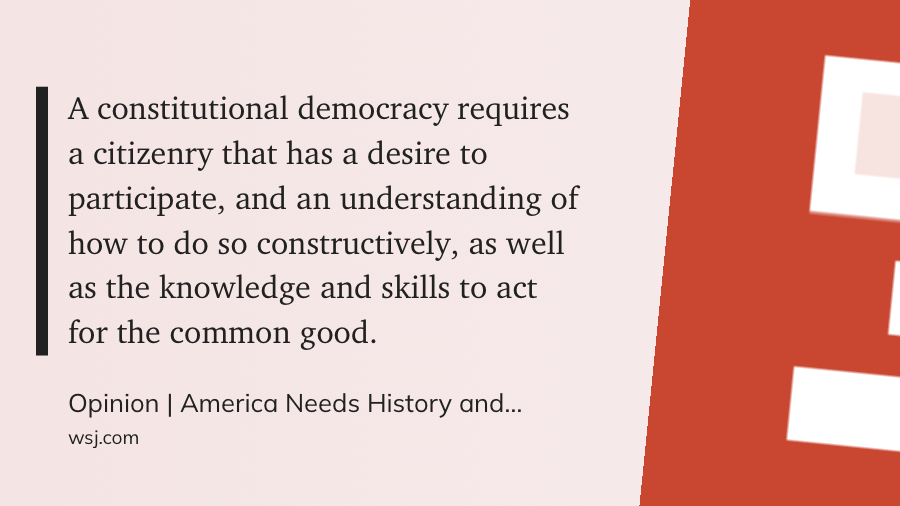
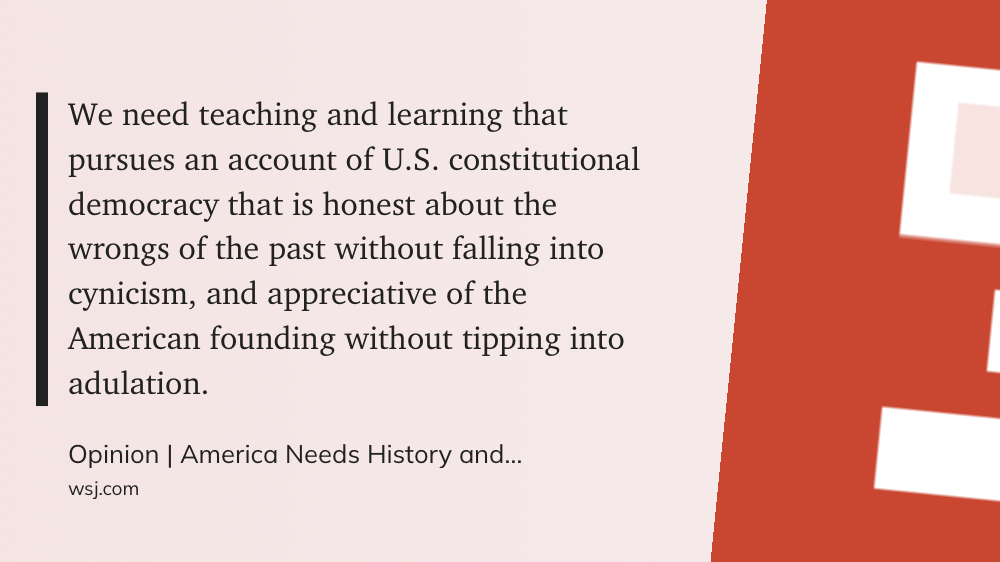

Effective, not Efficient
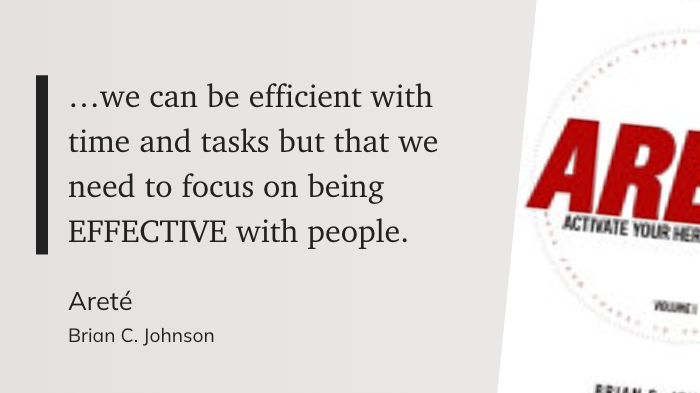
Brian Johnson is an amazing resource for those who want to learn about self improvement. I discovered him years ago because he produced what he called Philosopher’s Notes on the many books he read. Today he runs a company called Heroic that is focused on helping people and the world flourish. I highly recommend his book and other digital resources.
This quote hits hard for me. As a high school teacher, I am all about being efficient with my time due to the challenges of teaching (interfacing with 150 teenagers every day, email, planning, grading, hiking across campus just to make copies, dealing with all the other teacher admin we need to deal with–you get the idea). However, I find that I always feel rushed when talking to people individually outside of class and often give both students and colleagues less than my full attention. I know that is not ideal. After such an interaction, I can usually feel that I was not fully present and it leaves me disappointed. I saved this quote while reading Arete’ because it is a solid reminder that I need to reframe how I interact with people one-on-one at work. I’m still learning, and some days are harder than others, but I am getting better. I have come to realize that what’s true of productivity is also true of people: sometimes you’ve got to slow down in order to speed up.
5 Recommendations
- Napkin AI This is AI software that helps make interesting and creative graphics based on your inputs. I have found it simple to use and helpful from time to time when turning boring lists into something more interesting in the context of teaching (handouts and slide decks).
- Cool online thesaurus Came across this recently in one of the newsletters I read. Immediately bookmarked it. I imagine it would prove useful for writers, teachers, and students.
- Window Swap Website Every once in while I dial this up on my laptop while I am working on my desktop. I find it equal parts relaxing and fascinating. Some views are better than others, but it is easy to switch things up.
- Discussion on YouTube This is a great discussion about the decline of reading and its deleterious impacts on society. Worth a listen.
- Day One journal app Productivity and lifestyle gurus usually advise journaling as a positive habit. Science also backs up the habit. I have been a keeper of a journal off and on for most of my life because I like keeping a record of my life. I think it is the same inclination that leads me to find history interesting and to want to track my personal (QS) data. This is a digital journaling app that I love. Two cool features I dig include the ‘on this day’ feature, which allows you to see what you were doing on a particular day in the past, and the geolocation feature, that tracks where you were when you made the post. It works great on a phone or a desktop.
Alternatives to GDP
The novel I am currently reading is Kim Stanley Robinson’s The Ministry of the Future. (It is worth noting that Robinson lives in the awesome college town I grew up in.) In it he describes the problems with GDP as a measurement tool and mentions some alternative ways to measure how well a society (not just an economy) are doing overall. I found this relevant because GDP is something that always comes in my classes and it obviously has it’s flaws.
Here are some alternatives to GDP.
Genuine Progress Indicator Unlike GDP, which counts all spending as positive regardless of its purpose, the GPI subtracts costs associated with pollution, crime, and resource depletion while adding the value of volunteer work, housework, and education. The index was developed in the 1990s and aims to provide a more holistic view of progress by measuring whether economic growth actually improves quality of life rather than simply increasing total economic activity.
United Nations Human Development Index This index, created by the United Nations in 1990, combines life expectancy, education levels, and income to provide a broader view of human progress. Countries are ranked from 0 to 1, with scores above 0.8 considered “very high human development,” and the index has become one of the most widely used alternatives to GDP for comparing national development levels.
Happy Planet Index
The Happy Planet Index (HPI) is a measure of sustainable well-being that evaluates countries based on how efficiently they deliver long and happy lives for their residents within the planet’s environmental limits. Developed by the New Economics Foundation, the HPI combines life satisfaction, life expectancy, and ecological footprint data to calculate how much happiness and longevity a country achieves per unit of environmental impact. Wealthy nations often score poorly on this index.
Social Progress Index This index measures a country’s social and environmental progress independently of economic factors by evaluating three main categories: basic human needs (nutrition, medical care, shelter, safety), foundations of wellbeing (access to knowledge, information, health, and environmental quality), and opportunity (personal rights, freedom of choice, tolerance, and access to higher education). Initially published in 2013, the SPI deliberately excludes economic indicators to provide a clearer picture of how well societies meet their citizens' fundamental needs and create conditions for human flourishing.
Bhutan’s Gross National Happiness I’d heard of this one already. Introduced by Bhutan’s Fourth King in the 1970s and formalized into a measurable index in 2008, GNH evaluates progress across nine domains including psychological wellbeing, health, education, ecological diversity, time use, and community vitality. This approach has guided Bhutan’s policy decisions for decades, leading to constitutional requirements for environmental conservation and making Bhutan one of the few carbon-negative countries in the world.
End of August 2025 Reading Pile
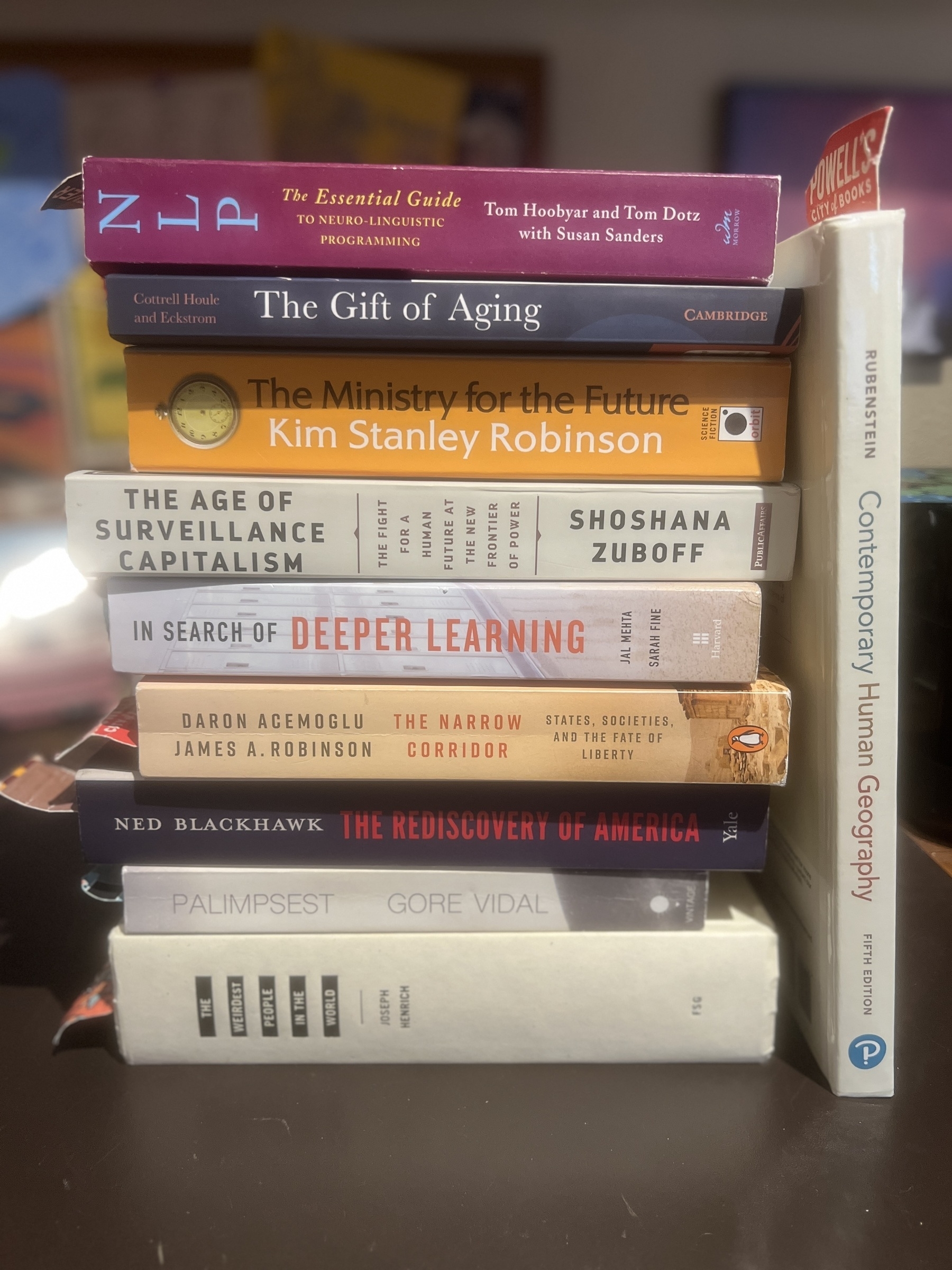
There are a lot ways people can spend their leisure time. I have friends who spend a lot of time in the gym, and others that like go bird watching. My favorite way to while away the time is to read. Over the past 15 years I have slowly been the type of reading that has several books going at once. At first it was two to four books, and now it is as much as 10 or 11. I’m fairly sure I am in the minority when it comes to this reading habit. Nevertheless, it is my way of reading and I love it.
The picture below shows my current stack. There is only one novel and there is also a high school textbook. I don’t ever have more than one novel going and it is unusual for me to be reading a textbook. This particular book makes it easy though because it is broken down into two page subsections, so I can just read a spread or two and put the bookmark back in.
Usually there are one or two books that I spend more time on that I finish faster. That is not the case with this pile. These are mostly dense books that force me to consume in relatively small chunks at a time.
Once a month, towards the end of the month I am going to post my current stack. Books on the bottom are ones I have been reading the longest.