Buddhism
Reflecting on the Ides of March
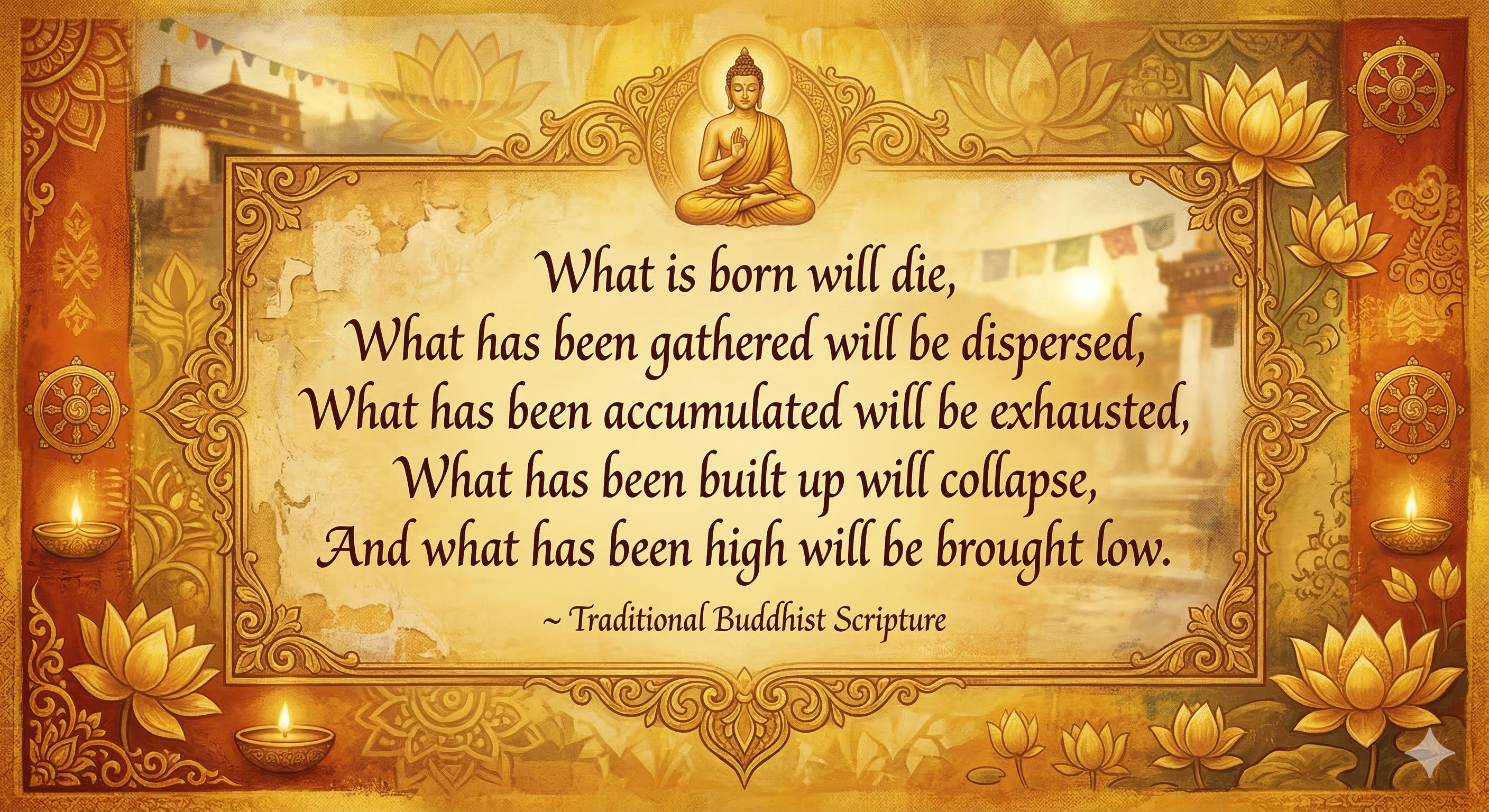
Yesterday was the Ides of the March, the anniversary of the violent fall of Julius Ceasar. The Buddhist scripture below came to mind today when thinking about the date.
Caesar, of course, had “gathered” absolute power and “built up” an empire, yet in a single afternoon, that height was brought low. The transition from the zenith of Roman authority to a cold stone floor is a reminder that no amount of worldly accumulation can stall the inevitable cycle of death and decay. It’s a sobering reminder: even the most monumental human achievements are ultimately subject to the same laws of exhaustion and dispersal as the smallest flower.
Indeed, ‘there is nothing you can hold for very long."
New Pew Polling on Buddhism in America
The Pew Research Center recently published polling about Buddhism in America. A few interesting facts include the following:
-
As of 2020 only about 1.3% of the U.S. population was Buddhist.
-
American Buddhists are much more likely to live in the West. This isn’t surprising considering the West Coast’s relative proximity to Asia.
-
There is high turnover in that many who are Buddhist converted and many who were Buddhist left the religion.
I, of course, live in the West so I am a typical ‘American Buddhist’ in that regard. I also connect with the fluidity of being Buddhist, as I was raised with no religion and my specific beliefs about Buddhism have evolved over the past 30 years since I intially took refuge in the Three Jewels. In my case, I’ve moved from being more religous to what I’d describe as a ‘secular Buddhist.’
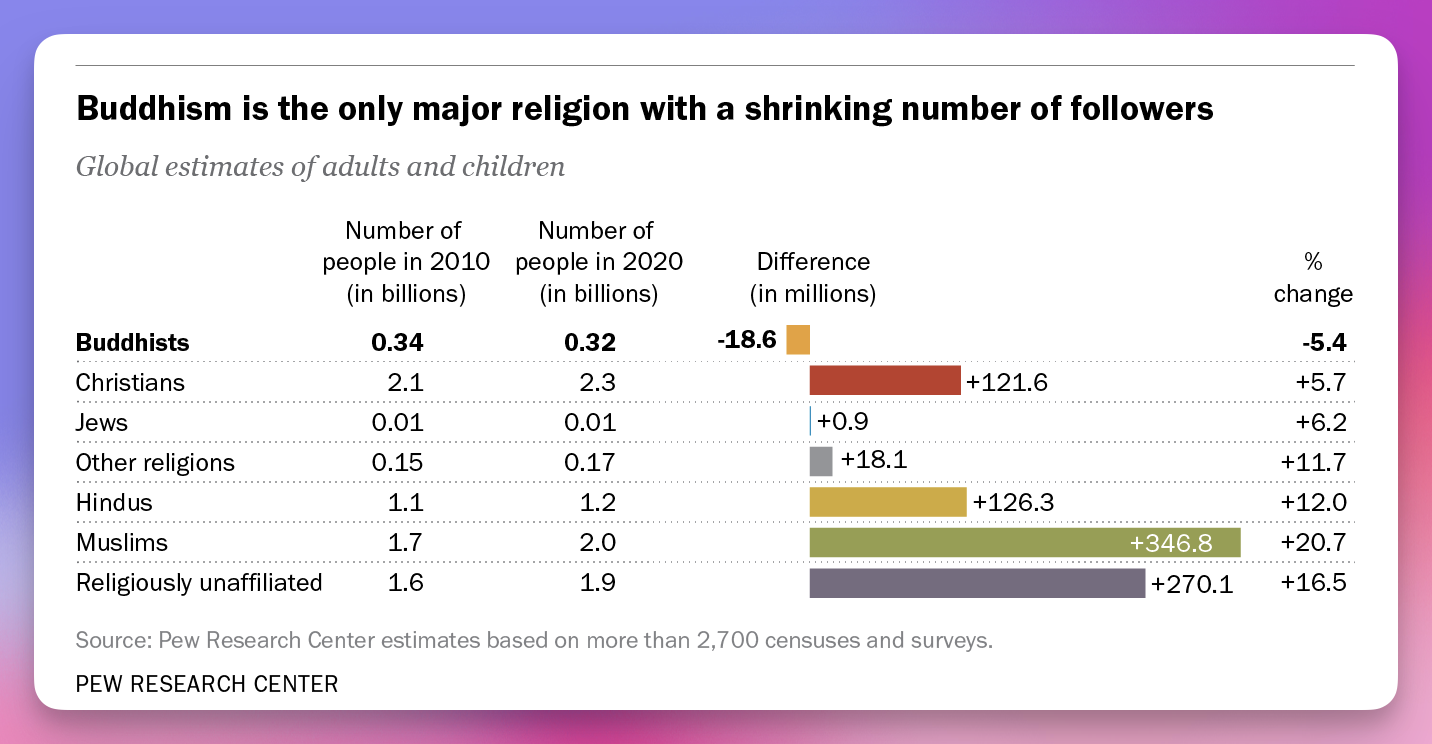
Pew also reports that Buddhism is shrinking world wide. I take heart that ‘religiously unaffiliated’ is a growing group worldwide. Sadly, the theistic religions continue to grow. (See the second image below)
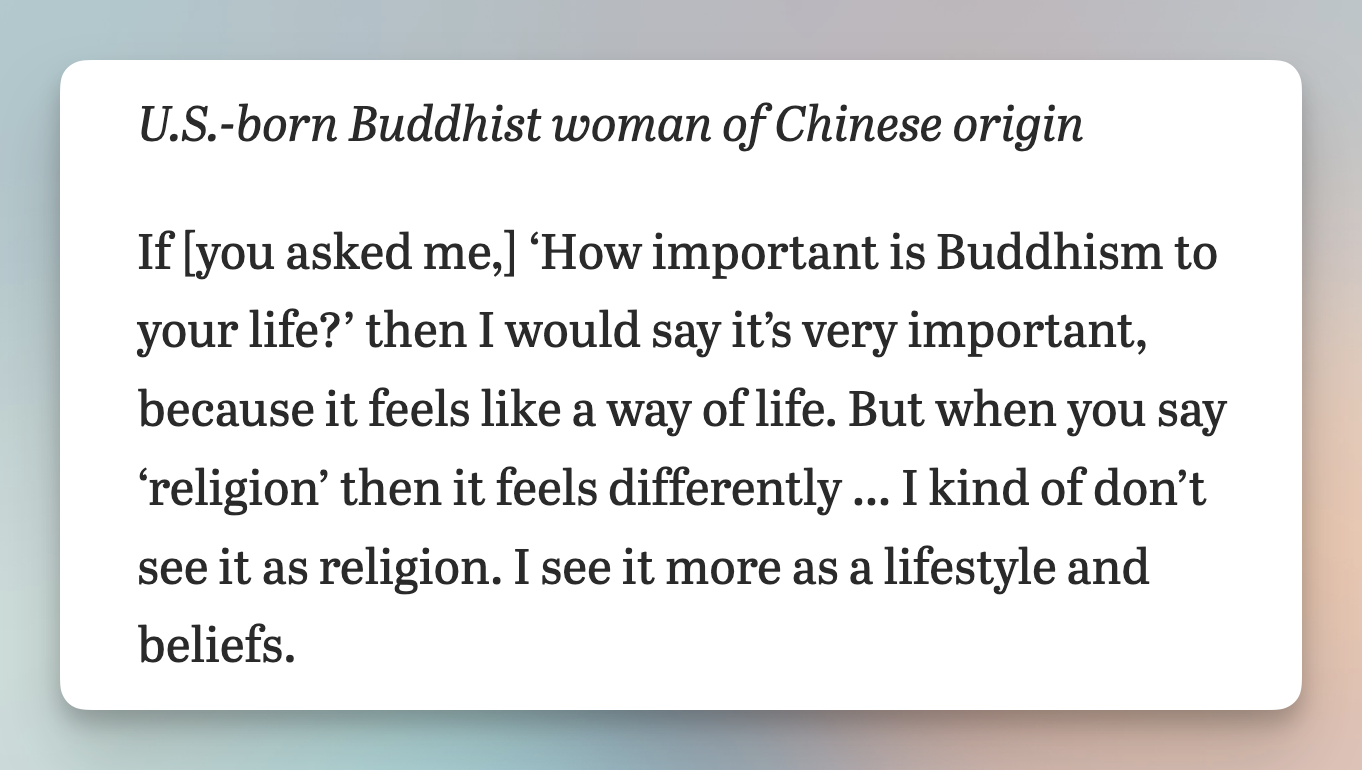
The quote shared below is from Pew’s related focus group interviews.