My Reading & Thoughts
He Does Not Forget
We dropped our cat off at the kennel today and that got me thinking about cats. That led me to J.R.R. Tolkien’s poem ‘Cat’ which beautifully juxtaposes a domesticated cat with it’s wild ancestors. The poem appeared not in one of Tolkien’s most famous novels, but in The Adventures of Tom Bombadil.
but fat cat on the mat
kept as a pet
he does not forget.

Life is Aperiodic
I just came across a concept that was new to me, the concept of being aperiodic. Technically, ‘aperiodic’ describes something that does not repeat at regular intervals. More precisely, it describes a system, pattern, or process is aperiodic if it lacks a fixed cycle—there is no consistent period after which it repeats exactly. A common example that we all learn about in school is the number pi. Another example is the tiling pattern known as the Penrose tiling pattern. Mathamatically, what is cool about this is that an aperiodic thing can still have structure, order, or rules, just not repetition.
Upon reflection, it is clear that life is aperiodic. I think we crave cycles because they feel safe: routines, habits, three-year plans. But our lived experience rarely cycles neatly. Even when days look similar on the surface, our interior weather keeps changing and the details are always a bit different. The same evening stroll hits differently depending on worry, hope, hunger, or sleep. Hearing the same song lands with a new weight. There is pattern, yes; but not repetition.
This makes me realize that it is okay if an open loop doesn’t always close when or how I expected. I want to pay more attention to the variations in the pattern of my day to day. Is that not where some of the wisdom hides, in the differences?
Iranian glazed ceramic tile work, from the ceiling of the Tomb of Hafez in Shiraz, Iran. Province of Fars.

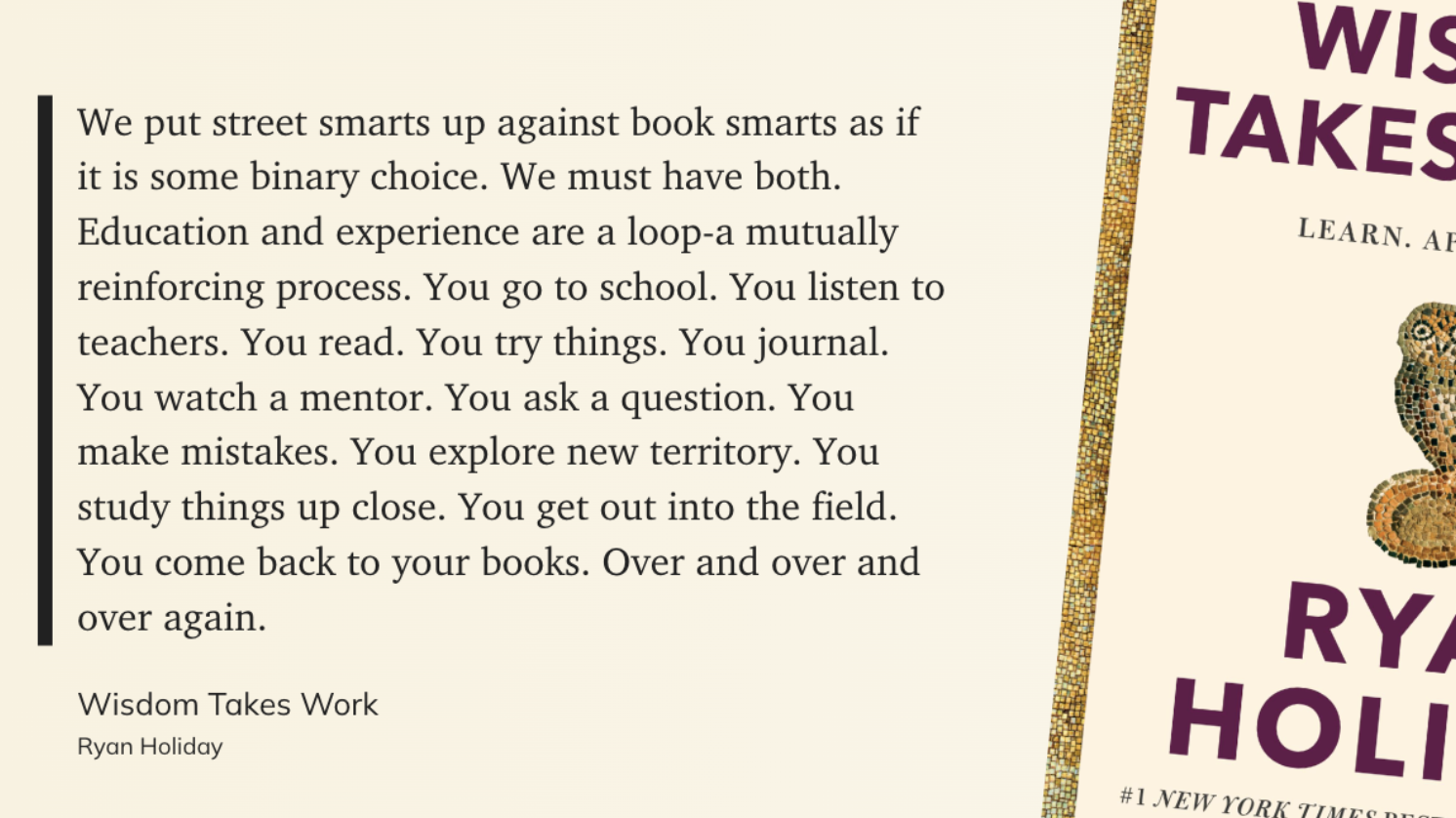
Some Quotes from Ryan Holiday
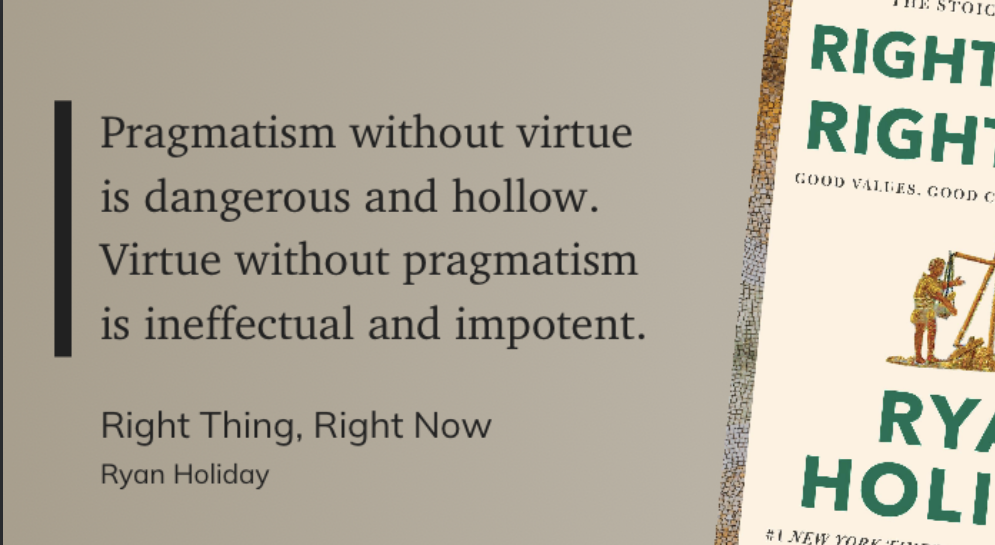
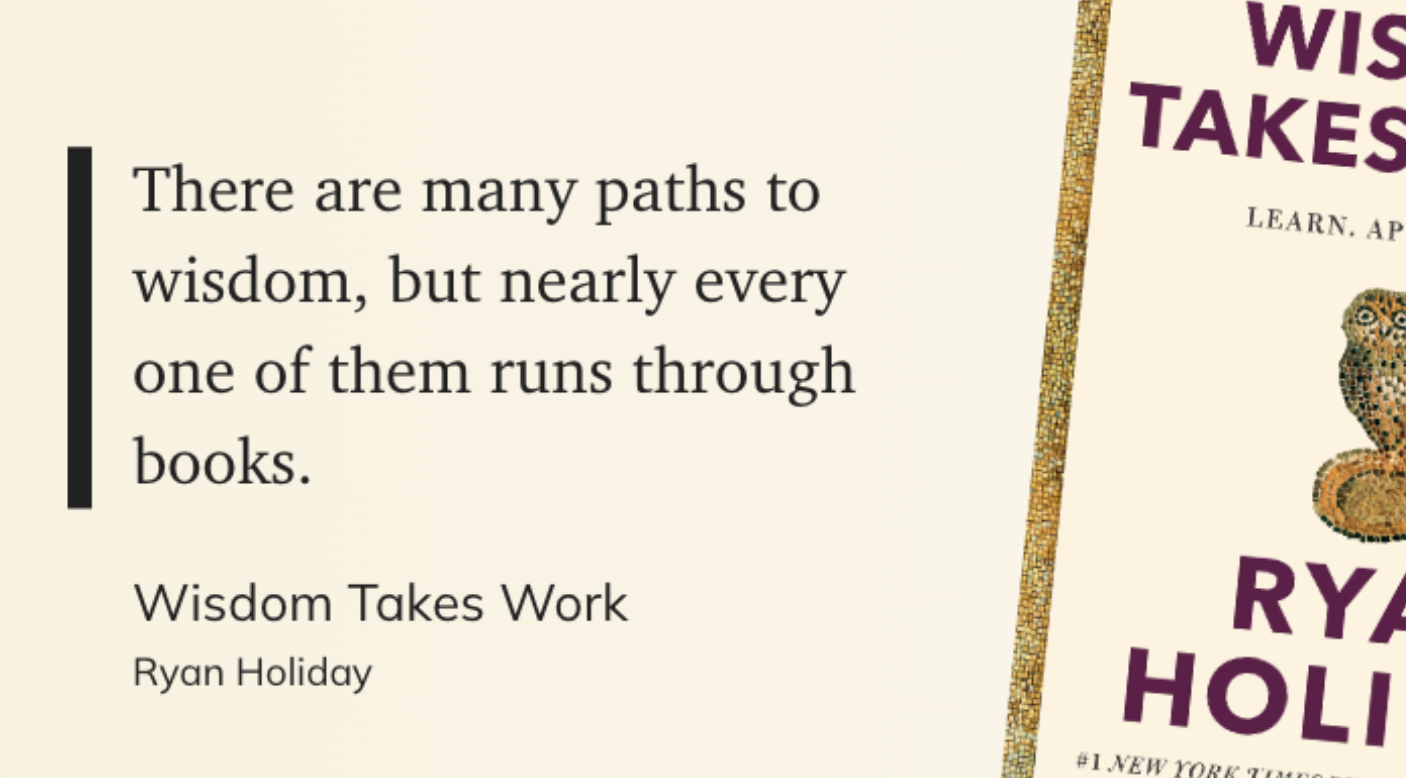
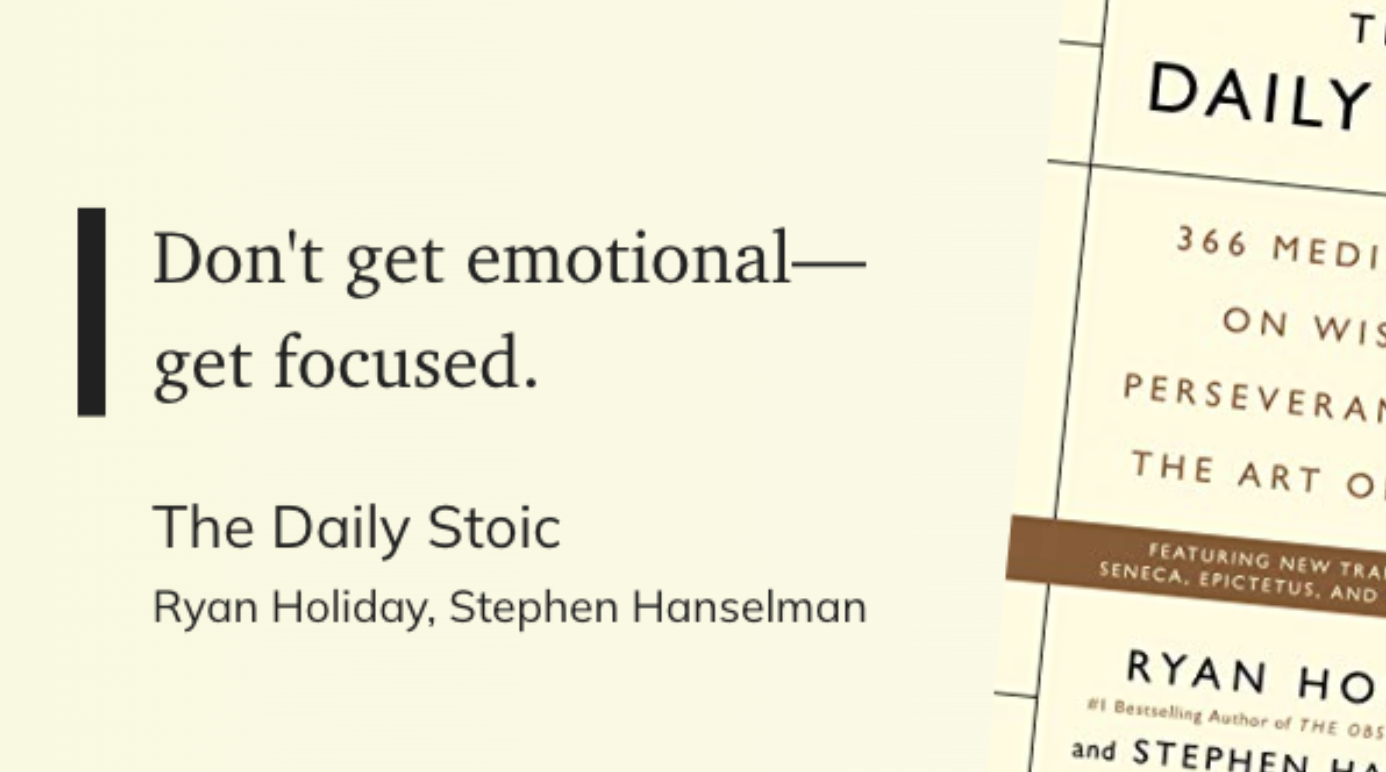
Ryan Holiday is one of my favorite writers. I can’t recommend his books enough. Here are some great quotes from a few of his books.
Mortality
I had never heard of the poet William Knox until I came across his name in Jon Meacham’s excellent book And There Was Light, which is about Abraham Lincoln and his spiritual beliefs. Apparently, the poem was one of Lincoln’s all time favorites. The poem is called Mortality. I looked it up and consider it a wonderful nod to memento mori; an always welcome reminder.

Don't Buy It & Create Your Own
I came across the first quote below by Morris Schwartz in Paul Millerd’s book The Pathless Path. What strikes me about the quote is twofold. First, I agree wholeheartedly that our culture is essentially sick and emphasizes many foolish ideas. The Terrence McKenna quote below (lifted from Tao Lin’s excellent memoir Trip) makes this point even more pointedly.
Secondly, agreeing as I do with both Schwartz and McKenna, I feel challenged to follow Morris’ advice to make my own culture as an antidote to living in such an unwell society. Upon reflection, I feel like I have quite a bit of work to do in this regard. I have managed to cut myself off from social media. I also watch virtually zero traditional TV, unless it is an interesting college football game. I have a subscription to Netflix, but I probably watch one show about every 4 months. I suppose my daily commitment to reading is also an attempt to cultivate my own mental universe.
Indeed, all of these elements of my media diet have helped in many ways. However, I still spend too much time on YouTube and too much time generally following politics. I also don’t vote with my wallet as consistently as I should, which I also see as a means of standing athwart the dominate culture and trying to make a small difference.
As I type this, I realize I am going to have to keep thinking about this particular question. This earlier blog post of mine is a stab at solving this puzzle. However, I simply don’t have many other answers appearing to me about how to follow Schwartz’s injunction. It is a worthy goal though, rejecting the powerful yet vapid parts of American society to carve out one’s own niche, and hopefully, improving the general culture action by action.


Inner and Outer Maps
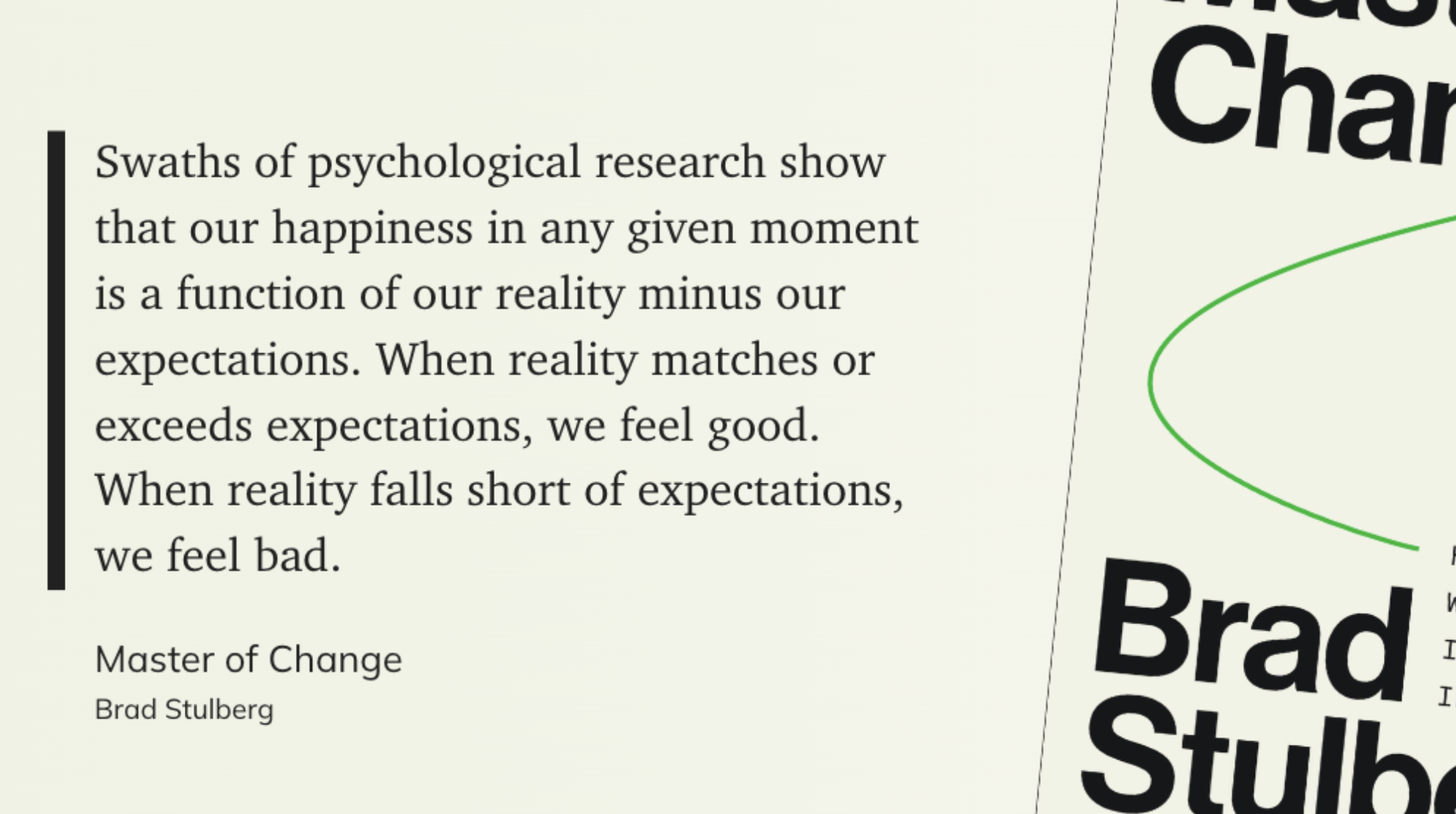
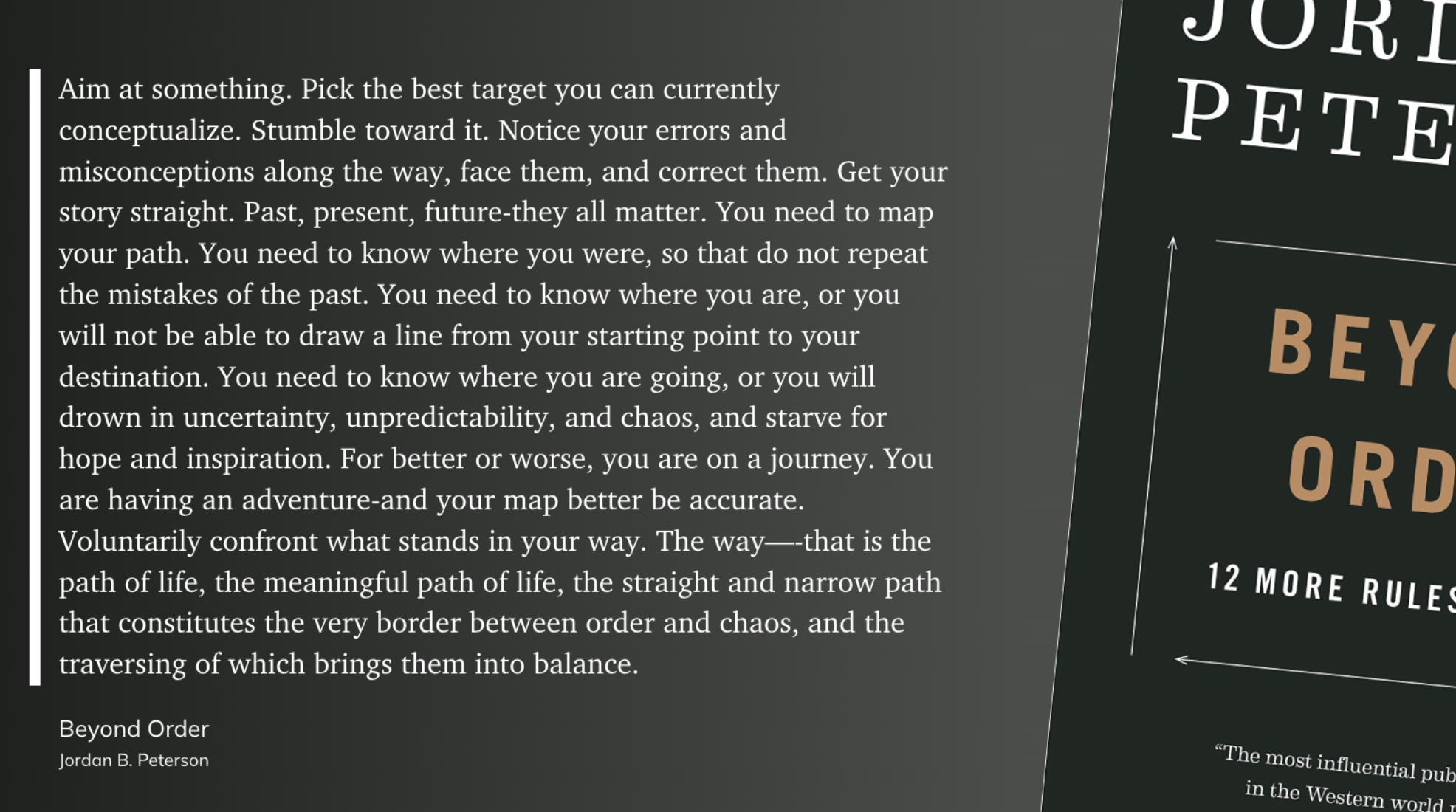
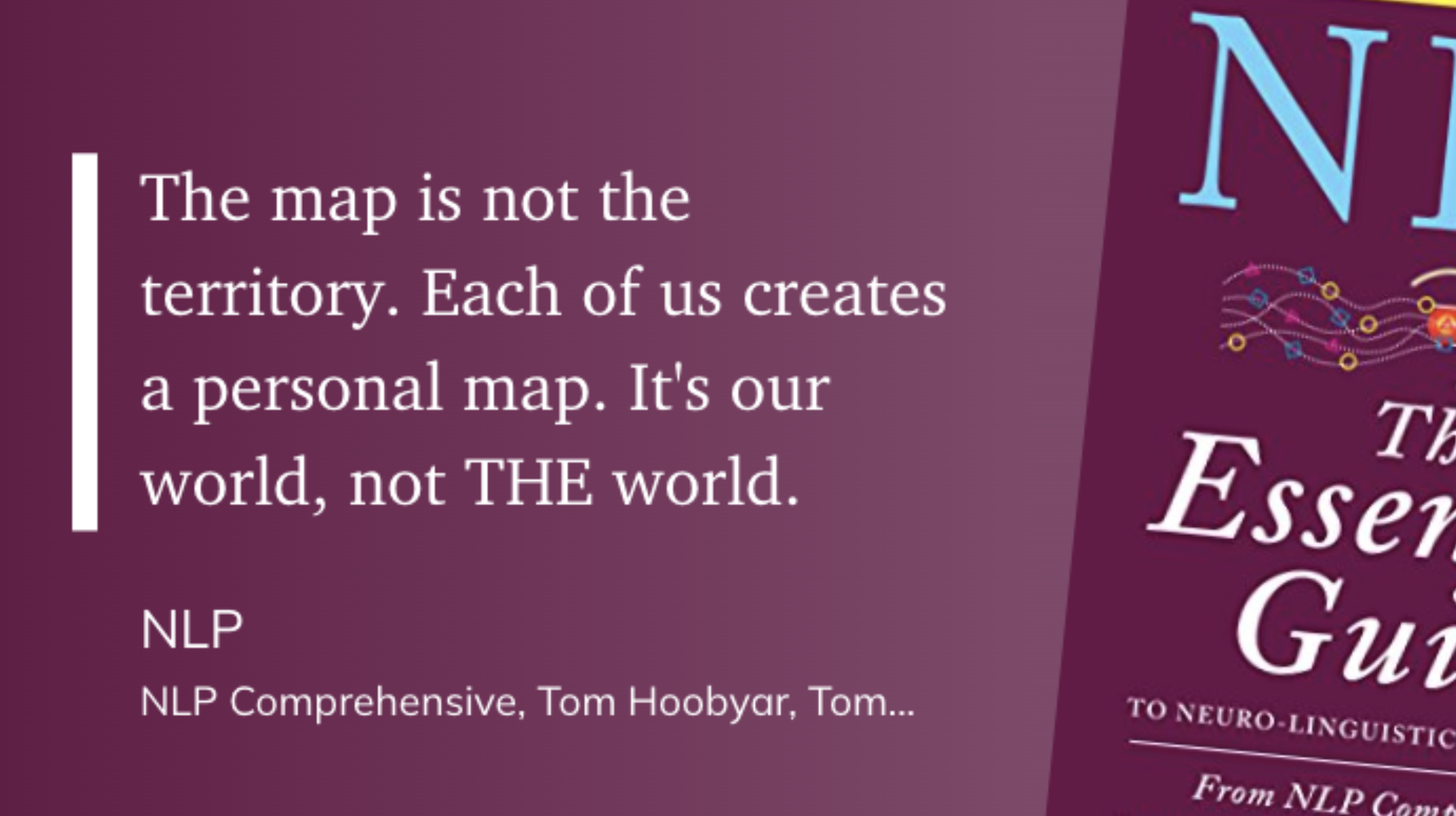
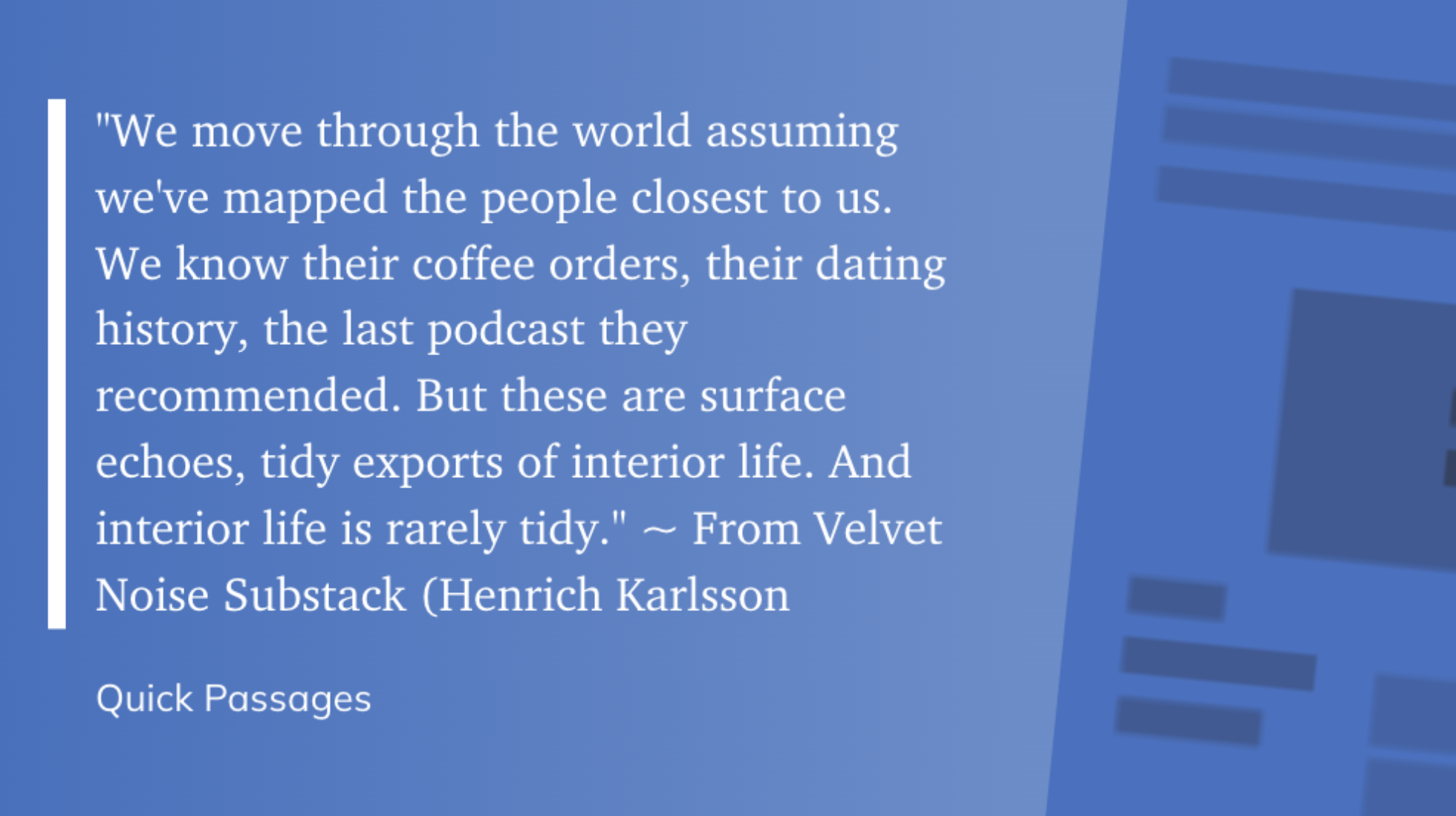
A cool new feature of Readwise is that is can send you a weekly email that combines four or five quotes from your collection that are related in some way. These four quotes all shed light on both the inner and outer maps of ‘the world’ we inhabit.
MMT, Ray Dalio, and Gemini 3
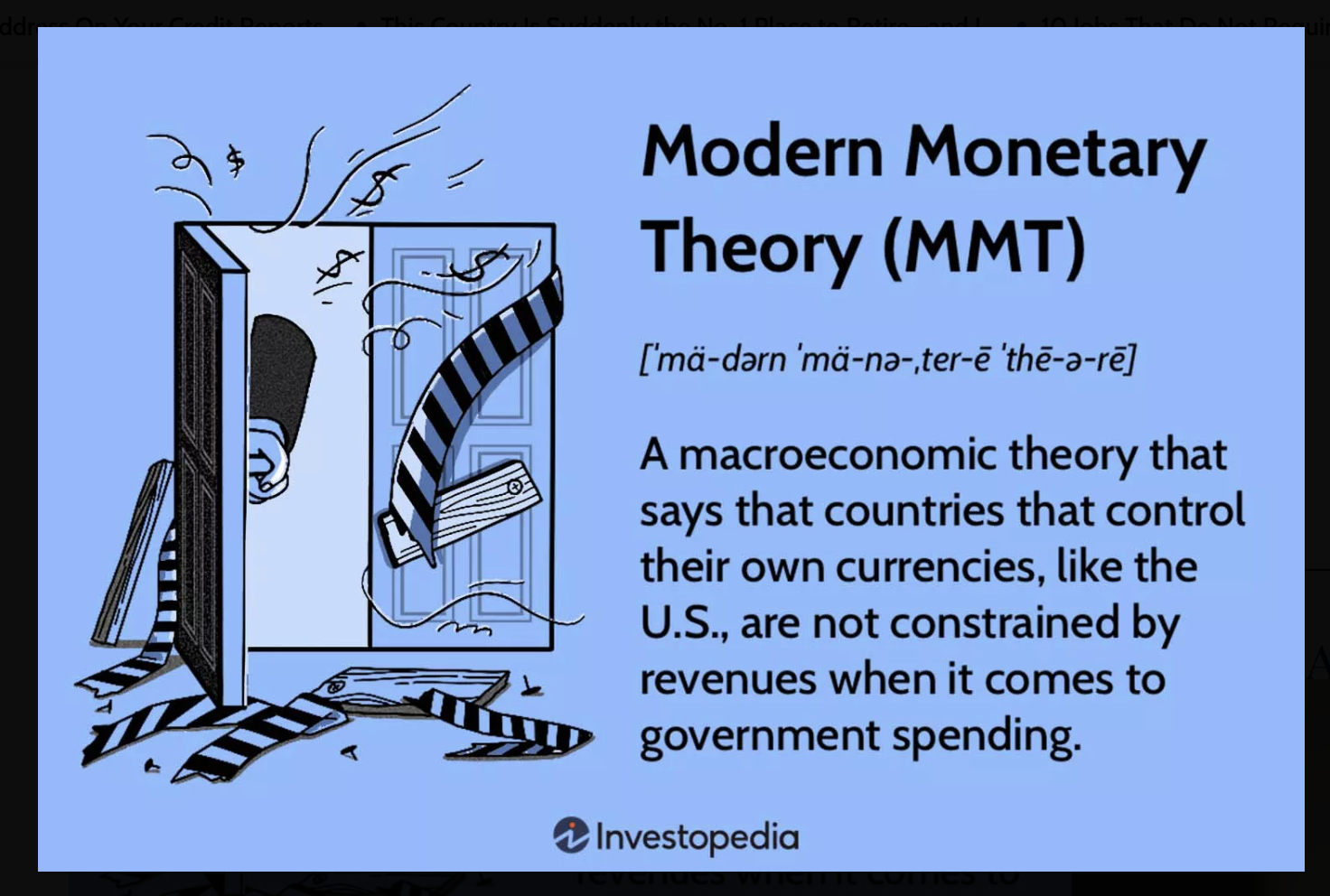
The latest book I have started reading is a book called The Deficit Myth by economist Stephanie Kelton. The book argues in favor of what is called the Modern Monetary Theory. I was vaguely aware of the theory and decided to read the book so I could understand it better. Right off the back I thought about Ray Dalio’s ideas, as expressed in his books about the debt cycle, which I’ve read and enjoyed.
Now, I’ve been playing around with Gemini Pro lately, which gives me access to their latest AI model Gemini 3. So I decided to ask Gemini to explain what Kelton and Dalio might say to each other about the national debt. The results were interesting so I thought I’d share them here. As you’ll see, I asked a few follow up questions. I absolutely love that I can share the thread with others like I am doing here.
To read the thread, go here.
Ten Books I Hope My Daughter Reads Someday
I hope my daughter reads tons and tons of books. She is a pretty big reader as a middle schooler, so I think she is well on her way. There are some books of course, that I hope that she one day reads. I decided to come up with a list of 10 that I especially hope she gets to. My guess is this is the type of list that will always be changing, based on where I am at in my life. However, for the record, here are the ten I thought of today. Please note, The Lord of the Rings is not on the list because I had the distinct pleasure of reading the whole thing to her when she was younger.
- Meditations, by Marcus Aurelius
2 to 5. Ryan Holiday’s Cardinal Virtues series
-
Eknath Easwaren’s translation of The Dhamapadda
-
The Diary of a Young Girl by Anne Frank

On William Penn
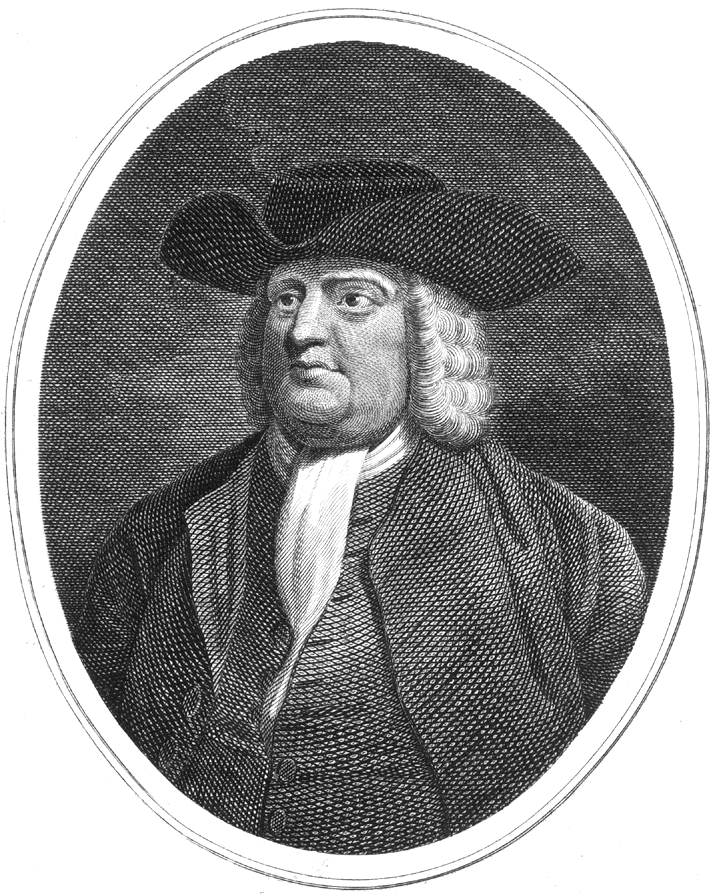
Most of us remember that Pennsylvania was founded and named after William Penn. Many will also recall that Penn was a Quaker and that the Quakers were a Protestant Christian sect that were pacifist and later played an important role in the abolitionist movement and the underground railroad. Oregonians may know that one of our local universities is named after the leading Quaker George Fox.
Penn comes up in my AP US History class when students are learning about the unique attributes of the original British colonies in America. I always talk a little about the Quakers and note that the city of Philadelphia derives its name from the Greek words for ‘dear’ or ‘loving’ and ‘brother.’ Hence, the ‘City of Brotherly Love.’ Very Penn.
I also instruct my students that Penn was relatively warm to the indigenous tribes. His general kindness backfired however, in the sense that migrants to the colonies found Pennsylvania relatively welcoming since the founder was so tolerant. The result was, after Penn’s death, the arrival of many who were not so tolerant, ultimately dooming the Native peoples to similarly frustrating sorry relative to the other parts of British North America.
However, I recently learned through my reading that Penn actually took the time to learn the language of the Lenni-Lenape (Delaware) people in order that he would be able to more fairly deal with them (he already knew five other languages, including English). Penn removed the middle man, hoping for deeper understanding and more fair dealing. I found this to be quite incredible, given what we know about the other colonists and their general greed and avarice. Indeed, Penn’s respect for the natives led to the so-called ‘long peace’ in Pennsylvania which lasted throughout his lifetime.
Where is David Rees When You Need Him?
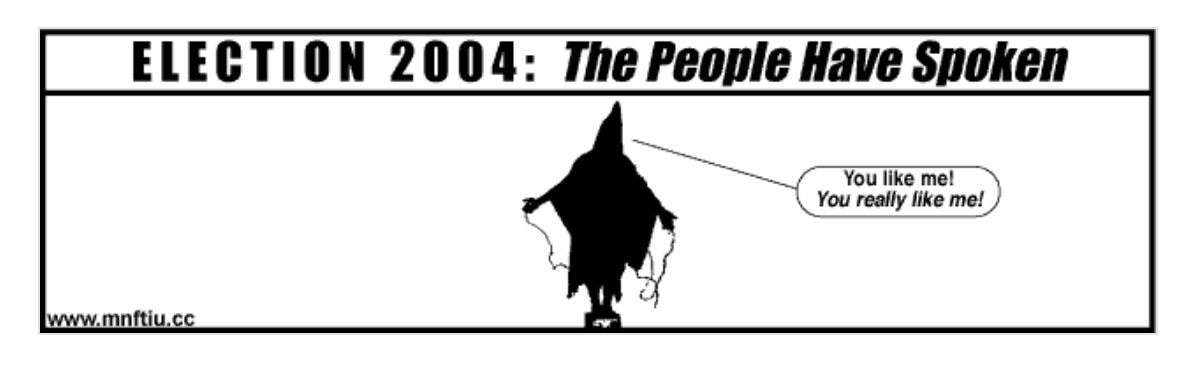
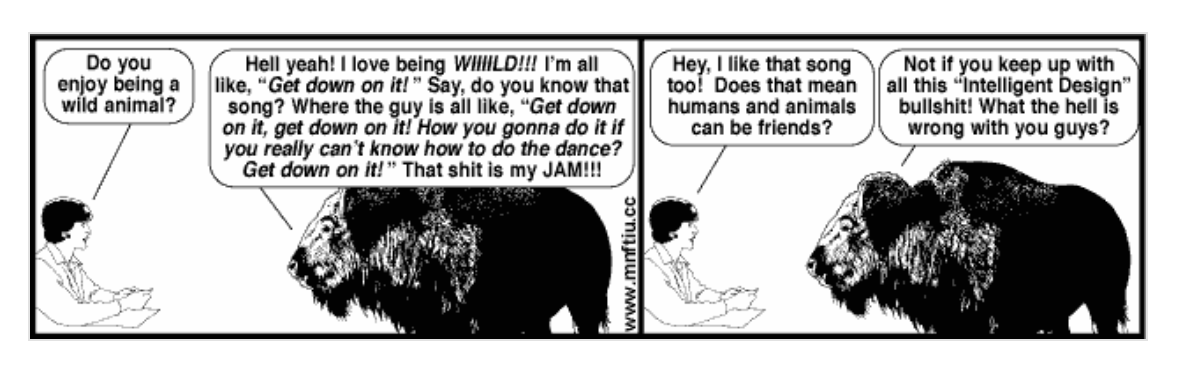
Back when George W. Bush was the president there was a cartoon published in Rolling Stone called Get Your War On. I absolutely loved it. It was created by a very clever, and funny guy named David Rees. The deeply sardonic cartoon used corny office clip art to sarcastically skewer Bush and his fundamentally stupid policies, including the ‘War on Terror.’ The cartoon ran from October 2001 to the end of Bush’s presidency in early 2009. I thought of it because as I recently finished Ben Burgis' book about Christopher Hitchens, it occurred to me how much we need the wit and wisdom of a guy like Hitch in these times. It then also occurred to me that I wish Mr. Rees was making a Trump era version of Get Your War On. Maybe he could call it Get Your Greed On? Or maybe Get Your Corruption On?
Anyway, here are few of Rees' brilliant cartoons.



Some Coming Challenges
I like to run experiments. Indeed, I’ve written about this before. I had some time on my hands last week due to the Thanksgiving holiday and I decided to run some personal experiments of varying lengths during the next four months. The first month-long experiment is going to be writing in my journal every day in December. I usually write 40% to 50% of the days during a typical month.
During the middle of December, for ten days, I’m going to try and reach out daily to a friend of family member. This will be hard, because after a full day of interfacing with teenagers, I usually want quiet time to myself. However, as I get older I realize more and more that I need to make an effort to keep relationships going strong, or going at all. As the new year begins in January, I’m going to challenge myself to increase my daily meditation time above a certain threshold that will feel like I am stretching myself a bit.
Finally, once school is back in session after the winter break I am going to challenge myself to give a ‘Bronco Gram’ to a different one of my students for ten classes in a row, complimenting them for something very specific that they are doing well in class. That means Monday through Friday, a different student each day, two weeks in a row.
The direct impetus for challenging myself in the coming months came from author and blogger Scott Young’s ‘Foundations’ concept. Basically, Young came up with a list of what considers foundational elements of a good life and is offering classes around developing those foundations. I’m not taking his classes, but I loved the idea. I tweaked his list a bit and came up with 10 of my own that I want to keep top of mind in the coming year. My experiments around journaling and meditation stem from the foundation I am calling Spirit & Reflection. The challenge around contact with friend and family grow out my foundation of Connection. Finally, my challenge to dole out some written compliments to my students is connected to my foundation of Teaching & Work. I’ll occasionally give updates on how things are going.
Current Reading Stack
I finished three books this month, all of which I really enjoyed. Memoir is becoming one of my favorite genres. My current stack, as always, is heavy on the non-fiction and concentrated on history and psychology/self-help. I am slowly making progress on Blackhawk’s book, but not really enjoying it. I’m committed to finishing it, but it won’t get a high grade. On the other hand, I am really enjoying Johnson’s history of the world between 1815 and 1830. Learning a lot. The book about Hitchens will likely be finished next, so I am already having fun thinking about which book I’ll start next.


Universal Consciousness as Foundational Field?
I came across this very interesting study that attempts to help explain consciousness and bridge the gap between quantum physics, concsiousness research, and non-dual wisdom traditions. I can’t pretend to understand the math, but I understand the argument as articulated below and find it very interesting and seemingly inline with my understanding of Buddhism.
It also reminds me of Ken Wilber’s thought provoking AQAL ‘theory of everything.’ For instance, the study’s depiction of a “Pre-Big Bang” era aligns remarkably well with Wilber’s concept of Involution, where Spirit “descends” or involves itself to create the manifest world. Just as Wilber describes the formless Ground giving rise to form, the study proposes a mathematical “collapse mechanism” initiated by Universal Thought that transitions ‘undifferentiated potential’ into specific physical states. Crucially, both frameworks agree that space and time are not fundamental containers, but emergent properties that arise only after this initial descent occurs. Consequently, the study offers a potential physics-based model for Wilber’s philosophical claim that the spatial-temporal universe is a secondary creation of a deeper, non-spatial consciousness.
My personal bias has me rooting for studies like this. If core Buddhist concepts can be validated with math, that’s a win. Also, if consciousness is unified, then it is true that our feeling of separateness is indeed an illusion. It also reinforces the Buddhist conclusion that we should have compassion for all living beings, animals included, because we are literally cut from the same cloth. All in all, very interesting. I hope more related inquiries follow.

Hope
I came across this quote in the recent George Packer “By the Book' segment in the New York Times. I love this sort of thing because I love seeing into the unique details of other people’s lives. It’s the same reason I love the weekly ‘Sunday Routine’ segment they do.
Randomly, I actually had the pleasure to meet Mr. Packer when he came to my school to talk about reading and writing to several classes (including mine). I think it was 2019?!? I’ve enjoyed the three books of his that I’ve read, including The Assassins' Gate, The Unwinding, and his biography of ambassador Richard Holbrooke, Our Man.
What might I add to this excellent, succinct list? Other than swapping his progeny out for mine, not much: Packer nailed it.

On Christopher Hitchens
I am reading an interesting book about one of my intellectual heroes, the late Christopher Hitchens. The book’s author, coming from the political left, argues that Hitchens got a lot right, but erred seriously in his support for both the “War on Terrorism” and the Iraq War during the first decade of the 21st century. Hitchens began his intellectual journey as a socialist and by 2004 was oddly all in on Bush’s foreign policy in the Middle East. The author also critically deconstructs some of the arguments Hitchens' made in debates about religion.
A couple points come to mind as I reflect on Hitchens and his thinking. For one, his mistakes make him more—not less—useful to thinkers today. The book emphasizes that studying where Hitchens went wrong sharpens our own judgment. Heroes aren’t templates; they’re case studies. His intellectual courage, eloquence, and range remain valuable, but so do the cautionary lessons that grew from his rhetorical confidence and general arrogance. Additionally, I am reminded that admiration doesn’t require full agreement about everything—especially with complicated figures like Hitch. Indeed, there is no one I likely agree with on everything. In my mind, Hitchens' error about Iraq does not tarnish his overall body of intellectual work. For instance, I love his book god Is Not Great, but thought his attacks on Buddhism to be feeble and a wasted effort.
But none of this diminishes Hitchens' importance. If anything, it makes him more useful. Hitchens shows us that admiration doesn’t always require absolute agreement and that inspiration doesn’t require perfection. For me, he remains a case study in how a thinker can be both brilliantly right and consequentially wrong—and still worth reading, wrestling with, and learning from.


Odd and Unpredictable
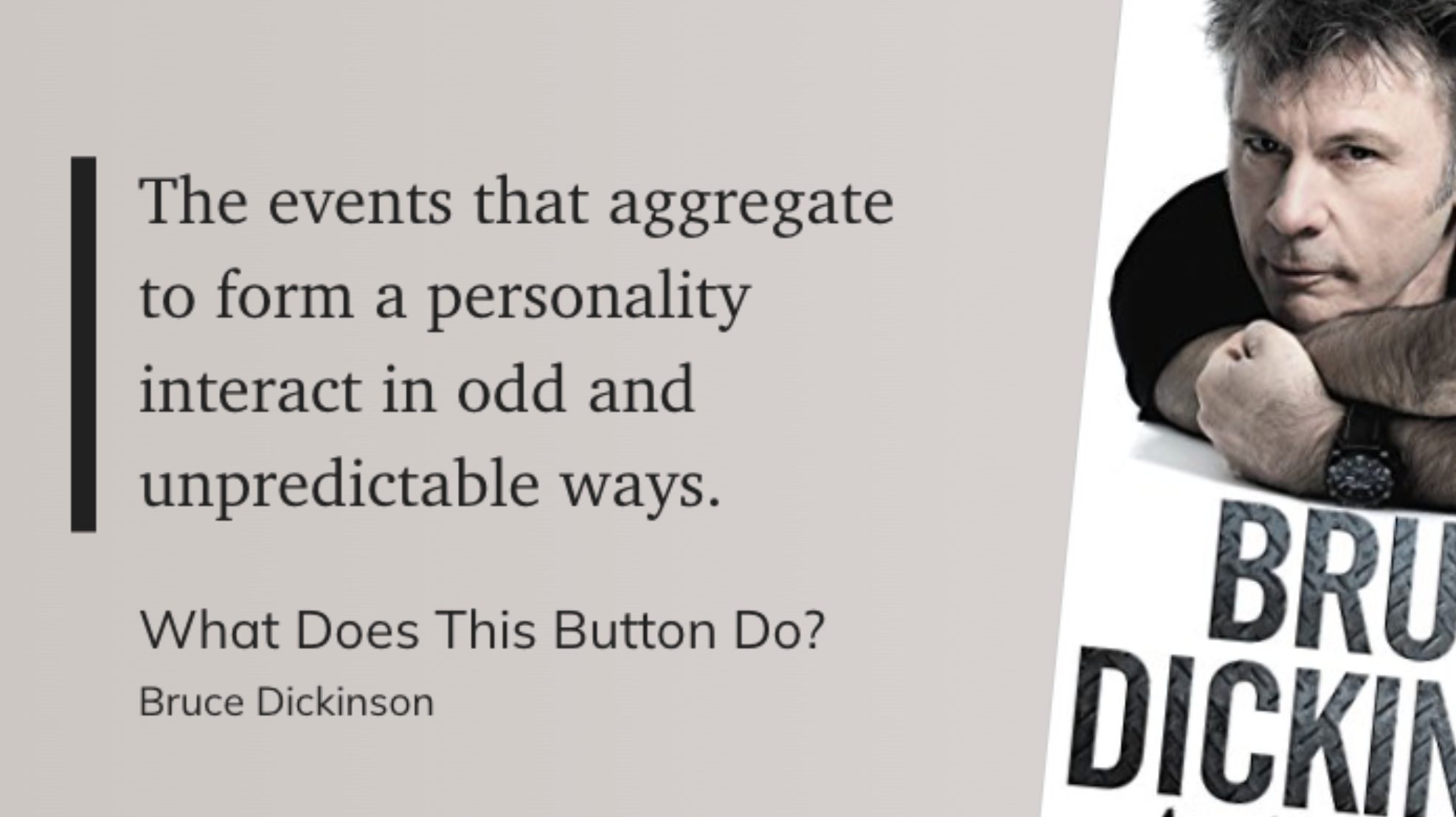
Bruce Dickinson is one of the most fascinating people in the world. He is most famous for being the long time lead singer of Iron Maiden, one of the best heavy metal bands of all time. However, in addition to that, Dickinson is also an author and a pilot, eventually flying the band around the world on their tours on their plane, Ed Force One. He is also a world-class fencer! His wide-ranging intellectual interests can be seen in the songs he has written over years. For instance, Alexander the Great is a great history lesson and Rime of the Ancient Mariner a great homage to Coleridge’s epic poem of the same name. Hell, I was first introduced to the novel Dune because of Maiden’s tune To Tame A Land.
The quote below is from his memoir What Does This Button Do? I saved it because I thought it was a great sounding sentence. I also saved it because I manages to convey a complex reality, very neatly.
On Travel
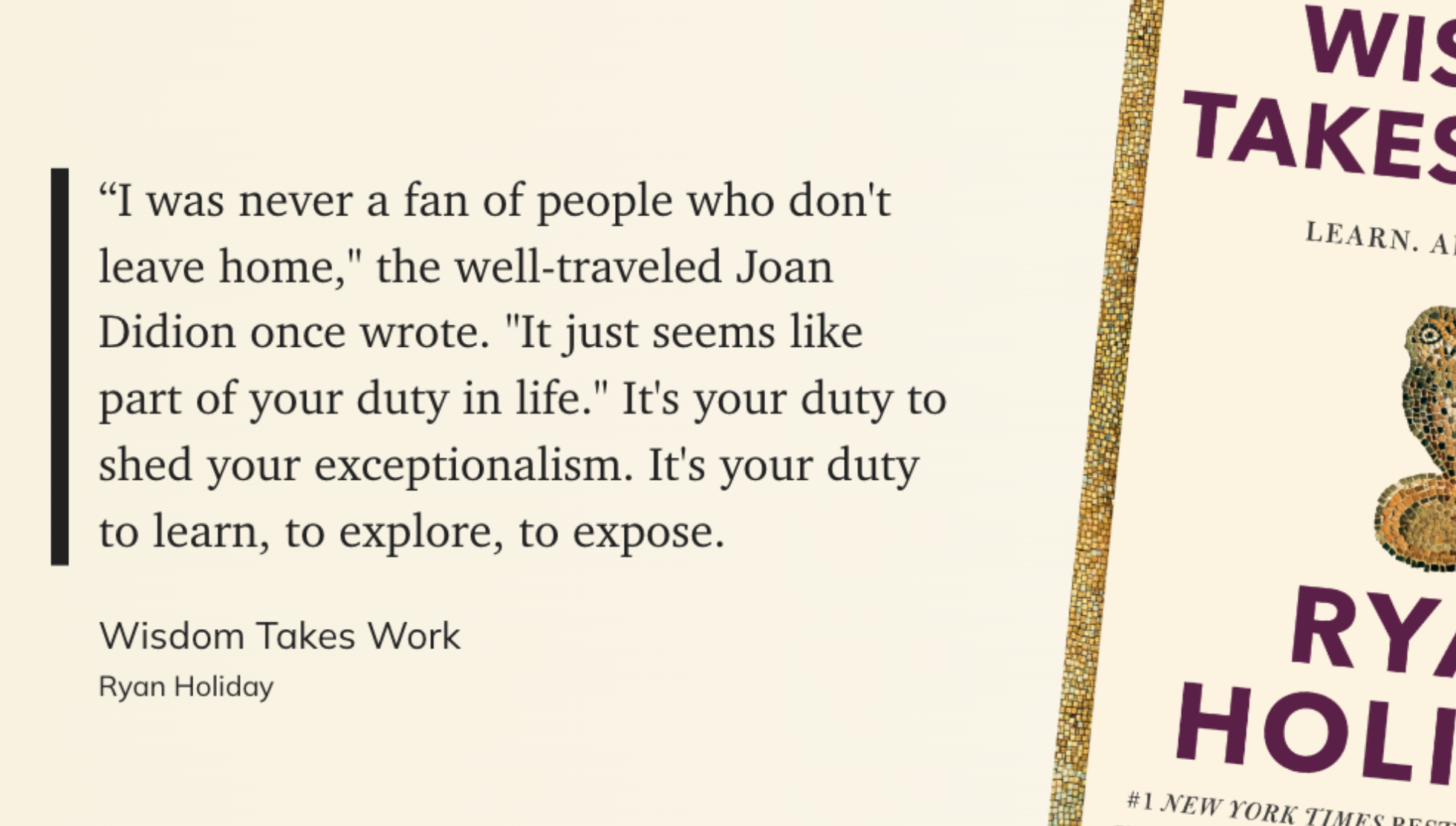
I agree whole-heartedly with Ryan Holiday’s take on Didion’s quote. I consider myself extremely fortunate about my travel experiences thus far. Indeed, I would even say I am relatively well traveled. That said, most of my close friends have seen more of the world that I have.
I didn’t really travel beyond California until I was in college. I roadtripped with parents once to southern California. Freshmen year I drove out with a friend to Utah. It wasn’t until I went to England for my junior year abroad that I really ‘traveled.’ Luckily, I was able to see a lot of Europe that year. Besides the big cities, I have very fond memories of Bedous, France and Korfu Island, Greece. Since then, memorable places I’ve visited include Chang Mai, Thailand and driving the Al-Can Highway from Portland up to Anchorage.
Having friends that are so well traveled helps keep the travel bug alive. Hearing about their advantures motivates me to keep checking places off my list. My Top 5 list at the moment (it is always changing, of course) of places I want to visit include: 1) Quebec City 2) Nova Scotia 3) Copenhagen 4) Sydney and 5) Anywhere in New Zealand.
Thinking about traveling, I realize there are certain parts of the world I’m just not that interested in visiting. I don’t know what that says about me, but it’s true. I suppose I wouln’t ever turn down an opportunity to go to one of these places, but with so many places to visit, there are definitely tiers of interest that are real for me.
Didion’s quote also lands because it connects with parenting in my mind. I feel like it is a duty of a parent to try and expose their children to as much travel as they can afford. The reason, in my mind, is connected with the argument Holiday was making with Didion’s quote in his book about wisdom. Specifically, seeing other parts of the world, experiencing other cultures, and meeting different people all help us become more wise as we become less insular.
Choose Your Hard
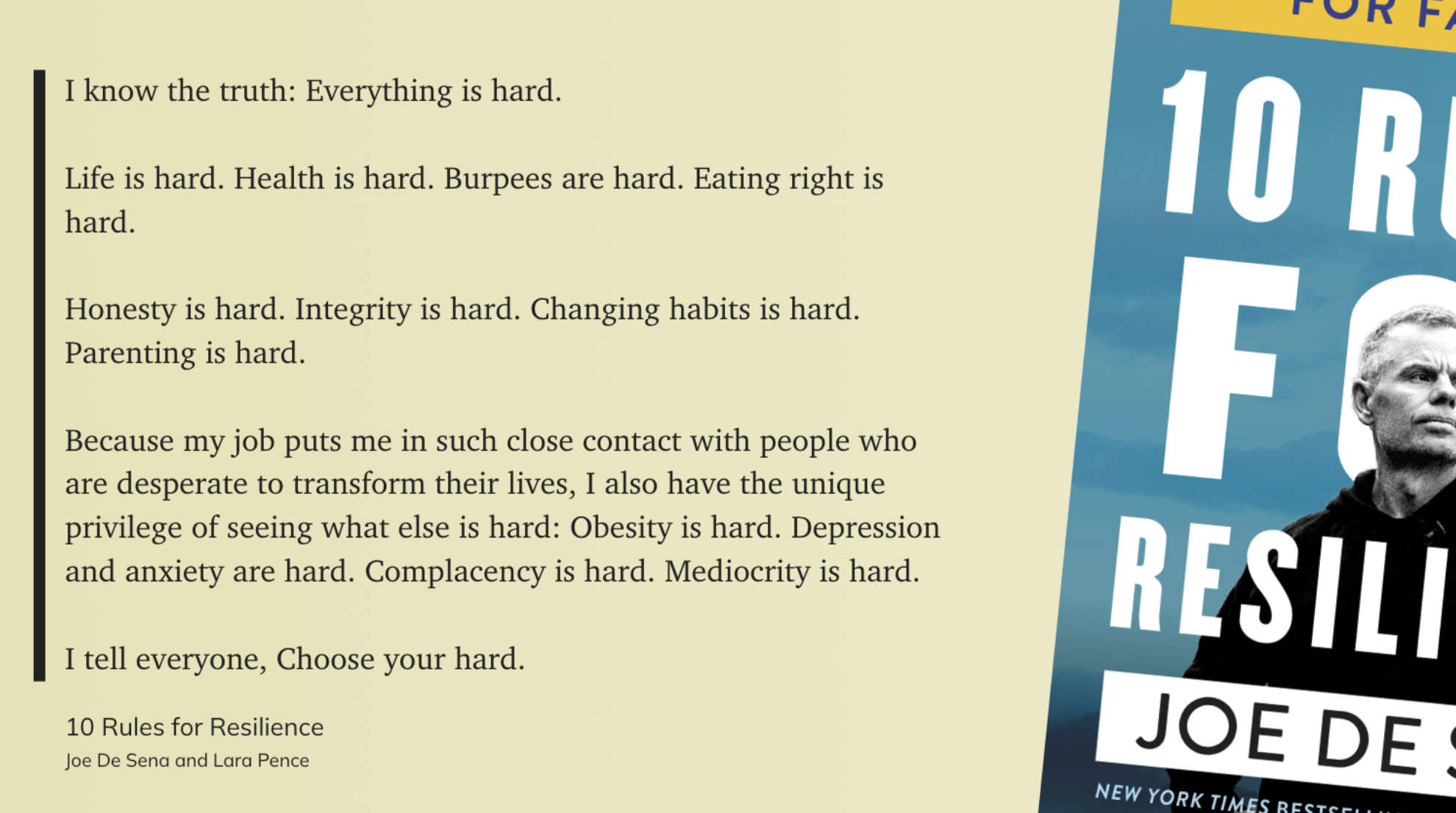
This quote is a major truth bomb, one we all need to remember. Hard is inevitable. Most of us operate under the illusion that if we take the easy way out, there will be no consequences. This is most often not the case. Indeed, in areas such as our health and finances, the consequences of poor choices can be devastating.
For me, making the right choice regarding exercise is most challenging. I have all the excuses in the book, but I know that if I don’t get my heart rate up every day (or most days), that I will pay the price in my 60s and beyond. Indeed, as I write this, I am experiencing some lower back issues. Why? Because I usually put off stretching and working on my core.
Teaching has its share of challenges in this regard, as well. For instance, parent outreach is frustrating for a variety of reasons, but I have learned that making the attempt, even if I never make contact, smooths out future interactions with both student and the parent.
Eventually I realized that if I wanted to choose the harder-but-better path, I needed habits that made the choice easier. These practices include reading widely, tracking certain metrics (like what I eat and drink, my weight, my steps, how many minutes I exercise each day), and meditation. Together, these habits help slow down my decision making and provide unvarnished data about how I am doing. Indeed, these three practices alone have provided a huge ROI for me. I know for a fact I’d be worse off without having them in my habit toolkit.
Blogging every day is another example of ‘choosing my hard.’ My posts aren’t long, but I’ve committed to putting something out every day and it isn’t always easy. However, I know that at the end of my blogging journey, I’ll be a better writer, a clearer thinker, and will be able to take pride in doing something I always wanted to do. Hard is inevitable, but when I choose it on purpose, it becomes a path instead of a burden.
What the?
I teach in a public high school so I hear cuss words pretty regularly. I also happen to cuss a fair amount myself, though hopefully not often in earshot of others who might be offended. When I come across the f word in a book, it doesn’t faze me much. It is usually used in an appropriate context and I treat it like any other word.
Recently while reading Bill Belichick’s book On Winning, he redacted the f word in a sentence. I was a bit aghast. As a football coach, I’m 100% sure he cusses regularly and probably does it more than a typical person at work, given his job as a coach of professional (and now college) football players. Honestly, I thought it was pretty lame. Who does he think is reading his book? Who is he trying not to offend? Indeed, to me it was self censorship on behalf of the type of guy who is into football but gets offended by ‘bad words.’ The feelings of such a snowflake should not take priority. Overall, though this is an inconsequential take, it is a lame move in my book. It treats the reader like a child. Just say what you mean, Bill. When the word is redacted but has the ‘f’ in front, the word still appears in the mind of the reader, after all. The redaction doesn’t really work.
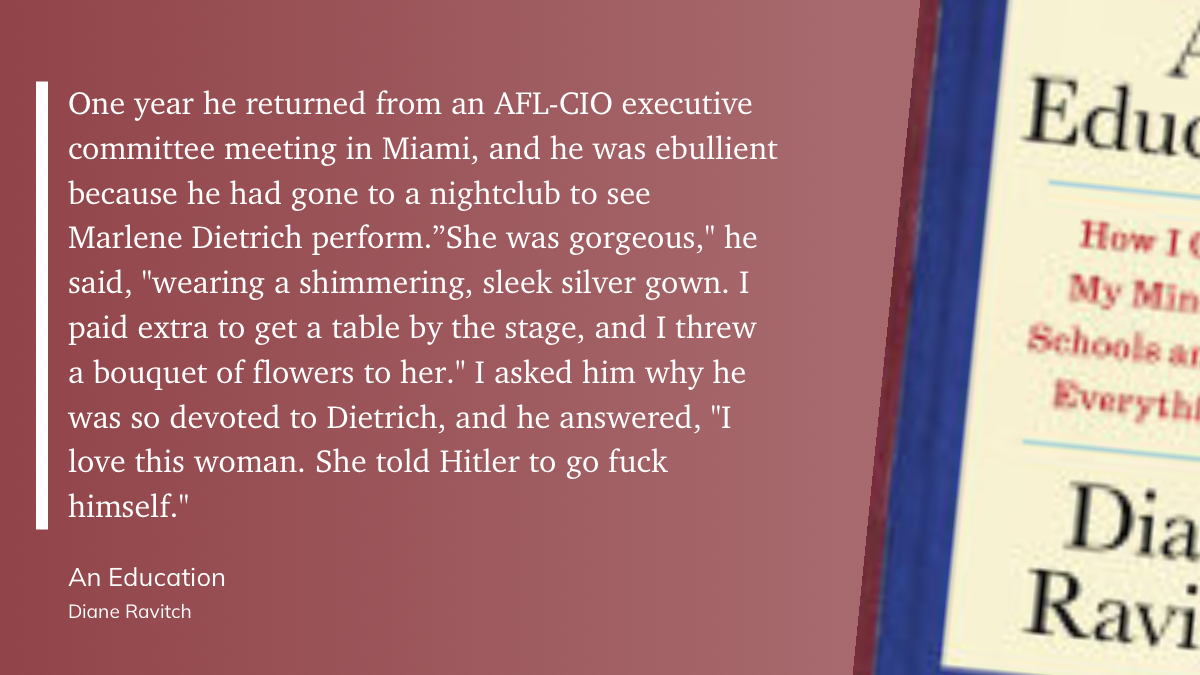
Now, Diane Ravitch on the other hand, isn’t afraid to include a four letter word like the f word in her memoir. She is actually quoting the civil rights activist Bayard Rustin, but the fact that she treats her readers like grown ups is appreciated. Also, considering the context, the word’s use is appropriate. Fuck nazis, right?
What or Who is a Quisling?
In Diane Ravitch’s memoir An Education, which I am thoroughly enjoying (!), I came across a word I was not familiar with. The word is ‘quisling.’ Chat bots being my new reading companions, I quickly looked it up.
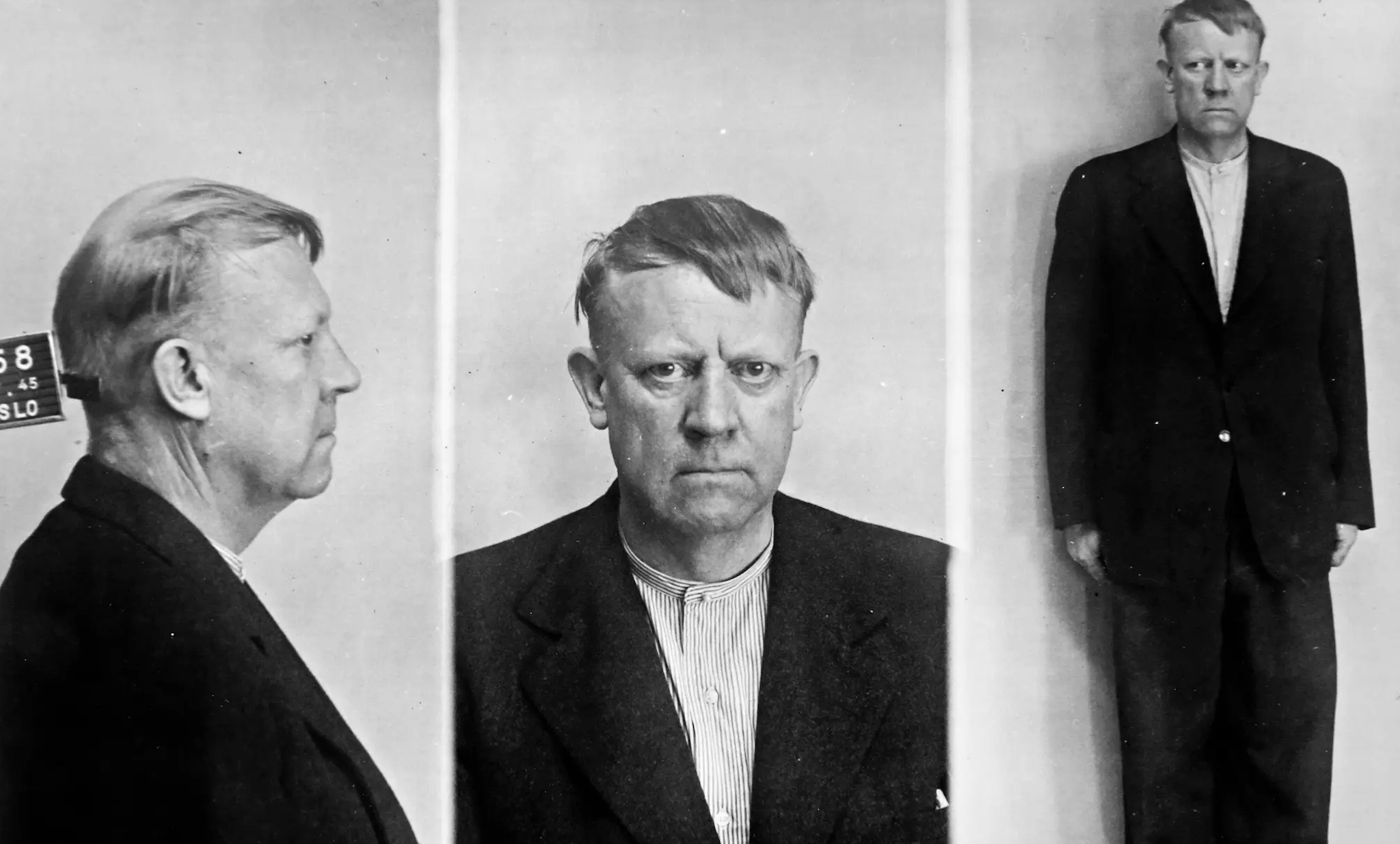
The word is of relatively recent vintage, being coined during World War II. Apparently, a Norwegian fascist named Vidkun Quisling collaborated with the Nazis in his home country during the war. Thus, the word refers to someone who betrays their own country, or own group, by collaborating with the enemy. Benedict Arnold came to mind immediately when thinking about this. Thus, a quisling is a traitor. **Great word! **
Not surprisingly, Quisling was put on trial after the war for a variety of crimes and was found guilty. He was executed by firing squad in October 1945 in Oslo. He was buried in an unmarked grade, and his surname now is equated with treachery. A fitting end, I’d say.