Live Free or Die
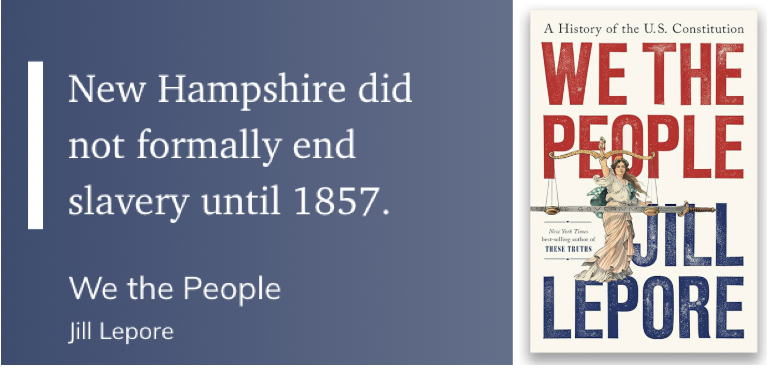
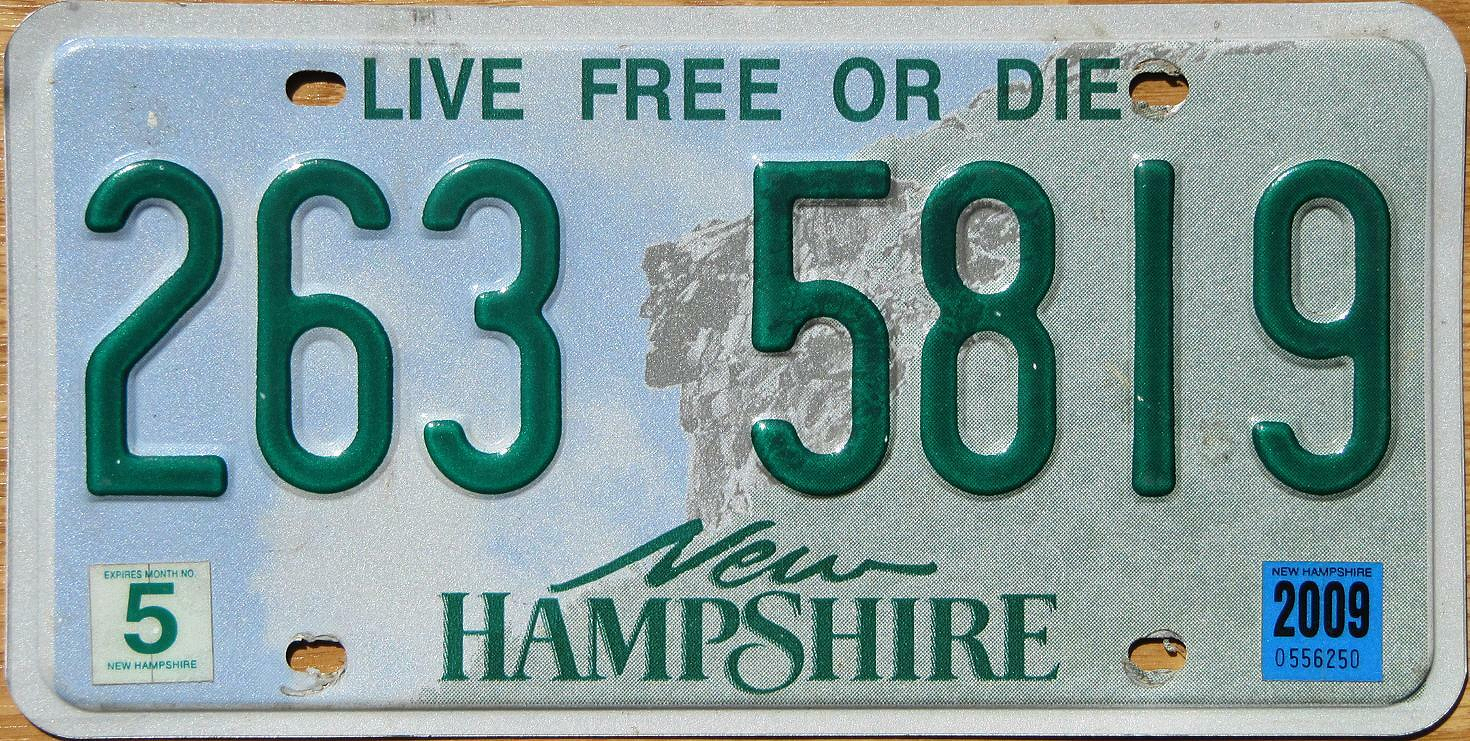
While reading Jill Lepore’s new book about the Constitution, We the People, I came across the quote below about when New Hampshire officially declared that slavery was abolished in the state. It surprised me that a New England state waited so long to do that. I also remembered their strident state motto, “Live Free or Die.”
I decided to put down the book and poke around to find out what happened, as New Hampshire’s motto seemed a bit hypocritical in light of the relatively late 1857 abolition of slavery. For starters, I learned that the phrase came from a letter written by a New Hampshire veteran of the Revolutionary War. His name was John Stark and the full line from the private letter was “Live free or die: Death is not the worst of evils.”
The state didn’t actually adopt the motto until 1945, as World War II was ending. The primary meaning behind the phrase as a state motto had to do with political sovereignty and the abhorance of living under governmental tyranny. But what about individual freedom? Why would a state that so boldly proclaims the importance of liberty wait until such a late date to ban slavery?
Apparently, the New Hampshire state constitution, ratified in 1783, stated ‘all men are born equally free and independent,’ which many assumed abolished slavery. However, no law officially banning the practice was every passed. Slavery faded out over time and by 1840, the census indicated that there was only 1 enslaved person in the state.
The reason they eventually made it official in 1857 had to do with the politics of the time. Their 1857 law explicitly stated ‘No person, because of descent, should be disqualified from becoming a citizen of the state.’ It was a direct response to the terrible Dred Scott decision of that same year in which Roger Taney wrote that black Americans were not and could not become American citizens. That makes more sense.
So, my conclusion after digging a bit deeper is that my initial thoughts of hypocrisy by New Hampshire were not totally warranted. Slavery had disappeared in New Hampshire, but the politics of the tumultuous 1850s encouraged New Hampshire to make it official. Sorry I doubted you New Hampshire!