My Reading & Thoughts
Current Stack
I’m a day late, but here we go: My current reading stack.
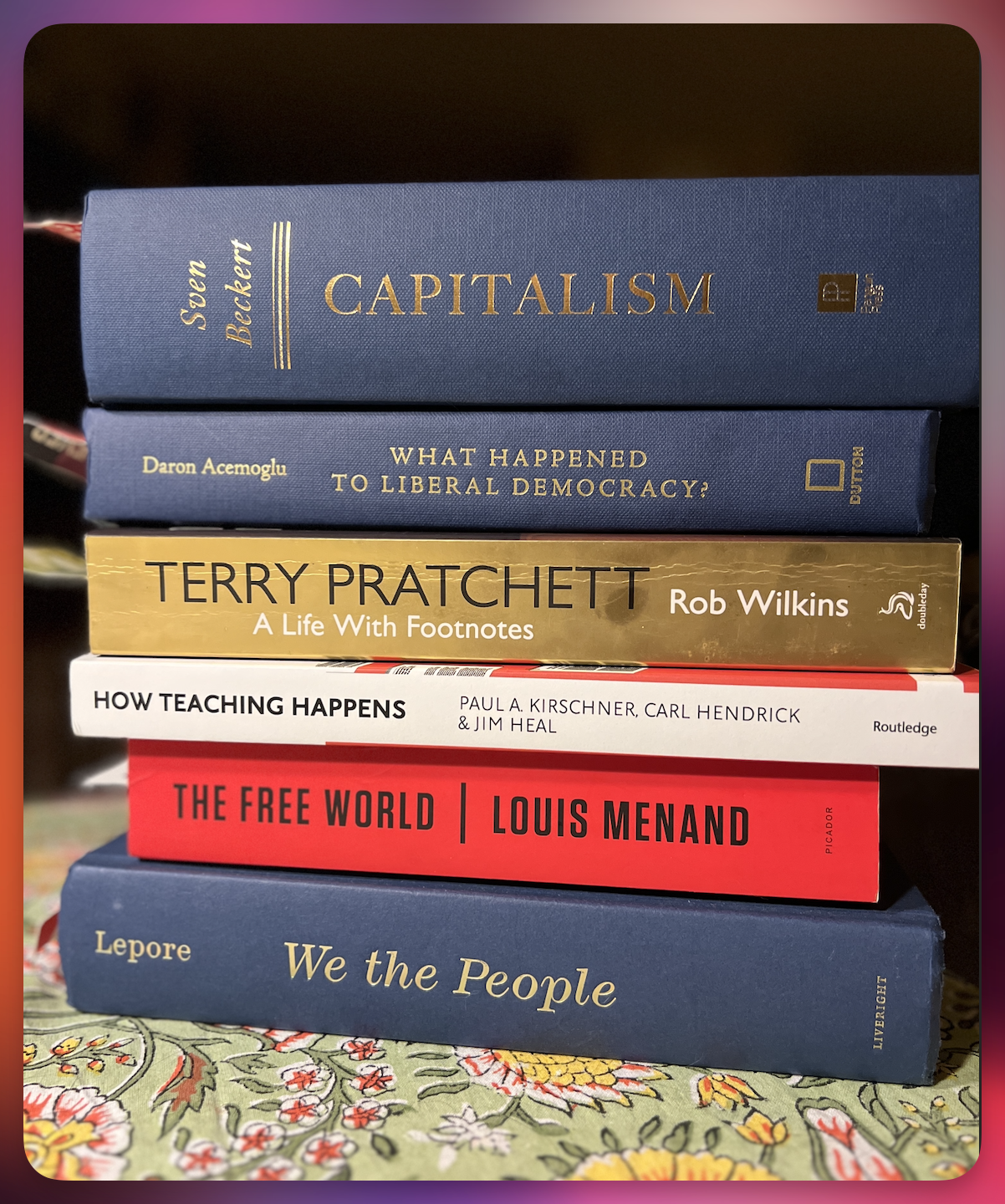
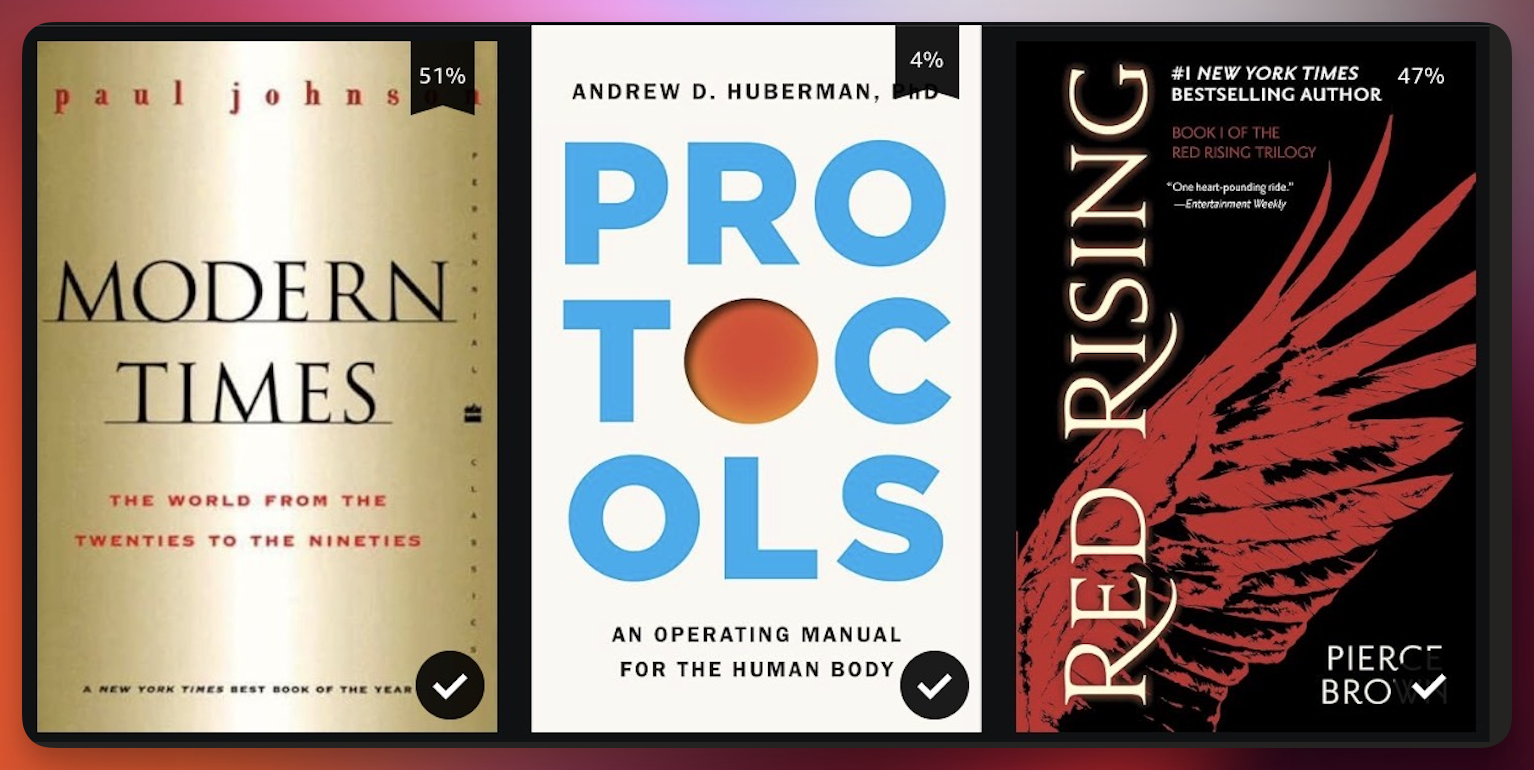
The newest book I have started is Andrew Huberman’s Protocols. I’m likely to skip the detailed explanations of neurobiology, but I’m willing to wade through that stuff for the gold–the protocols. The other really new start is Capitalism by Sven Beckert. I’ve come to enjoy big histories, and so far I am liking this one.
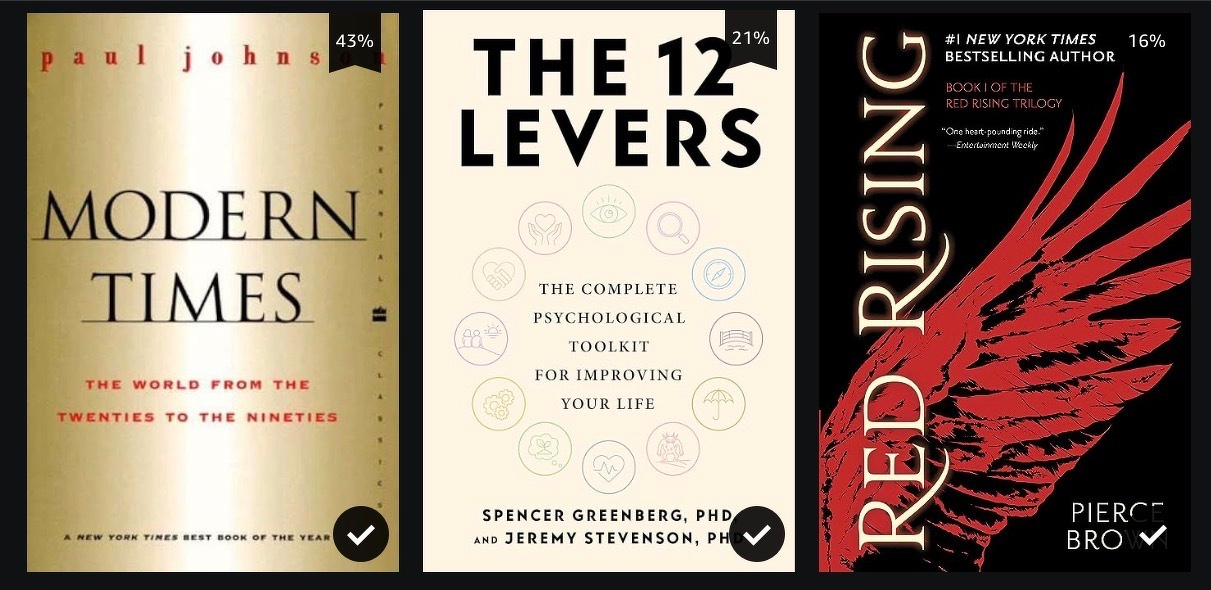
Red Rising is the one novel I’m reading, and though the start was slow, I’m starting to get into it now. The premise is certainly interesting. I am still slogging through We the People. It is relevant enough to what I teach that I want to power through. Not as enjoyable as her book These Truths, which I loved.
The new Daron Acemeglu book is enjoyable, but requires slow deliberate reading for me. One thing I like about it is that not only is it a book about political history, but he is making an argument about the type of liberal democracy that America should adopt and I like that he’s making an argument and marshalling evidence to make his points. So far, so good.
Finally, a word about the Terry Pratchett biography. Prachett is a famous fantasy writer, and while I love a good fantasy book, I’ve never read any of TP’s books. Indeed, they don’t intrigue me. However, I have come to love biographies of writers so I thought I’d give this a go. It isn’t as good as the Hobsbwam biography I finished not too long ago. I keep coming back to it almost every day though so that means it isn’t that bad.
Hope you’ve got some good books to read too at the moment!
Perlego FTW!
I recently discovered a cool resource for book lovers that I want to share. It is a subscription service called Perlego that bills itself as the Netflix of books. They specialize in academic books and textbooks, but after spening about 45 minutes browsing their more than 1 million titles, I’ve noticed they carry a lot of mainstream, popular non-fiction. Prices seem reasonable too if one decides to read using the platform. For instance, for a one year subscription, the cost is $144. That may sound like a lot, but that’s 7 to 10 books if you are buying at a typical retail bookstore. Certainly for those who enjoy reading non-fiction, Perlego is worth checking out. Of course, they allow readers to highlight text and make notes in the app. You can also easily favorite books and have them easy to find in the app when the time is right to dig in. They also offer curated lists on topics and it seems they use AI to suggest books from their massive catalog based on the books you are reading or have favorited. Did I mention they have every single book in the ubiquitious For Dummies series? If you’re a big non-fiction reader and are used to reading on an iPAd, this is worth looking into.

No One's Disciple
I’m not sure how long this will be up on Youtube, but it is up now. I’m talking about the new tribute documentary about Rush drummer and lyricist Niel Peart. This is a must watch for any Rush fan, and frankly any fan of late 20th century rock music.
This is also an appropriate time to recommend Niel’s brilliant memoir Ghost Rider. The TL;DR is that Niel suffered the death of his only daughter and then his wife within 10 months then took the roads of North America on his BMW motorcycle to process his losses. The book is a meditation on death, as well as a travelouge. Read it if you haven’t already.

36 Questions (to fall in love?)
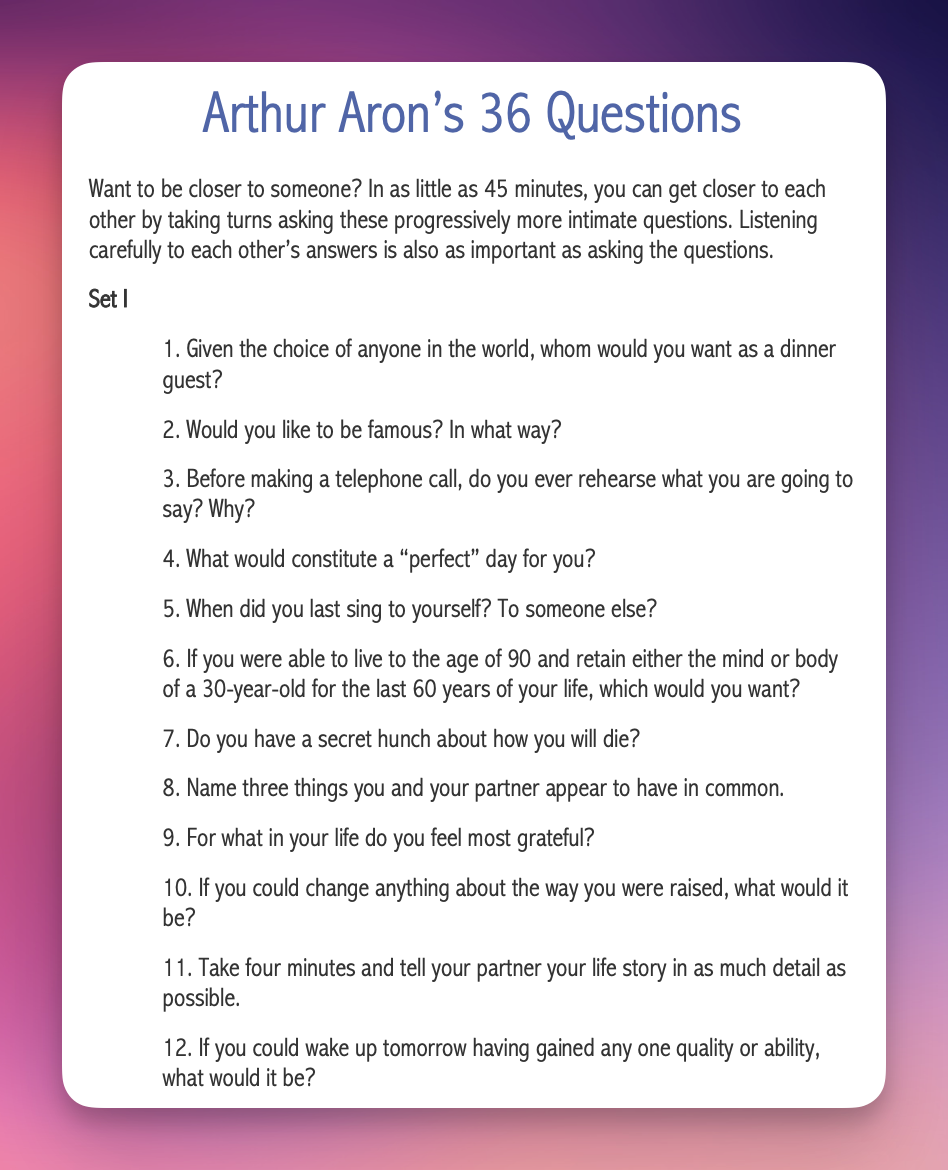
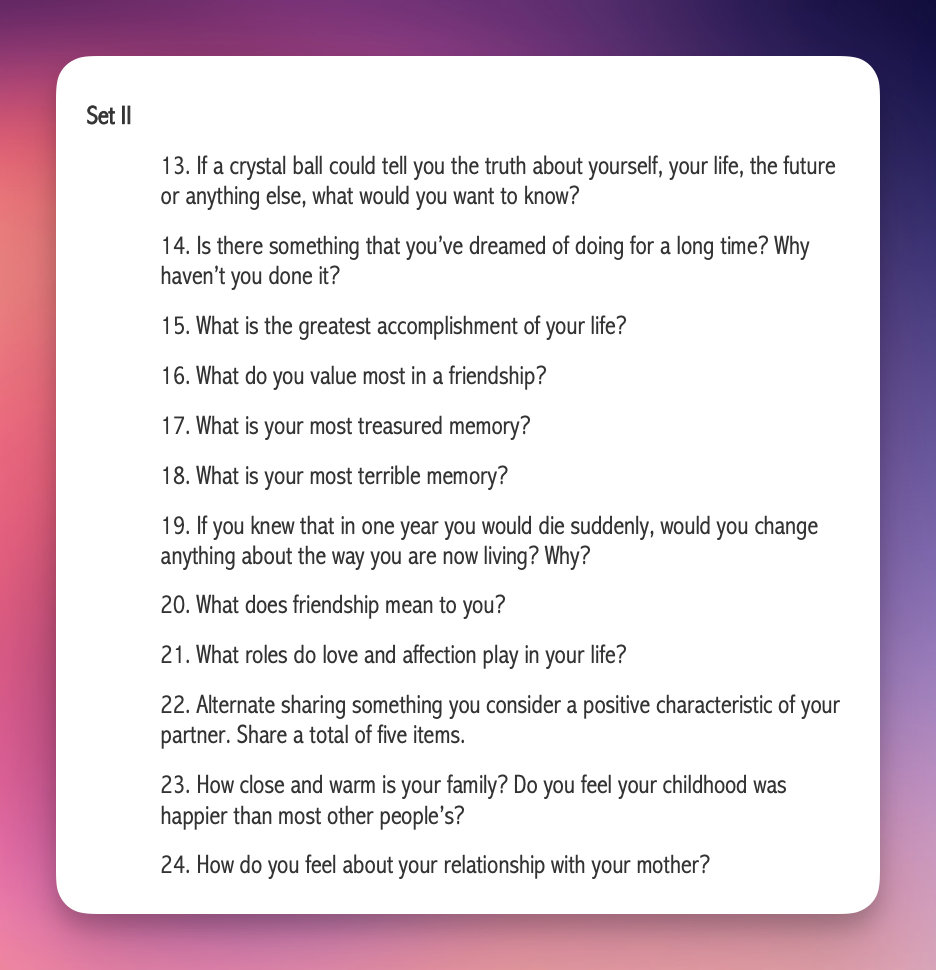
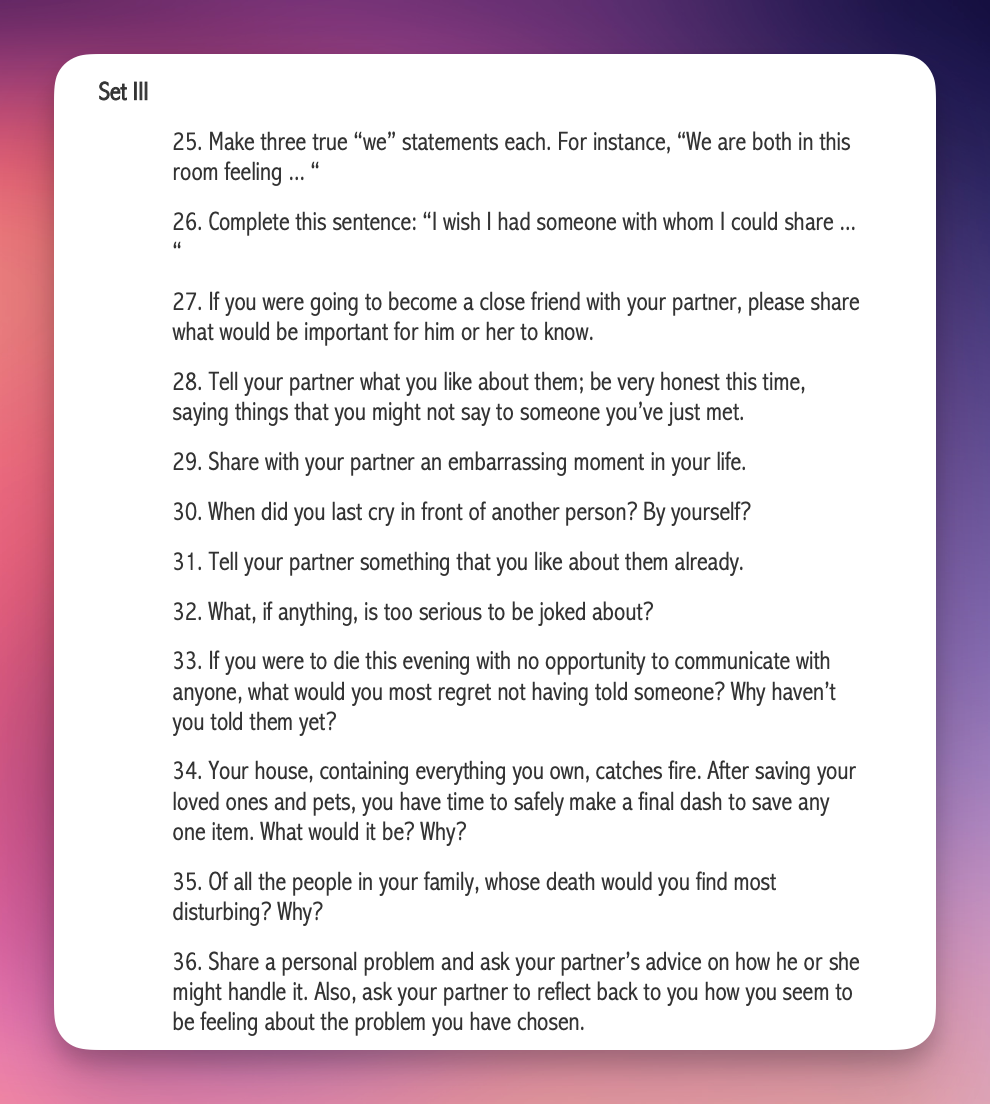
One of the books I am reading right now is called The 12 Levers. It is a self help book, a genre I enjoy. One of the 12 levers is Communicate Skillfully (Lever 10). In that chapter the authors discuss Arthur Aron’s 36 questions. The questions were designed to encourage people who don’t know each other well to get relatively close, relatively fast, by discussing the questions in order. Apparently, the questions have lead some couples in the experiments by Aron and his colleagues to actuallly fall in love and get married. The list of questions is sometimes refered to as the ‘36 questions to fall in love.’
I was curious about the questions so I looked them up. For the most part, the questions also seem like they would work great as journal prompts. Here they are…
5 Quotes I've Recently Collected
I am a quote collector. One reason is because I have always shared a ‘quote of the day’ on my board or digital agenda in my classroom throughout my career. Another reason is because I love a good quote. Indeed, one can’t get enough wisdom, so collecting quotes and using an app like Readwise to periodically resurface them is a no-brainer for me. Finally, collecting and categorizing quotes feeds my inner digital packrat.
The last quote I added to my collection came from a surprising source: George W. Bush. Indeed, good quotes from surprising sources is part of the fun of hunting them down. The Bush quote came from a short review of Bush’s new book of portraits (he has taken to painting as an ex-president). The quote struck me for two reasons.
For one, it is striking to me that I long for a traditional Republican president. When Bush was POTUS, I loathed him. I still think he was a horrible president who set our country on its dramatic decline (allowing 9-11 to happen then over-reacting and invading Iraq, not to mention the irresponsible tax cuts and devastating Great Recession that started on his watch). However, he wasn’t pathological. He had a semblance of a moral compass. He wasn’t a racist narcissist.
Another reason why the quote struck me is because it is clear that he is, in his own way, rebuking the current Republican administration. That is worth noting. I also happen to believe in the sentiment. If you are lucky enough to live in freedom, you have a moral obligation to help others experience the same thing. That means treating immigrants with families and two feet in this country with decency and respect.
I’ll let the other quotes I’ve recently collected speak for themselves.
Quote #1 (collected today)
“…we who live in liberty have a duty to stand with those who do not.” ~ George W. Bush
Quote #2 (collected on September 11th)
“Never give up your right to do the next right thing. This is how we find our way home.” ~ Matthew McConaughey (as read in his recent book of poetry Poems and Prayers)
Quote #3 (collected on September 5th)
“I have read my books by many lights, hoarding their beauty, their wit or wisdom against the dark days when I would have no book, nor a place to read. I have known hunger of the belly kind many times over, but I have known a worse hunger: the need to know and to learn.” ~ Louis L’Amour
Quote #4 (collected on September 4th)
“However mean your life is, meet it and live it; do not shun it and call it hard names. It is not so bad as you think. It looks poorest when you are richest. The fault-finder will find faults even in paradise. Love your life, difficult as it is…You must live in the present. Launch yourself on every wave. Find your eternity in each moment. Fools stand on their island of opportunities and look toward another land. There is no other land; there is no other life but this.” ~ Henry David Thoureau
Quote #5 (collected on September 3rd)
“Being ready is a myth. You start. You suck. You figure it out. You get better.” ~ Anonymous
Cheat Codes and Life Lessons
I am a big fan of writer Dan Pink and have enjoyed many of his books. Today I stumbled on a recent YouTube video of his where he shares 30 ‘cheat codes’ for life. I’m a sucker for these sorts of lists. Watching the video reminded me of many similar lists I’ve come across (and saved in my Second Brain). Here is a short list of some solid life lists, as well as a link to Pink’s video
-
Dan Pink’s 30 Cheat Codes

3 Substack Blog Posts and Some Tunes
- WTED Goose Radio
As a massive Goose fan, I was very happy to recently discover this 24/7 streaming Goose radio station. They also have a great Goose 101 page for newbies.
- Substack blogger Rob Henderson on How I Read
As an avid reader I am always interested in other people’s take on reading and how they manage to read at volume. This is an interesting take.
- Substack blogger Joseph Heath on Becoming Less Full of Shit.
This is another Substack blog post I have come across recently that I enjoyed. At this particular juncture, we definitely need less bullshit.
- Substack blogger The Existential Contrarian on why modern young people’s liking for socialism suggests a failure of American schools
This one is relevant to social studies teachers, a group I belong to. Good stuff.
- New Stephen Wilson recording, Requiem for a Village
Stephen Wilson is the musical genius behind Porcupine Tree and tons of other great musical creations. He is a prog god and this new tune (it looks to have been released two days ago on Youtube, on September 11) is killer.

Current Stack
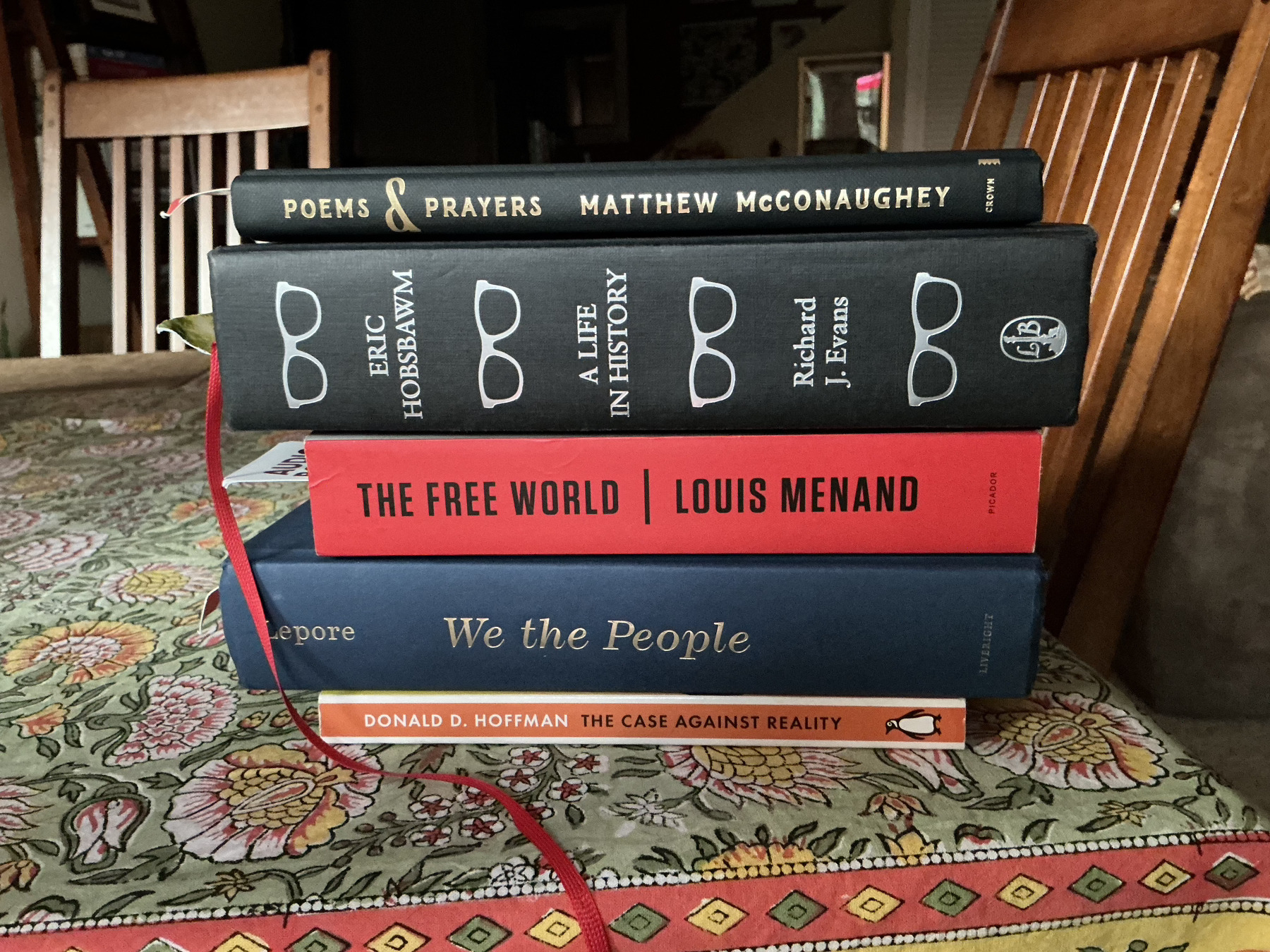
Being summer, I had more time to read than usual and as a result I was able to finish 6 books this month. I don’t anticipate finishing that many in September. The pictures below show my current stack. The novel Red Rising came highly recommended and at about 70 pages in I feel like it is starting to get interesting. The Hobsbawm biography is interesting because it blends several elements I like, history, political theory, and biography. That’s the one I find myself migrating too most often.
I just started the Mathew McConaughey book yesterday. I enjoyed his memoir Greenlights very much. This is a book of poetry, so it is a bit of a wild card. I don’t read much poetry, but after having read his first book, I felt open to what he has to offer in the way of words. So far, so good, though I suspect a poetry snob would think me foolish.
The Jill Lepore history is a slog. For whatever reason, the late 18th century doesn’t spark my interest at the moment. I’ll keep chipping away. Her American history book These Truths was so good, she’s earned my continued focus and attention. The philosophy book is also a difficult read. The ideas are interesting, but require my morning attention, and I do most of my reading in the afternoon, when I am apparently not quite sharp enough for such esoteria.
Nevertheless, I am grateful for my good fortune to have the time, money, and physical ability to continue reading what interests me.
Rock and Roll
I continue to plow through Louis Menand’s deeply researched The Free World, which is about ‘art and thought in the cold war.’ Happily, I am now in the part of the book where Menand recounts the story of rock and roll music. I was familiar with the general contours of the story, but am enjoying learning details I was previously ignorant of.
One part of the story that is interesting to me is creation of the new genre’s name–rock and roll. The term was a nautical term as far back as the 1600s, describing the behavior of ships at sea. In the early 20th century, the term emerged as a slang term for dancing, and a double entendre for sex. The first musical recording using the term was by Trixie Smith in 1922 (“My Man Rocks Me (With One Steady Roll)”. Cleveland disc jockey Alan Freed then popularized the term in the 1950s.
Like jazz before, and like rap later, rock and roll was first an African American phenomenon before it went mainstream.
Thinking about this, especially the important role of Alan Freed in Cleveland (whose popularity soon got him a better gig in New York City), I am reminded of the role a disc jockey named Donna Halper played in catalyzing Rush’s popularity in the midwest. Halper, arguabley, turned many OG Rush fans onto the band.

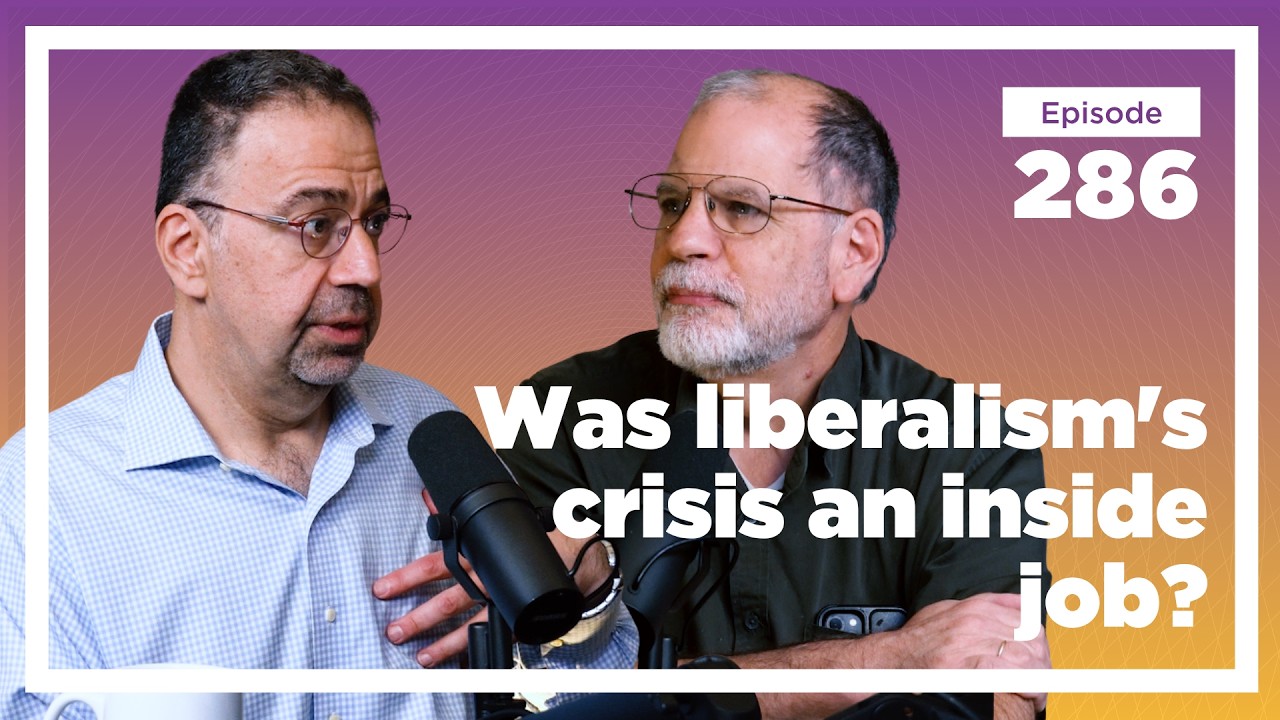
Daron Acemoglu on What Happened to Liberal Democracy
I have read two of Daron Acemoglu’s books, Why Nation’s Fail and The Narrow Corridor. Both books were co-authored and hard books to read because the arguments were a mix of history, economics, and politics. Challening but fun reads. Acemoglu has a new book out called What Happened to Liberal Democracy? that I definitely want to add to my TBR pile. He’s also a Nobel Laureate in Economics.
He is making the rounds to promote his new book. Below are two interviews worth listening to, especially if you aren’t planning on reading the book.

Browsing in Toronto
I recently got back from a very cool week in Toronto. The main purpose of the visit was to catch some Rush shows in their hometown. However, when I visit a new/large city, I try and hit up as many bookstores as time allows. Indeed, I’ve already written about my visits to bookstores in Connecticut, New York, and Santa Barbara on this blog.
Well, Toronto’s bookstore scene didn’t disappoint. Of course, I only scratched the surface by visiting 7 different businesses. The first thing I noticed was that there were not a lot of big corporate retail stores, such as the Barnes & Noble stores that are ubiquitous in the U.S.. I visited one such store, Indigo, which is one of the bigger, if not the biggest, book chain in Canada. The store itself was big and I enjoyed a long browse there, but it struck me how small the lines were to buy books, especially since I had recently been to Powell’s in Portland and witnessed lines 15 to 20 people deep there. It is also worth mentioning that the Indigo store was located in a massive mall in downtown Toronto that is apparently one of the busiest malls in North America.
Without big box retailers, that leaves small independent bookshops to fill the void. I visited 5 such places and they were all unique. One was exclusively used books and felt like something Harry Potter might be found shopping in. Another, just down the street, was sleek and modern (but too small with too few books). Small bookstores have to be picky about what they are going to stock so it was interesting to see how each of these small stores stocked their shelves. The best history section was at Type.
My favorite store though was the University of Toronto bookstore. I love checking out college bookstores, especially because I am curious as both an avid reader and a high school educator, what college professors are having their students read. It was summer, so the shelves were not fully stocked but I really enjoyed seeing what was on offer. I discovered a series of IB (International Baccalaureate) textbooks, which was strange since those are meant for high school students. Nevertheless, it was fun to see what the IB curriculum is, as I know a bit about how it differs from the more popular (but less rigorous) AP program that I teach.
One element of IB curriculum that I am interested in is their Theory of Knowledge program. After visiting the UT bookstore, I actually found a free pdf copy of the Theory of Knowledge text that I saw at the bookstore. I started reading it before I left Toronto. At a future date I’ll likely make a post about what I think about that subject.
All in all, I was super happy to check out these bookstores in Toronto. If you are a book lover, there’s a lot to explore in Canada’s biggest city.

5 Books Teacher Ed Programs Should Assign
I got a text an hour ago from my student teacher from last year. He was in a box at Madison Square Garden about to see his first Rush show. Lucky dog!
That got me thinking about teacher ed programs, which led me to recall the many chats I’ve had over the years with young teachers earning their M.A.T.s about what they are being assigned to read by their professors. I was often shocked that books I thought would be de rigueur were not on the syllabus.
Here are 5 books I think any future high school social studies teacher should read.
-
Jill Lepore’s beautiful American history book These Truths. Forget Howard Zinn, read this wonderful, comprehensive, narrative history instead.
-
John Hattie’s Visible Learning for Teachers. I first heard about Hattie from a friend and took a deep dive into his oeuvre, especially as it relates to social studies. What Hattie does so well is explain, based on all the research, what actually works to produce actual learning.
-
Developing Curriculum for Deep Thinking by a gaggle of experts, including John Hattie. This wonderful, short book about the importance of knowledge (aka, facts) should be mandatory reading for future and current educators. The argument isn’t trendy, but I agree with it completely: higher order thinking is not possible if people don’t have a strong foundational base of knowledge.
-
How Teaching Happens, by Paul A. Kirschner (one of the co-authors of the book mentioned above), Carl Hendrick, and Jim Heal. This book is a review of 30 seminal books and papers that teachers should know about. It is a follow up to their similarly styled book, How Learning Happens.
-
Make History: A Practical Guide for Middle and High School History Instruction by Art Worrell and Paul Bambrick-Santoyo. As the title emphasizes, this book is practical and contains a ton of easy to implement ideas for any high school social studies class.
Current Reading Stack
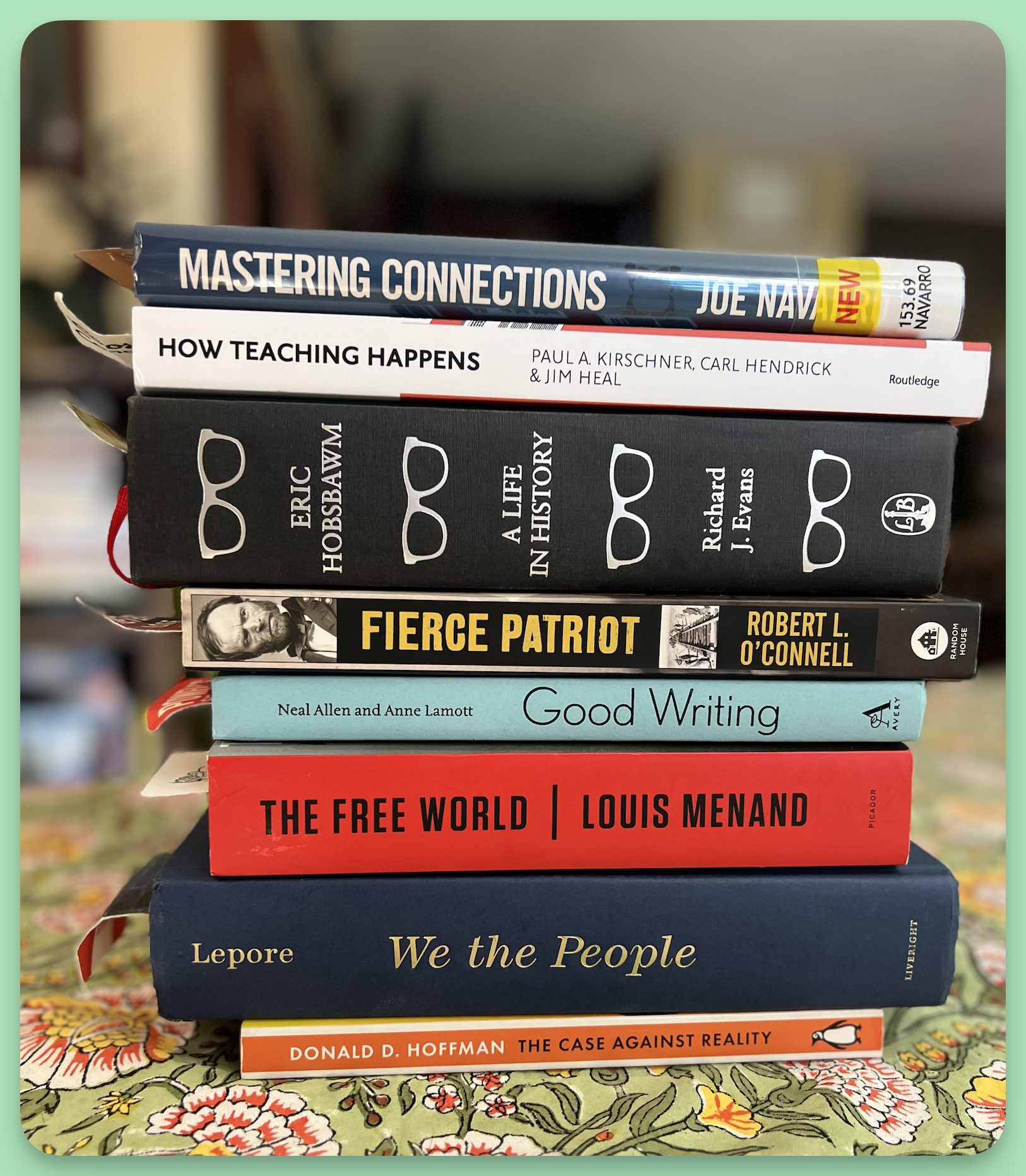
It is time once again to share what I am currently reading. Books on the bottom of the pile are the ones I’ve been reading the longest. One difference from what is normal is that I have a library book in my current stack. As usual, my stack contains a good mix of what interests me: history, biography, philosophy, general knowledge, and pedagogy.
I’ve gotten past the Civil War section of the Sherman book, which I’m happy about. Military history was never terribly interesting to me, so I am anxious to read about Sherman’s post-Civil War biography (though he was heavily involved in the Indian Wars of the Great Plains so I suspect I have more military history to wade through).
The Louis Menand book continues to inform about art in American during the Cold War, a topic I realize as I read more of this book, that I didn’t know much about. Ever heard of the Black Mountain College? Neither had I.
Lepore’s book has been a slog because at the moment Constitutional history isn’t much piquing my interest. However, Lepore has a new book coming out soon so that has motivated me to keep making progress on this one.
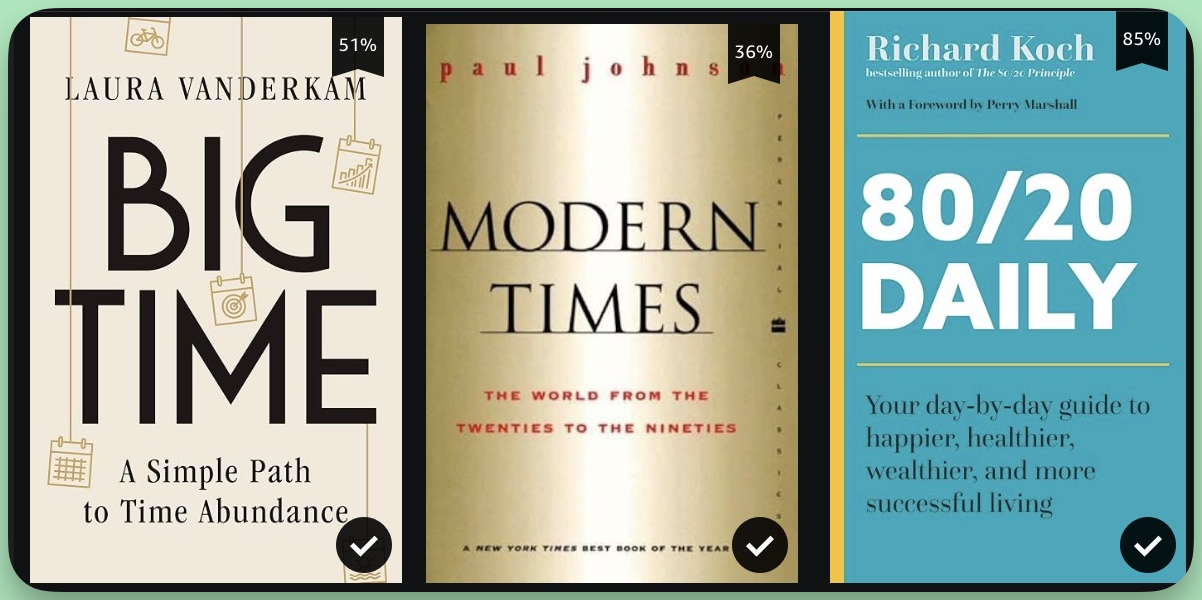
Finally, the big biography with the glasses on the spine is about British historian Eric Hobsbawm, and the book intrigued me because it combined two elements I enjoy, biography and history. I must say, it is interesting to read about Hobsbawm’s support of the USSR in the 1930s as a young Briton while also reading about (in Johnson’s Modern Times) the sadistic, evil, depraved way Joseph Stalin ran his government at that time, existing in a symbiotic relationship with Hitler and the Nazi’s with regards to developing and implementing methods of totalitarian brutality. Hobsbawm cared about the working class and had magnanimous intentions, but he missed the f’in boat on the Soviet regime! Moving deeper into the biography, it will be interesting to learn how (and to what extent) the historian reconciled his initial positive impressions of the Soviet Union with the reality as it became known after World War II.
Novel Recommendation
Most of what I read is non-fiction. In recent years I have made a concerted effort to always be reading one novel. The last novel I finished, Dungeon Crawler Carl, was enjoyable because it was so unusual. The book I picked up next I am enjoying even more. Indeed, reading it reminds me of the addictiveness of fiction that I experienced growing up and in my 20s, when I read a lot of novels.
While I have about 35 pages yet go go, I can say with certainty that Ken Follett’s 1993 novel A Dangerous Fortune is a real page turner. The book is one of his earlier works, and stands apart from his more famous novels, which can be categorized as spy thrillers or historical fiction set in the Britain of the Middle Ages. This book is also set in Britain, but takes place in the later half of the 19th century, during the Victorian period.
There are a few elements that I think make the reading most enjoyable for me. For one, the plot is well layed out, with several strings being pulled through the story to the end. The characters, despite being somehat simply drawn, are interesting and their motivations intriguing. Indeed, I am anxious now that I am near the end to see how the good guys are going to pull through and the bad actors karmically brought to task.
The setting of the book reminds me of Caleb Carr’s excellent book The Alienist. I am also reminded a bit of Kevin Baker’s excellent story Paradise Alley.
If you’re looking for a ‘beach read’ or ‘page turner’, A Dangerous Fortune is a solid choice.
For the Heads
This YouTube channel has got to be one of the coolest Grateful Dead related things on the internet. If you’re a head, you’ve probably seen them before…but maybe not!
They call themselves Searchlight Productions, as in ‘search light casting, for thoughts in the clouds of delusion.’ You know. There are a few aspects of their production that I love. First, the host is a young dude who likely never saw the Grateful Dead. He also is dressed like a middle brow professor type. Yet he comes across as a fierce lover of the music and he definitely knows his shit. Indeed, these videos are steeped in GD lore and they aren’t shy about dropping primary source (and secondary source) materials on us. The videos are a perfect mix of Grateful Dead and history, which zaps my dinger. The video shared below covers the history of the band’s performances on July 3. Watcing the video, it was fun to see that I was at the last July 3 Dead show in 1994 at Shoreline. I think it was the only time I saw Fire on the Mountain unpaired with Scarlet Begonias.
I noticed in the video that the host has a few ‘history’ books about the Dead on the desk. One of them is a great book called Heads that I have read and highly recommend.

5 Public Intellectuals I Keep Tabs On
I’ve written before here about my respect for the late intellectual Christopher Hitchens. Boy, could we use his wit nowadays! There are other living writers, thinkers, and pontificaters that I continue to enjoy learning from. Here are 5 of them.
1. David Brooks
Brooks was a long time columnist for the New York Times, one of their ‘conservative’ writers. He is also the author of several 5-star books, including The Social Animal, The Second Mountain, and How to Know a Person. Brooks has moved to the center over the past 10 years or so. While I don’t agree with all his takes, I admire his thoughtfulness and his willingness to acknowledge changes to his thinking on important issues.
2. Sam Harris
Sam Harris pisses everybody off. Liberals don’t like him because he condemns the ideology hiding behind organized monotheistic religions, and conservatives don’t like him because he is one of the most effective verbal butchers of MAGA stupidity. He’s also an AI doomer, which can be off putting to those who are AI optimists. Most importantly though, Harris speaks clearly about the benefits of a meditation practice and his app Waking Up is arguably one of the most comprehensive secular tools for waking up from the ongoing and persistent delusion of the self.
3. Ryan Holiday
Holiday is a writer, book store owner (yes!), podcaster, and general promoter of Stoic wisdom. His books, like those by Brooks and Harris, are fantastic collections of history and all-purpose wisdom. He also walks his talk regarding virtue, calling out racism and greed that are commonly dressed up as patriotism and ‘family values.’ And did I mention he likes great music?
4. Shane Parrish
Parrish is the Canadian writer and podcaster behind the Farnam Street blog, which is a trove of wisdom about the human condition. He is also thoughtful, smart, and his work is consistently offering new and interesting ideas to explore further. Parrish, unlike the others on this list, generally avoids politics.
I’ve been a fan of Prof G, as he is affectionately known, since I first came across his podcast. Like Harris and Holiday, he is an outspoken critic of the current state of American politics and I tend to agree with most of his ideas. He can be off putting in the sense that he is often crude and has a juvenile sense of humor, but when it comes to the intersection of economics and politics I find that I am nearly always in agreement with him. He also promotes what I consider to be a much healthier version of masculinity, which is important when there are so many tools promoting toxic masculinity online. Galloway’s book Adrift, which I finished reading about a week ago, is also worth reading.
🇺🇸 America, this Fourth of July 🇺🇸
America turns 250 years old officially today. I am old enough to have vague memories of the 200th birthday celebration in 1976. Without getting specific, it is clear to those paying attention that the country is struggling in many ways. And yet the promise remains.
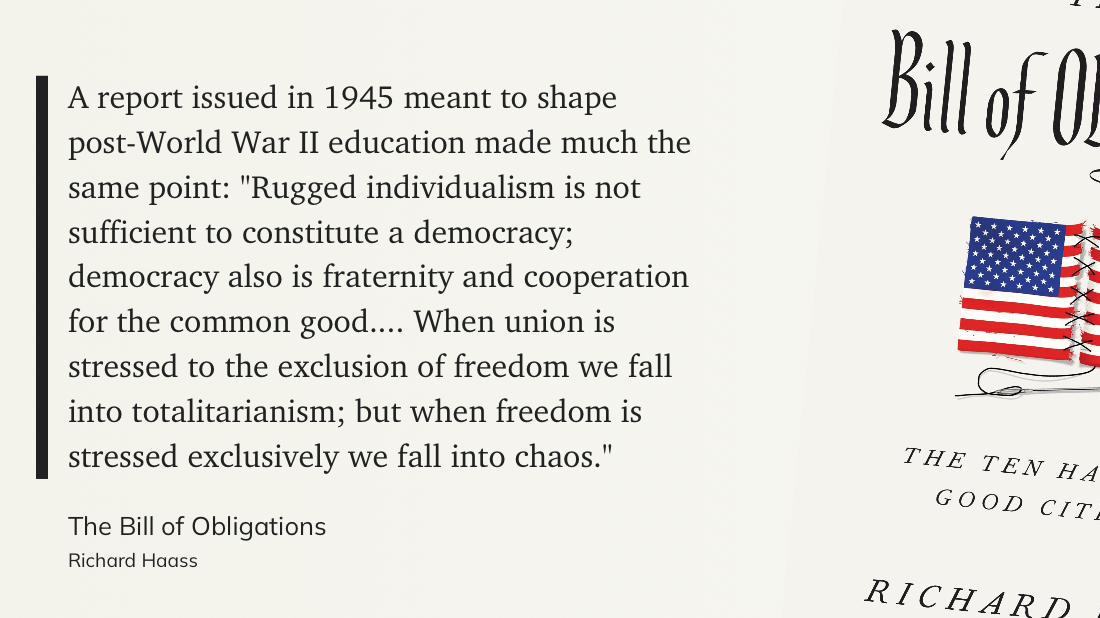
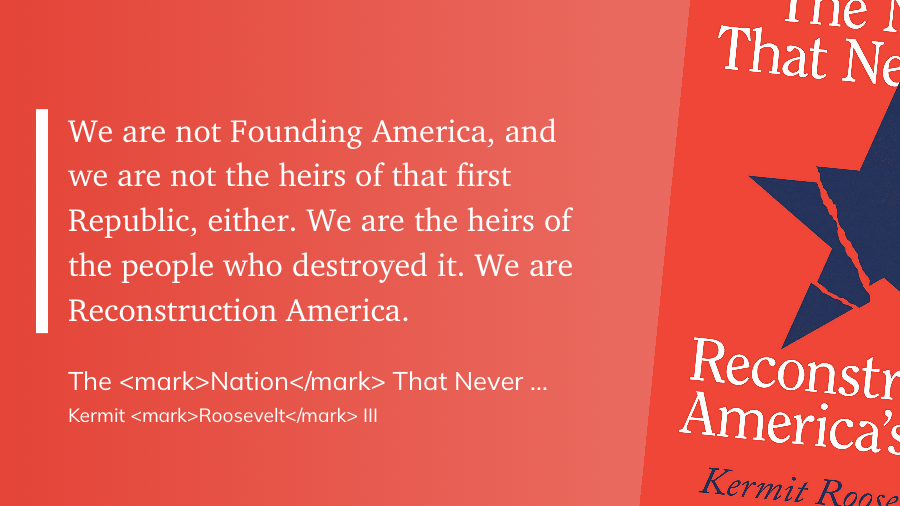
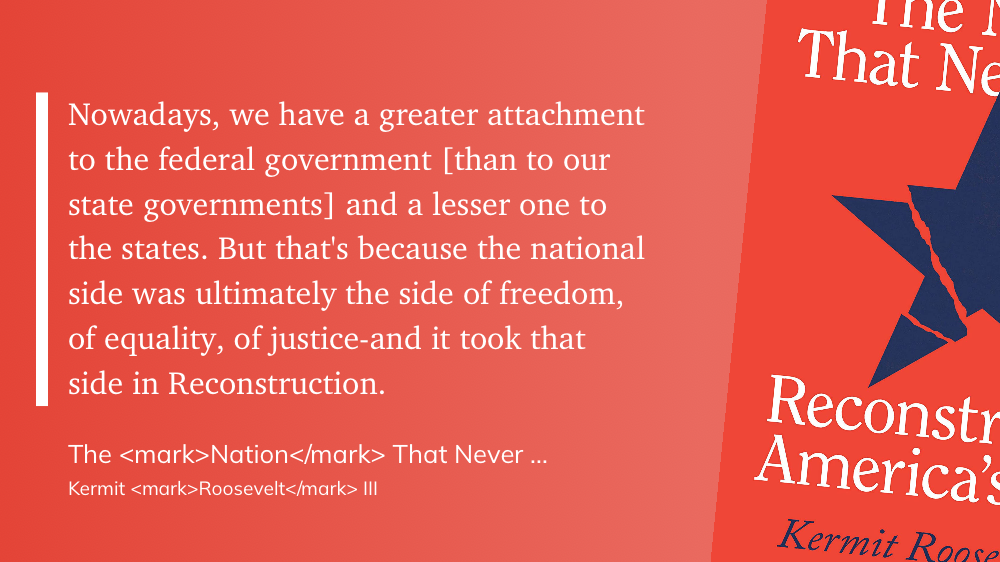
The quotes below come from three books I’ve read, two of which I strongly recommend. The first is called The Bill of Obligations by Richard Haass. It is required reading for true patriots. The last two quotes come from Kermit Roosevelt III’s wonderful book The Nation That Never Was (and yes, Mr. Roosevelt is the great grandson of Theodore Roosevelt). The thesis of this book is that the better version of America was created during Reconstruction, after the Civil War, not in 1776. It is a book worth reading and certainly an argument worth thinking about.
Happy 4th! May the United States of America become more united, may lying become shameful again, and may justice be established. Wave that flag!
Old Trees and Some Poetry
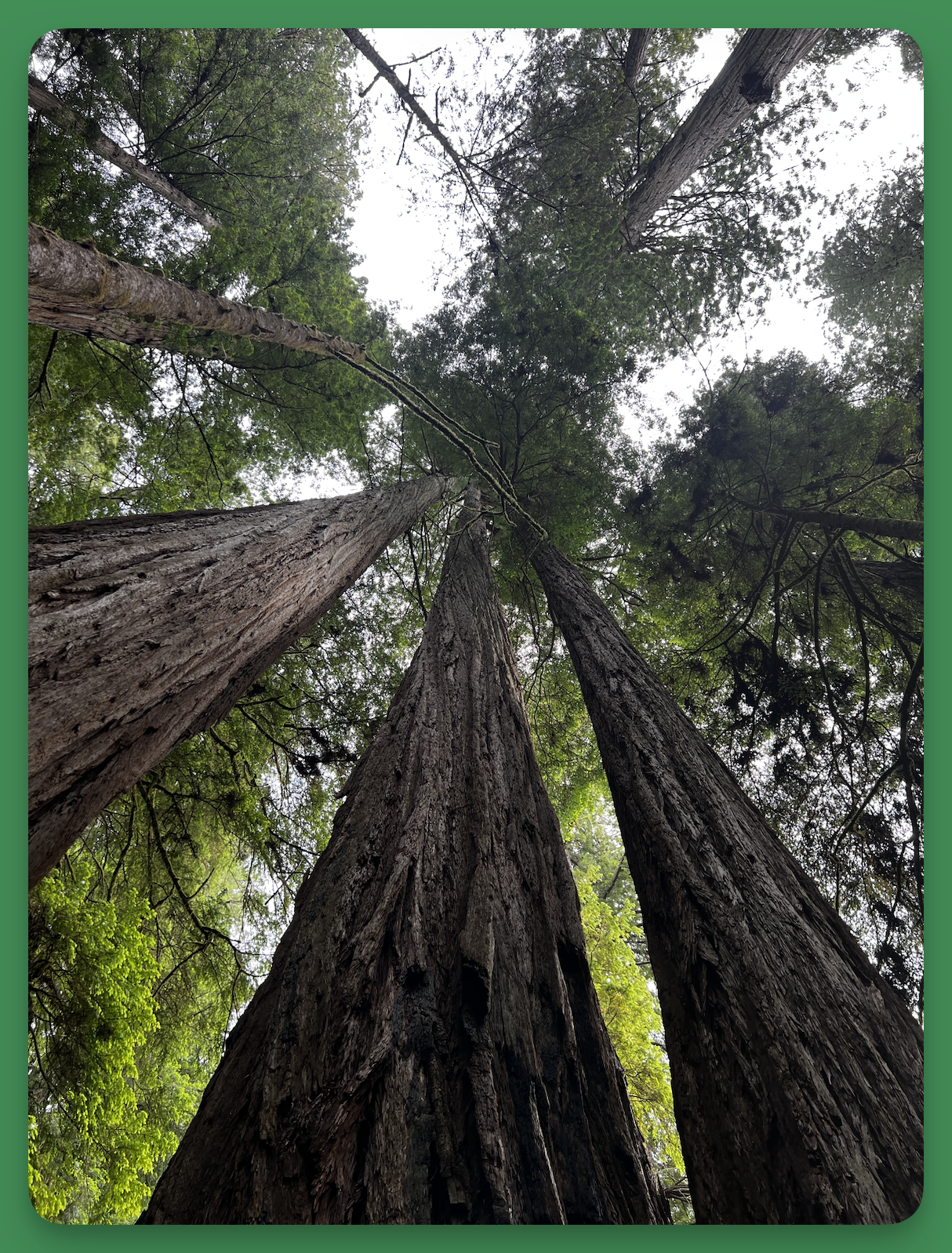
There were two elements of my recent road trip that I wanted my 12 year old to experience. One was the southern Oregon coast. My kiddo had been to the northern part of our state’s beautiful coast, but not south of Newport. We stayed in Gold Beach, Yachats, and Bay City, and spent several sunny hours enjoying the beach at Bandon. The other experience I wanted to share was a walk through an old growth redwood grove, which we managed to do at a place called the Stout Grove, just a bit southeast from Crescent City. (Shout out to my old friend EK for pointing us in that direction.)
The trees, of course, did not disappoint. We got to the old growth section early enough to find a good parking spot close to the Grove of Titans trail and spent about an hour walking around with our heads tilted skyward. Everyone we encountered was friendly and the weather was perfect, damp but not too cold. It is quite a feeling to walk amid trees that are more than a thousand years old.
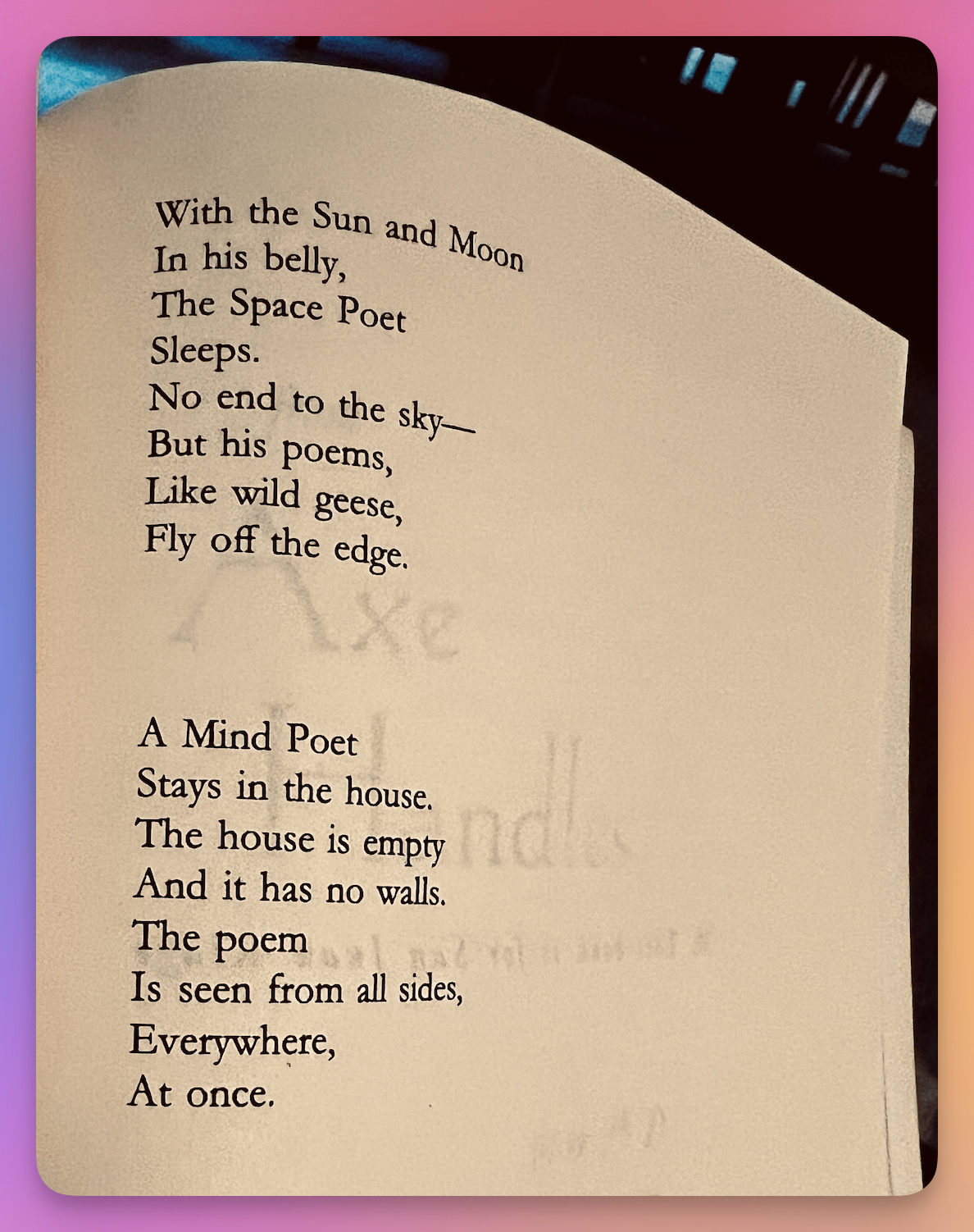
Back home, reminiscing about the big, old trees, I picked up a book of Gary Snyder’s poetry and reread some of his poems that I love. He writes beautifully about nature in general, and the west coast of North America in particular, and I am always drawn to his work after getting back from some quality time in the outdoors. The picture below shows the final 2 stanzas of a 6 stanze poem of his called As For Poets.
On William T. Sherman
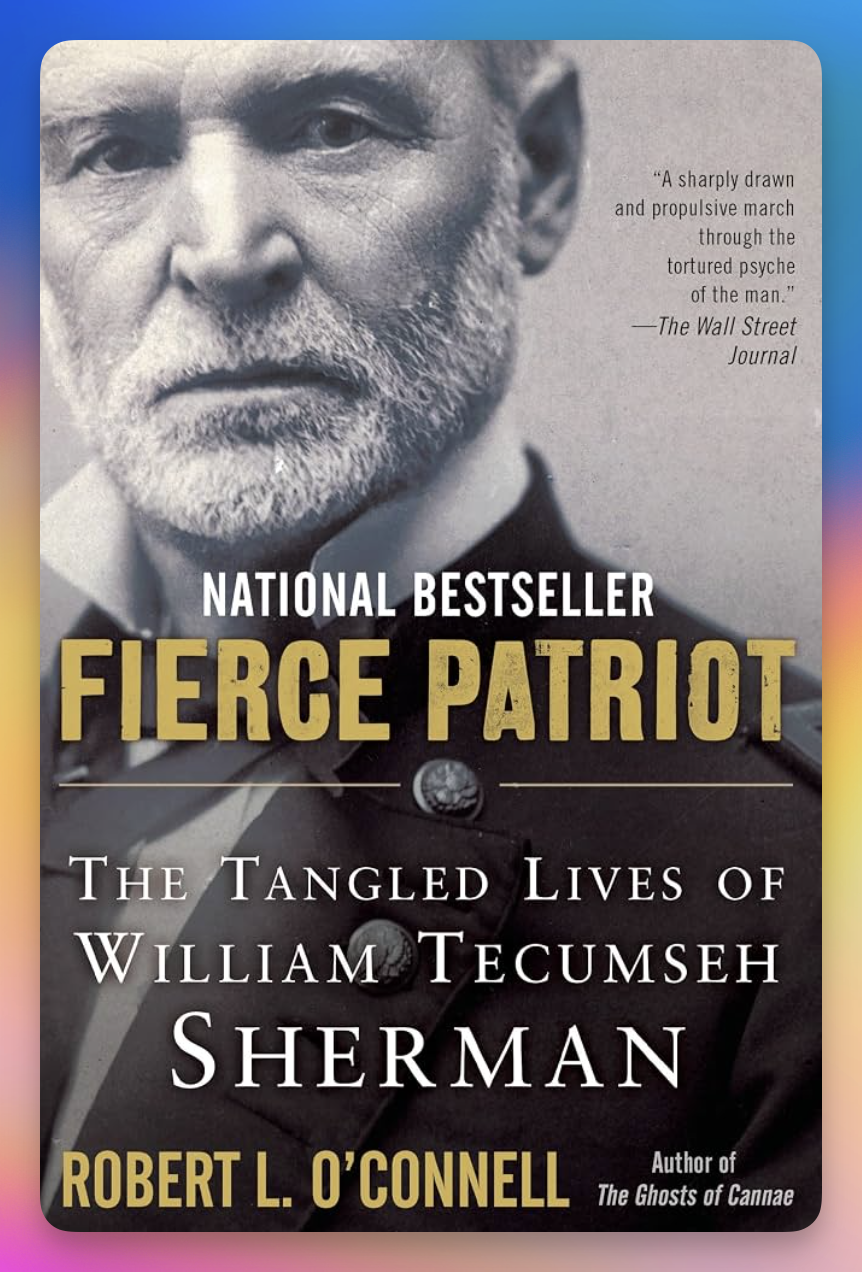
I’ve written about William Tecumseh Sherman before. However, I am inspired to share a little more about him as I am partway through Robert L. O’Connell’s wonderful, and relatively short, biography of the American warrior.
Here are 5 facts interesting facts about Mr. Sherman.
-
His middle name comes from the great Shawnee warrior Tecumseh who fought against the Americans in the War of 1812. This was something I was familiar with because Tecumseh comes up in my APUSH curriculum.
-
Sherman had 10 other siblings and his father died when he was young, so he and several of his siblings were orphaned out to family and friends. In Sherman’s case, he was adopted by a wealthy, good friend of his father’s named Thomas Ewing. The Ewings also took in William’s brother John, who would go on to become a congressman and the author of the famous (if ineffectual) Sherman Anti-trust Act of 1890.
-
Sherman was one of the first government officials to verify the discovery of gold at Sutter’s Mill in what is now Sacramento. He had been stationed a bit south along the California coast during the Mexican War (he was bummed not to be near where the fighting was). Nevertheless, he visited Sutter, saw what had been discovered, and mailed gold dust with confirmation to Washington, helping to start the California Gold Rush.
-
Sherman married his foster sister, a woman named Ellen Ewing. They weren’t blood siblings, but to the modern eye it still seems a bit off. And it was a bit off then, too. But they got married anyway in 1850.
-
Because his foster dad/father-in-law was a very well connected politician from Ohio, many powerful politicians from that era attended their wedding in Washington DC. Their wedding guests included the current president, Zachary Taylor (a military man, like Sherman), members of the cabinet, and congressional giants Henry Clay and Daniel Webster. It was definitely a Whig wedding.
William Tecumseh Sherman was clearly an interesting dude.
And yes, the Sherman tank was named after him.
Start of Summer Book Haul
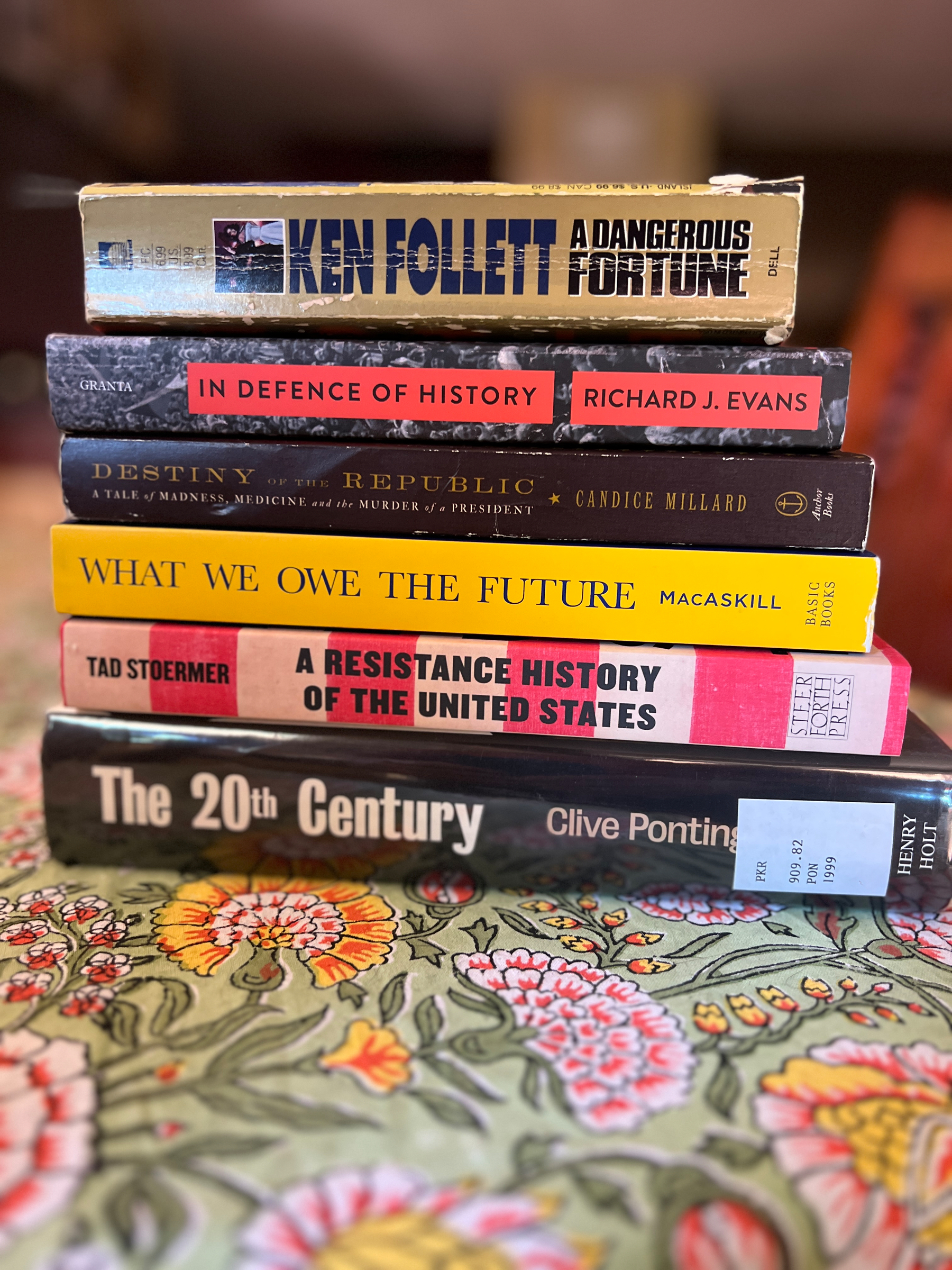
Summer has officially begun for me and that means even more time to enjoy reading. To celebrate the start of another summer reading season, my kiddo and I made a trip down to glorious Powell’s Books downtown. I had already snagged a few books from school that want to read soon (the history book The 20th Century and Ken Follet’s A Dangerous Fortune). I wound up getting three from Powell’s, and because they didn’t have a few Richard J. Evans books that I wanted, I had to come home and order a few more for good measure (one of the books is a biography of British historian Eric Hobsbwam, but it won’t arrive for another week or so). The very recently published Tad Stroemer book is the only non-used book of the bunch. I think the Follett novel will be the first of these that I’ll start; just got to get through Dungeon Crawler Carl first (because I can only handle one novel at a time).