On Woodrow Wilson and His Wife Edith
Few Americans know that in a sense, we’ve already had a female president. Back in 1919, after the fighting in World War I had ended, President Woodrow Wilson went to Paris to help negotiate what became the Treaty of Versailles. It was the first time a sitting American president had ever left the country. The negotiations were famously convoluted and difficult. One of the elements of the treaty was the idea of a League of Nations, which had been the 14th point of Wilson’s 14 Points. I’ve learned from reading Paul Johnson’s book Modern Times that the idea for such a league was not actually Wilson’s.
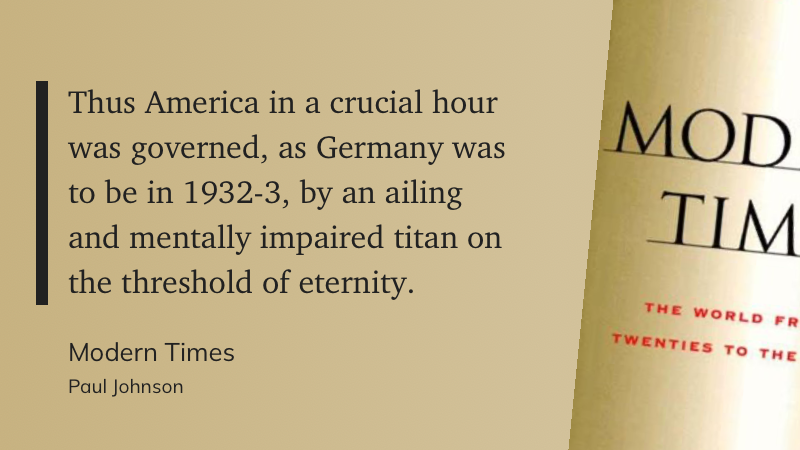
Nevertheless, he came to believe it was necessary and was willing to fight for it. However, treaties in America must be ratified by the Senate. In order to win support for the League, in 1919 Wilson barnstormed the country, speaking to massive rallies in the hopes of turning the focus of public opinion onto the Senate. Wilson apparently had a small stroke in Paris during the treaty negotiations early in 1919. Back in the states, he had a massive stroke in America in the fall at the end of his speaking tour. The stroke was so debillitaing that Wilson was essentially bed-bound and out of commission for the last year and half of his presidency.
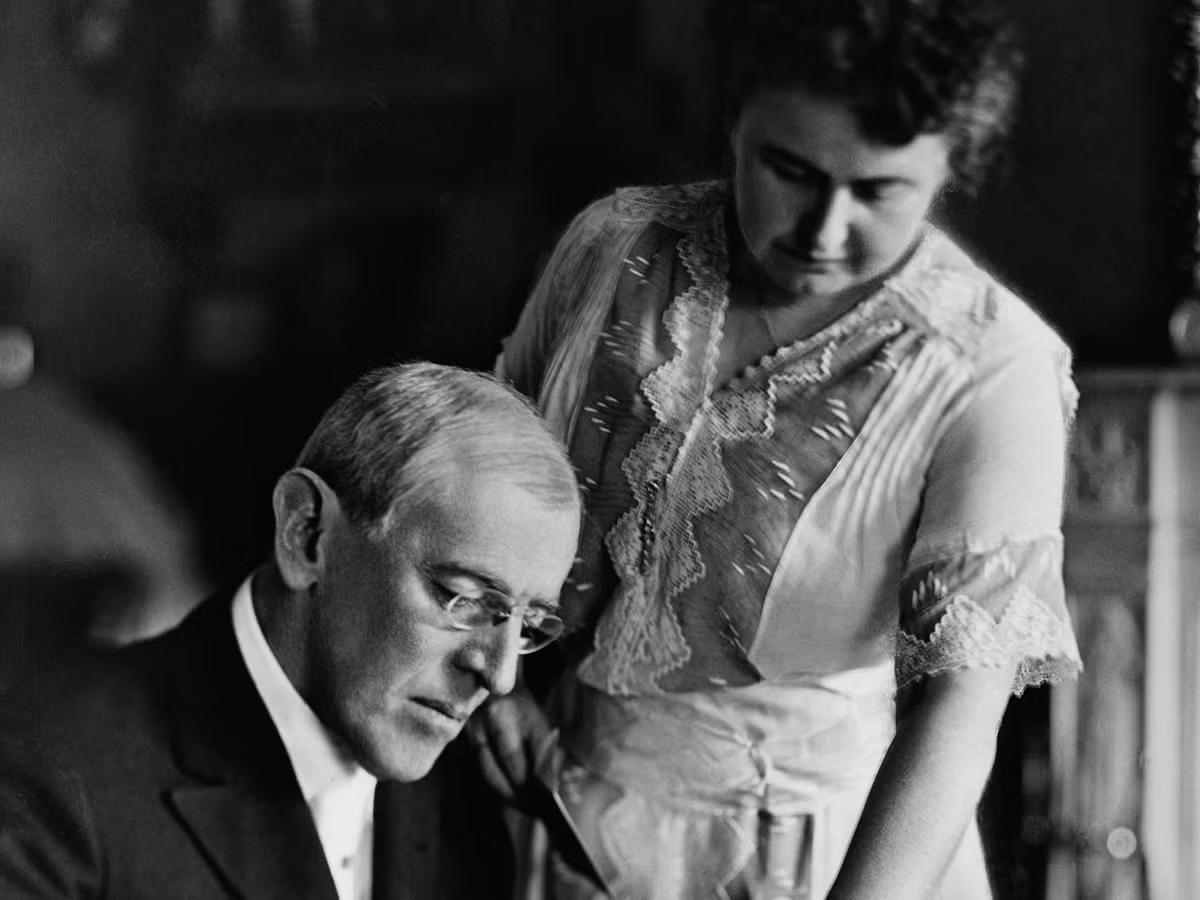
During that time, his second wife, Edith Wilson, became a sort of shadow president. Indeed, he had only just married Edith in 1915, so she had only been the first lady for four years when this all went down. I was aware of this episode from my reading of A.Scott Berg’s biography of Wilson, but was reminded about it recently while reading Johnson’s book. Indeed, I make a point to teach this strange episode to my students.
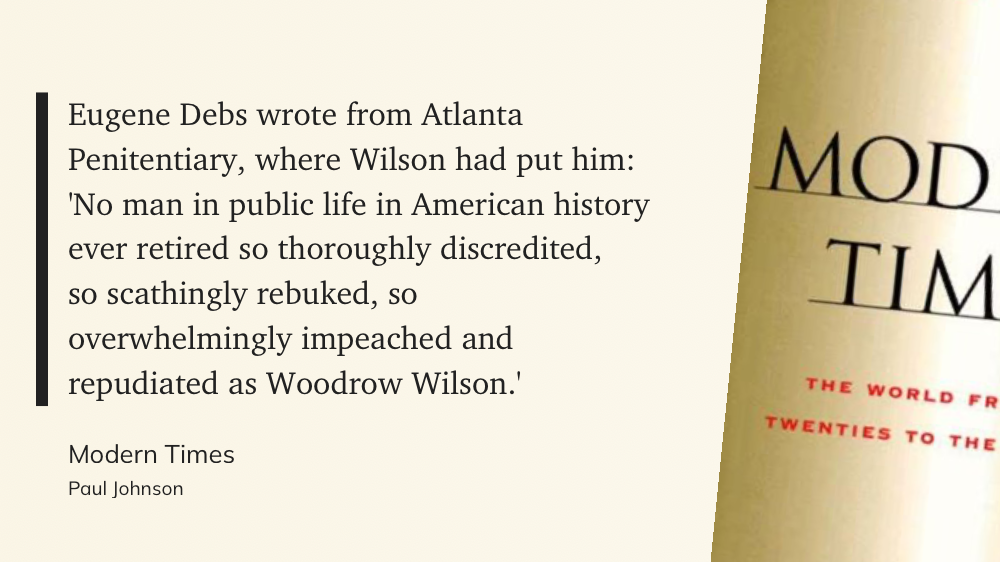
The quote below is from Johnson and it is what sparked this post. Not only do I think it is a great sentence, but I just taught the Treaty of Versailles last week so Wilson was top of mind. The second quote below from Johnson’s book shines a light on another noteworthy event in Wilson’s administration–the jailing of Social Eugene Victor Debs for speaking out against the war. Debs ran for president from jail in 1920 and garnered slightly less than a million votes. His disgust with Wilson is understandable. Debs, luckily for him, was pardoned by the winner of the 1920 election, Warren Harding.