Thinking about Robert Reich and William T. Sherman
One of the books I am currently enjoying is economist Robert Reich’s memoir Coming Up Short. The book is not a straight memoir, as Reich works in polemics about American politics and our economy while telling his life story in roughly chronological order. I tend to agree with his views, so I am not put off by the political digressions. Reich was born to a working class Jewish family and eventually earned a law degree from Yale, where he knew and went to school with Hillary Rodham, Bill Clinton, and Clarence Thomas. He worked for the Carter administration in the 1970s and eventually served as President Clinton’s secretary of labor. He eventually became a professor (at Harvard and Berkeley) and is now a pretty outspoken policy wonk advocating for a variety of progressive issues.
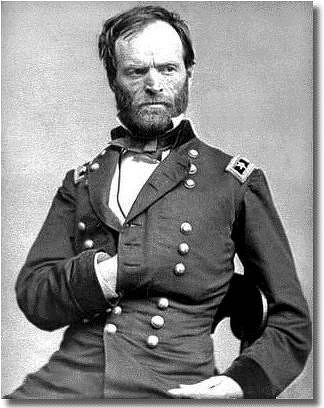
I have also been thinking about Union General William Tecumseh Sherman because I recently taught a lesson about his ‘March to the Sea’ during the Civil War. The essential question of the lesson was whether or not it is justifiable to make war on civilians and infrastructure, which Sherman did to great effect. As I write this, I realize that I am overdue in reading one of the biographies about Sherman, because it is clear to me that he is a fascinating character. A fact that I love about him is the willingness he had to do what it took to defeat the traitors during the American Civil War. That said, he was generally conservative, a racist, and was motivated more by keeping the Union together than abolition.
What might these two very different people have in common? The connection that comes to mind has to do with systems. Sherman had his soldiers attack the railroads (leading to ‘Sherman’s Neckties’) and farms (leading to ‘Sherman’s Sentinels’) as they marched through the South. He also didn’t feed his soldiers and instead had them ‘forage,’ which led them to steal from the people of Georgia as they made their way to the coast from Atlanta (which was left in flames). By doing this, Sherman attacked the system that sustained the Confederacy.
I see Reich as someone who thinks a lot about the reality of the economic system we live in. Rather than wallowing in theory, in his book Reich often explains the mechanisms and decisions that many people in power make that impact our society, for better and for worse.
I’m left wondering, what can one do to improve the corrupt and immoral systems we are a part of? Simple, every day choices made by enough people hopefully preclude the need for the type of choices Sherman had to make.