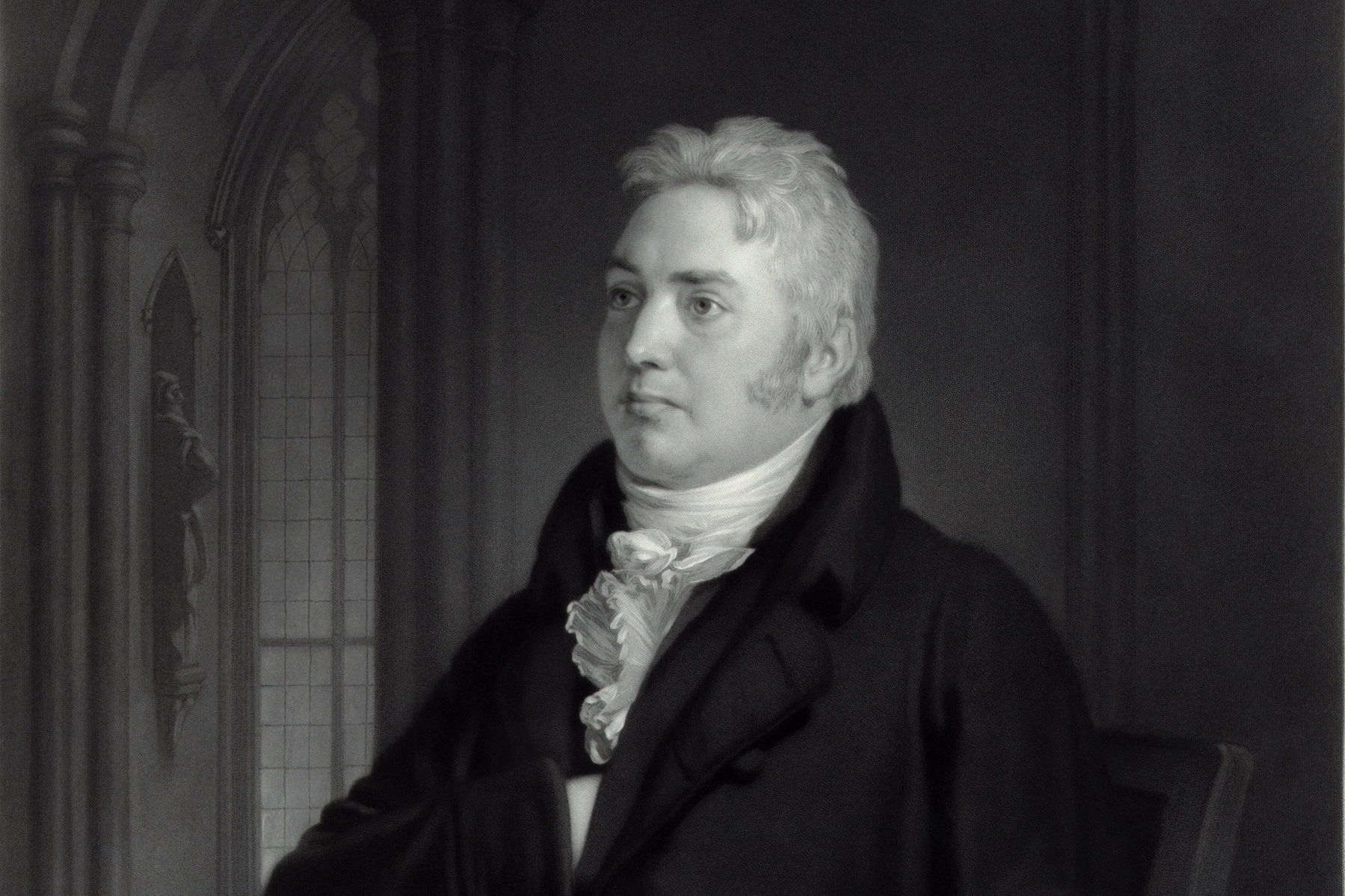
Samuel Taylor Coleridge: Poet, Addict and Underachiever?
I first encountered Samuel Taylor Coleridge the way many fellow Gen Xers did, through a speaker cabinet. Iron Maiden’s Rime of the Ancient Mariner, from their amazing 1984 album Powerslave, is a thirteen-minute epic based on Coleridge’s poem of the same name. It’s definitely a lot of song. The poem it draws from is a lot of poem; over six hundred lines of albatrosses, cursed sailors, and supernatural dread. Indeed, I remember making my Dad listen to it with me, thinking he’d be more likely to enjoy it since it was based on a Coleridge poem. At the time, I was more focused on Steve Harris’s bass lines than on British Romantic poetry, but Coleridge’s name lodged somewhere in the back of my brain.
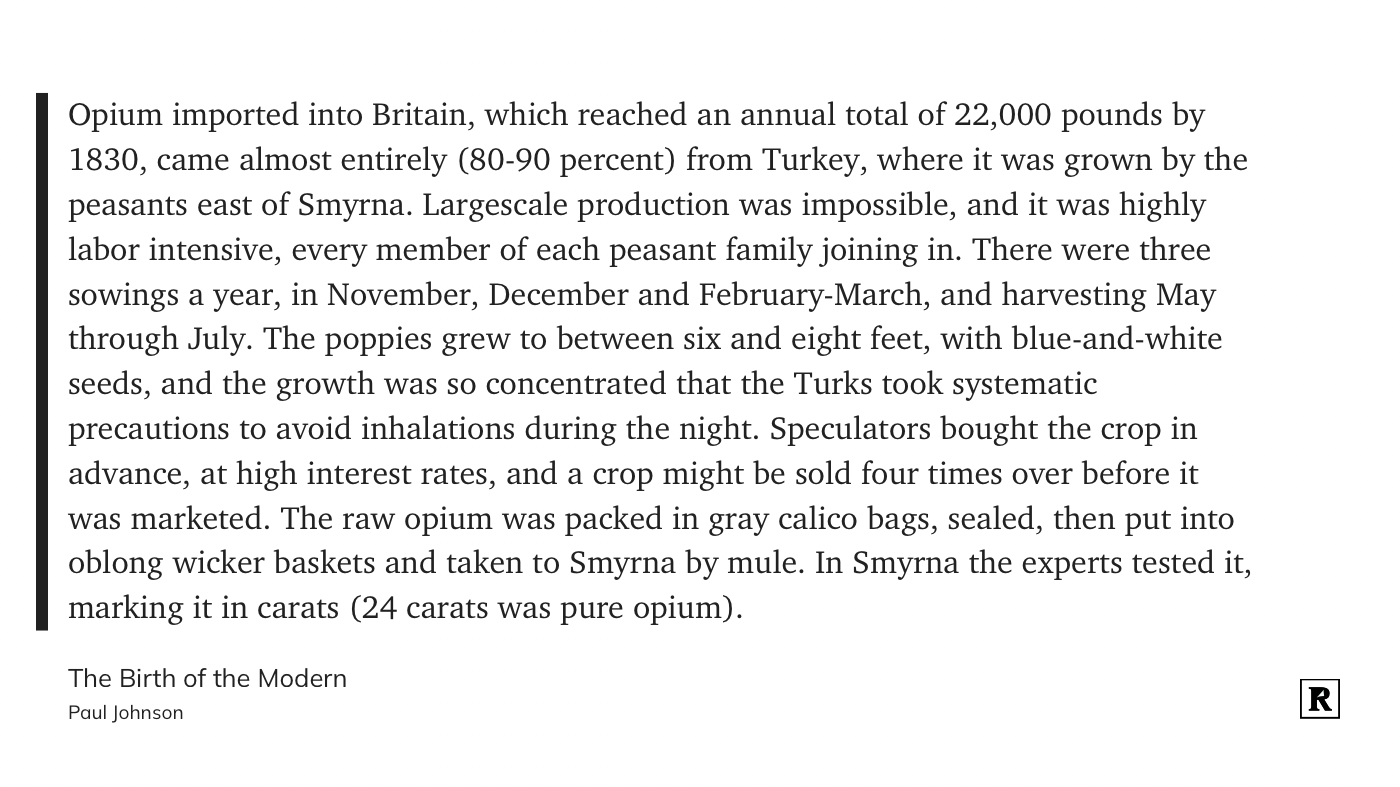
He’s come back around to me recently via Paul Johnson’s The Birth of the Modern, which I continue to happily work through. Johnson covers in great detail the market for opium in Britain in the first decades of the 19th century (see the quote below). Never one to pull punches I’m discovering, Johnson also sketches a rather unflattering portrait of Coleridge. Indeed, his opium addiction is front and center. Apparently Coleridge had developed a serious dependency on laudanum, which in those days was widely available as a tincture. Ostensibly Coleridge used the drug for pain relief, but the habit consumed him. Johnson paints a picture of a man of staggering intellectual gifts who was nonetheless chronically unable to finish what he started. The unfinished poem Kubla Khan is perhaps the most famous example. It is a fragment of fifty-four lines that Coleridge claimed to have composed in an opium-induced dream, only to be interrupted by “a person from Porlock” before he could complete it.
What strikes me about Coleridge is the gap between his potential and his output. By most accounts, he was one of the most brilliant minds of his era — a gifted poet, philosopher, and literary critic. His conversations were legendary. His follow-through, considerably less so. The opium didn’t help. Neither, apparently, did the chaos of his personal life.
History is full of people undone by the distance between what they could have been and what they managed to pull off. F. Scott Fitzgerald, filmmaker Orson Welles, and original Pink Floyd frontman Syd Barret also come to mind in this regard. Coleridge is a particularly affecting case. Water, water everywhere — and yet.