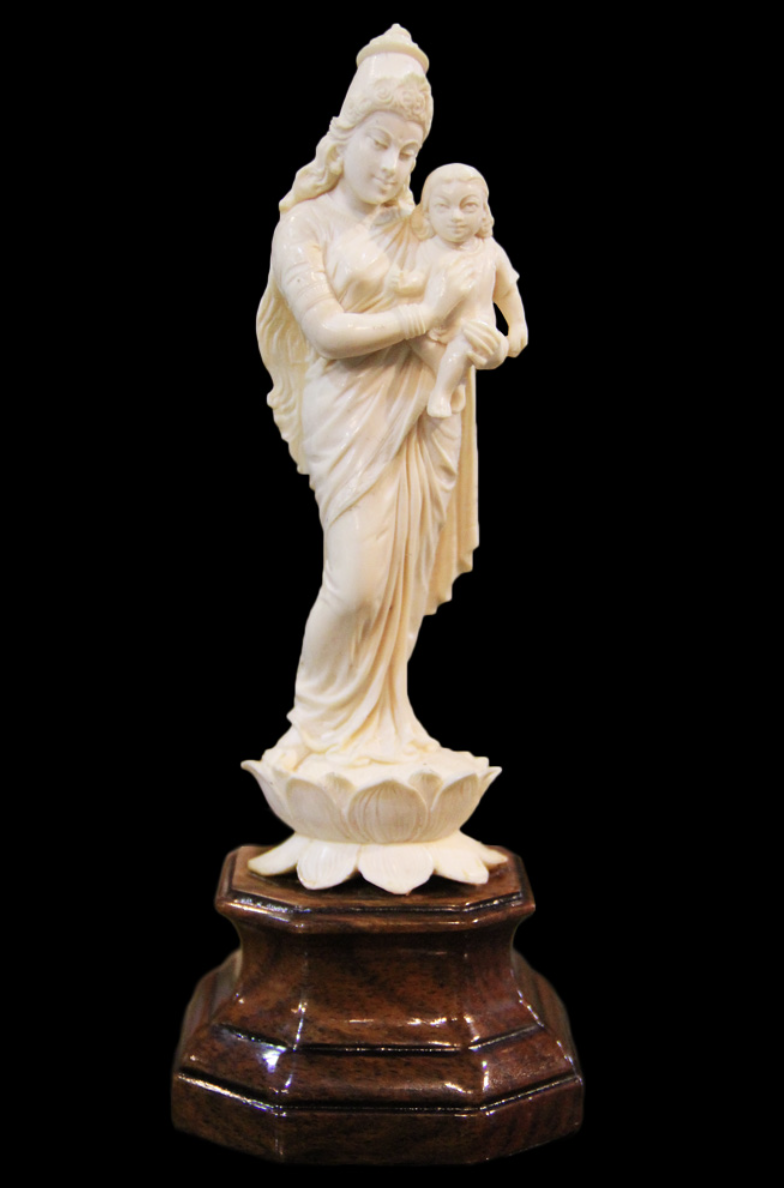
The Possible Connection Between Bodhisattva Guanyin and the Nestorian Christians
I’ve been working my way through a Great Courses class on the Middle Ages, and it sent me down a bit of a rabbit hole I wasn’t expecting: the feminization of Guanyin, the beloved Buddhist “Goddess of Mercy.” As someone who has had Avalokiteśvara on our family altar for twenty years, I found this story interesting.
Guanyin is famously female. But here’s the thing: Guanyin started out as a dude. The original figure — Avalokiteśvara in Sanskrit — was a male bodhisattva, essentially a handsome Indian prince of compassion. Early Chinese Buddhist art reflects this clearly. Indeed, paintings from the Dunhuang caves dating to the tenth century show the figure with a moustache. The full feminization into the graceful, white-robed goddess we recognize today was largely complete by the Song Dynasty, making it a uniquely Chinese transformation.
So why the change? Mostly internal Chinese forces, including the needs of laywomen for a relatable female figure, Confucian social dynamics, and the gradual indigenization of Buddhism as it took root in China. The folk legend of Miao Shan, a compassionate princess who sacrifices herself for her father, became enormously influential in giving Guanyin a distinctly feminine Chinese biography.
But here’s where it gets really interesting and what specifically stoked my initial curiosity about this. Some scholars argue that the Nestorians — a Christian sect that traveled the Silk Road and established a presence in Tang Dynasty China — may have nudged things along. Their veneration of Mary, and specifically stories of holy women who were pure and compassionate intermediaries, may have influenced how Chinese people imagined a female divine figure. The “child-giving” Guanyin, holding an infant in a pose unmistakably reminiscent of the Madonna and Child, likely reflects later Jesuit influence in the Ming Dynasty, but according to professor teaching the Great Courses class I am learning this from, the Nestorians may have planted some earlier seeds. Crazy!
Apparently this is not totally settled among scholars. Nevertheless, the idea that a modern female Buddhist bodhisattva may have transformed from male to female in part due to a small Christian sect that settled in Asia in the 630s is nuts. This is the sort of story that illustrates why I love learning history.