My Reading & Thoughts
Right and Left
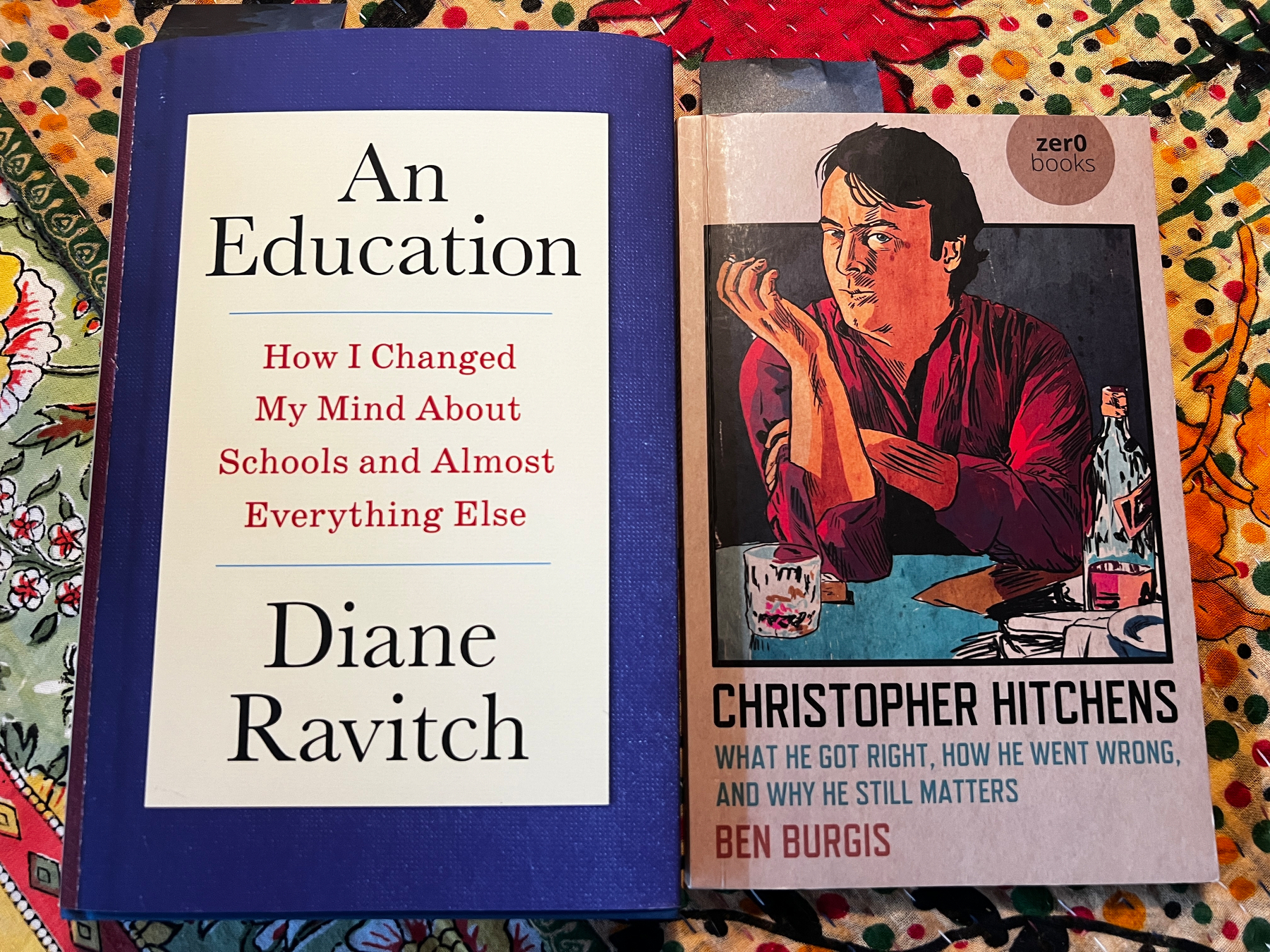
I treated myself today to a long browse at Powell’s downtown. I walked out with two books, neither of which I had on my radar going in. I noticed after I left that the two books had a something in common: They are both books about American intellectuals who at various times in their lives took positions that didn’t align with their initial ideologies. In the case of education expert Diana Ravitch, her views morphed from conservative to liberal over her adulthood. In the case of Hitchens, who is one of my real intellectual heroes, he was a loud supporter of America’s war in Iraq, despite his position leading up to the war as a staunch leftist. He didn’t become a conservative, but he took a controversial position that rankled many on the Left that previously tended to agree with him.
Patriotism trumps Nationalism
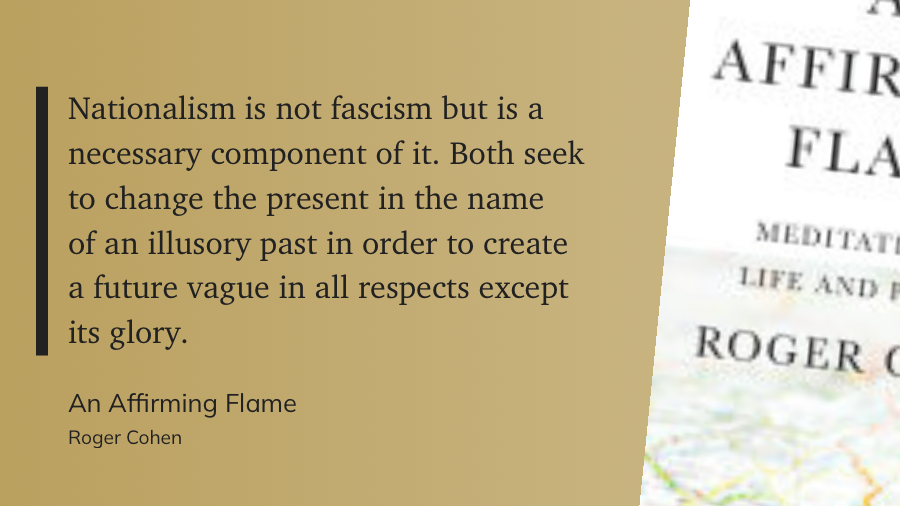
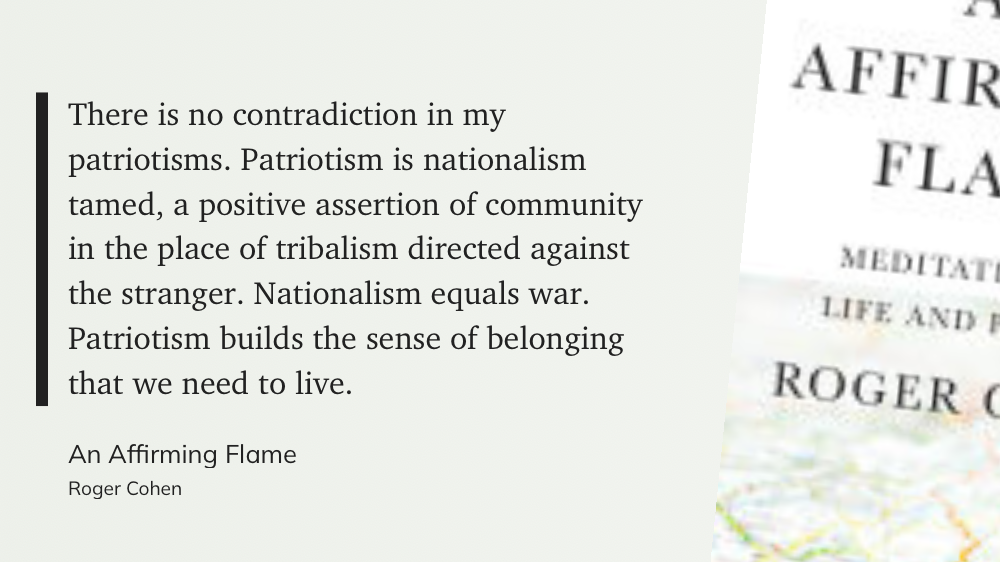
In my APUSH classes today we wrapped up the War of 1812 and began a lesson on the surge of nationalism that arose in the young United States in the wake of the war. To help differentiate nationalism from patriotism, I shared the quotes below from Roger Cohen’s excellent, thought-provoking book An Affirming Flame and encouraged students to discuss them.
My students got Cohen’s points immediately, and I think it is safe to say they agree with Albert Einstein that nationalism is an ‘infantile disease’ that leads to war and is primitive and unbecoming of grown ups in this day and age. Many of us can see that now. However, nations as political constructs are not all that old and despite the fact that in the early 1800s the Napoleonic Wars were raging in Europe, the horrors of the two world wars lay ahead of everyone. The nationalism that arose in America during and after the Era of Good Feelings had many contributing factors (such as the Battle of New Orleans, Clay’s American System, Chief Justice John Marshall’s SCOTUS rulings, and developments in the arts) and in hindsight it is understandable why it arose. However, surely it is time to put the ridiculous ideology to bed and replace it with an openhearted patriotism and general goodwill towards others.
Huzzah to the Big, Beautiful City
New York City made history yesterday electing immigrant politician Zohran Mamdani as their new mayor. It got me thinking about New York, which is a city I love and have been fortunate to visit many times (and will soon be visiting again). Then this morning, the quote below appeared in my daily Readwise email. The quote is from The Weirdest People in the World by professor Joseph Henrich. The quote notes the fact that big, beautiful, diverse cities like New York are more innovative than the sum of their parts. I think many of us intuit this, but in the book Henrich explains the research and the logic. However, innovation isn’t the reason I love places like New York, but it is adjacent to what I love–the vibrancy, the opportunity for serendipity, the randomness, the deep layers of culture, and the variety of experiences available.
These admirable and enjoyable elements of modern urban life contrast vividly in my mind with what I see when I drive through rural America. I’m always shocked by how depressed and poor rural America feels. Small town America just gives off defeated vibes to me. I don’t mean to insult people who live in rural places. I’m only expressing my reaction when passing through and I am certainly not condemning or criticizing people who prefer to live in rural areas. To each his own.
Nevertheless, the point Henrich makes with this quote, and in his book generally, is that cities drive innovation and progress. As a fan of diverse, electric places like New York City, I’m not surprised.


More Friends, More Division?
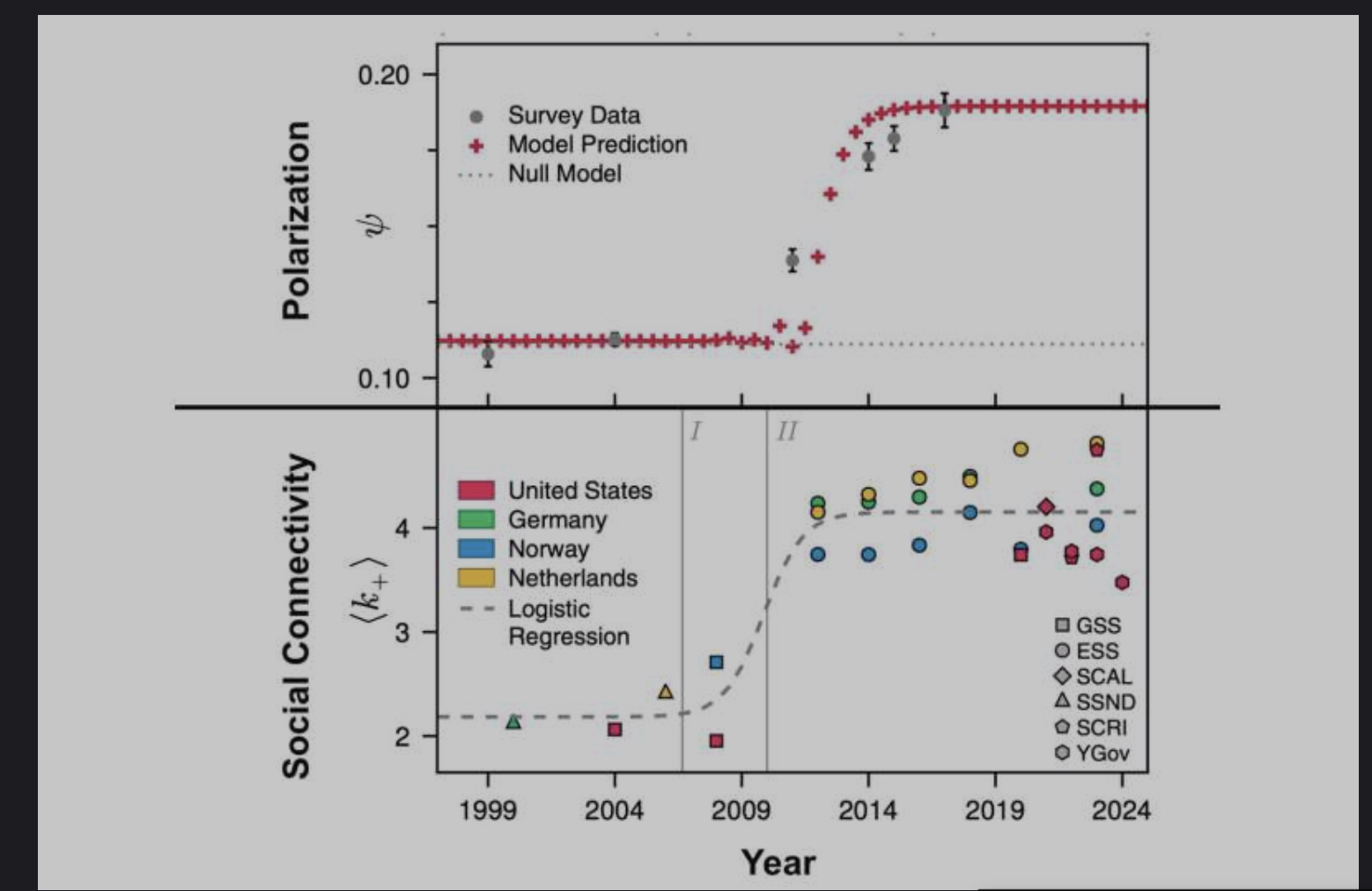
This research makes a few points that are interesting, relevant, yet slightly counterintuitive. According to this article, by Complexity Science Hub Vienna, the number of close friends people have has increased over the past fifteen years (starting between 2008 and 2010). This coincides with the rise of smart phones and social media. However, political polarization has also increased. According to the article, those consistently expressing liberal views rose from 14% to 31%, while those holding conservative views increased from 6% to 16%. The researchers explain that since most people have more close friends, they are more likely to cut ties with one who has different political beliefs then they do. That means more of us have friend groups that see the world they way we do politically. In other words, there are less ‘bridge friends’ who help expose us to different viewpoints. The end result is less dialogue and more breakdown of our democracy, both of which are becoming enormously dangerous at present.
Another interesting angle has to do with Dunbar’s number, which suggests we can only maintain about 150 meaningful relationships, with roughly 5 close friends in our innermost circle. This research shows we went from 2 close friends to 4-5 around 2008-2010—so we’re actually approaching the upper limit of what Dunbar predicted for our intimate circle.
Thus, it can be said we are not exceeding our cognitive capacity for friendships; we’re just filling it differently. Social media didn’t give us superhuman social abilities. Rather, it made it easier to maintain more connections within our natural limits. But here’s the problem: when you’re at capacity with like-minded friends who are easy to maintain online, there’s no room (or motivation) for the harder work of bridging divides with people who think differently.
In other words, Dunbar’s Law explains why the doubling of close friends leads to polarization: we’ve hit our cognitive ceiling, so we’re now optimizing for similarity and comfort rather than diversity. Our social “budget” is maxed out on echo chambers.
Some Thoughts from Retired General Stanley McChrystal
General Stanley McChrystal is a fascinating dude. I first learned about him when he was forced to resign by Obama in 2010 because of comments attributed to him and his staff members that were published in Rolling Stone. Leading up to that, I have learned that he was a top rate soldier, which explains why he was in charge of Allied forces in Afghanistan at the start of Obama’s presidency. His military career is undoubtedly honorable and exemplary.
He is also known for the fact that for many years while in the military he only ate one meal a day. Combined with his daily exercise regimen he developed a reputation, even amongst those in the military, as a Spartan.
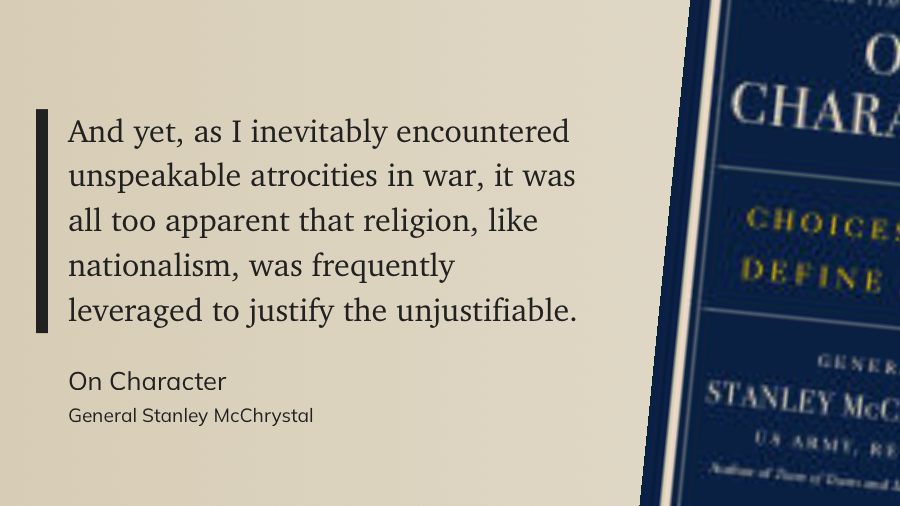
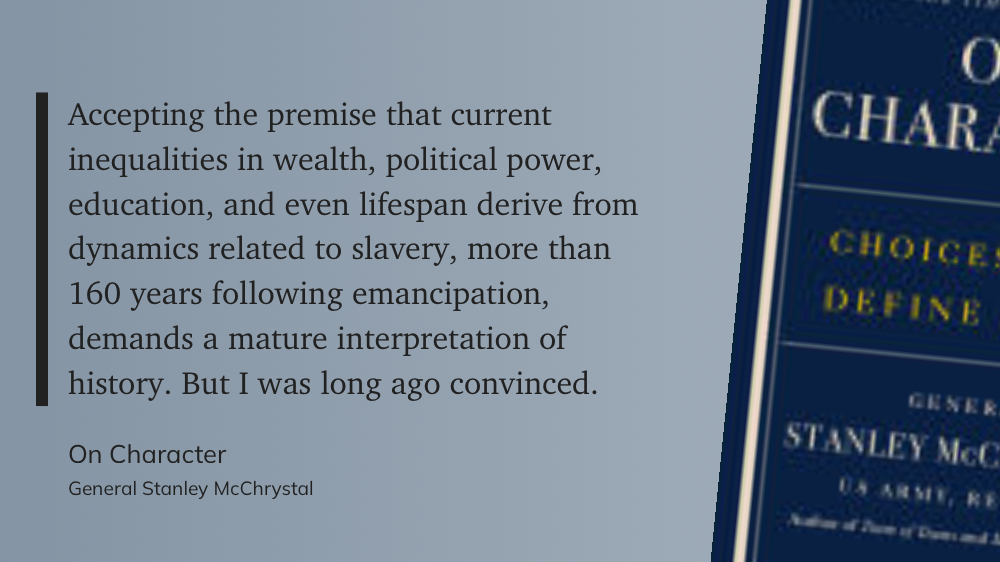
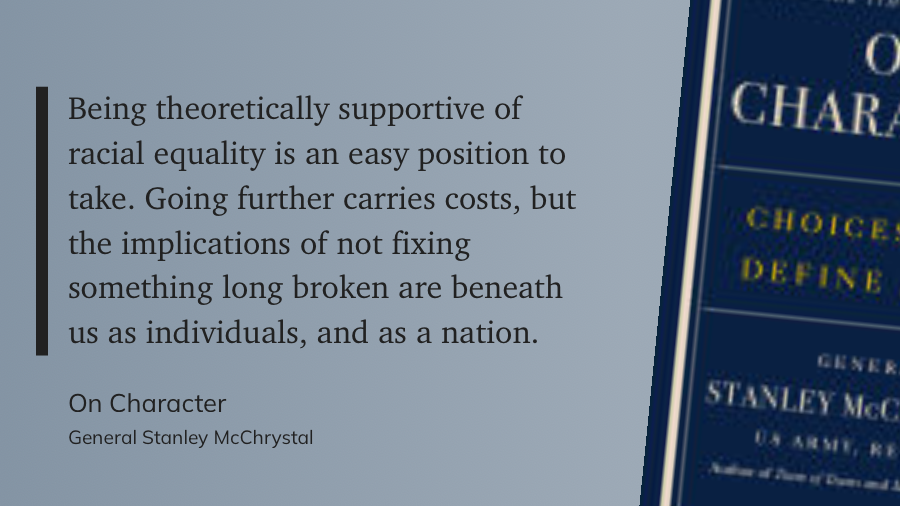
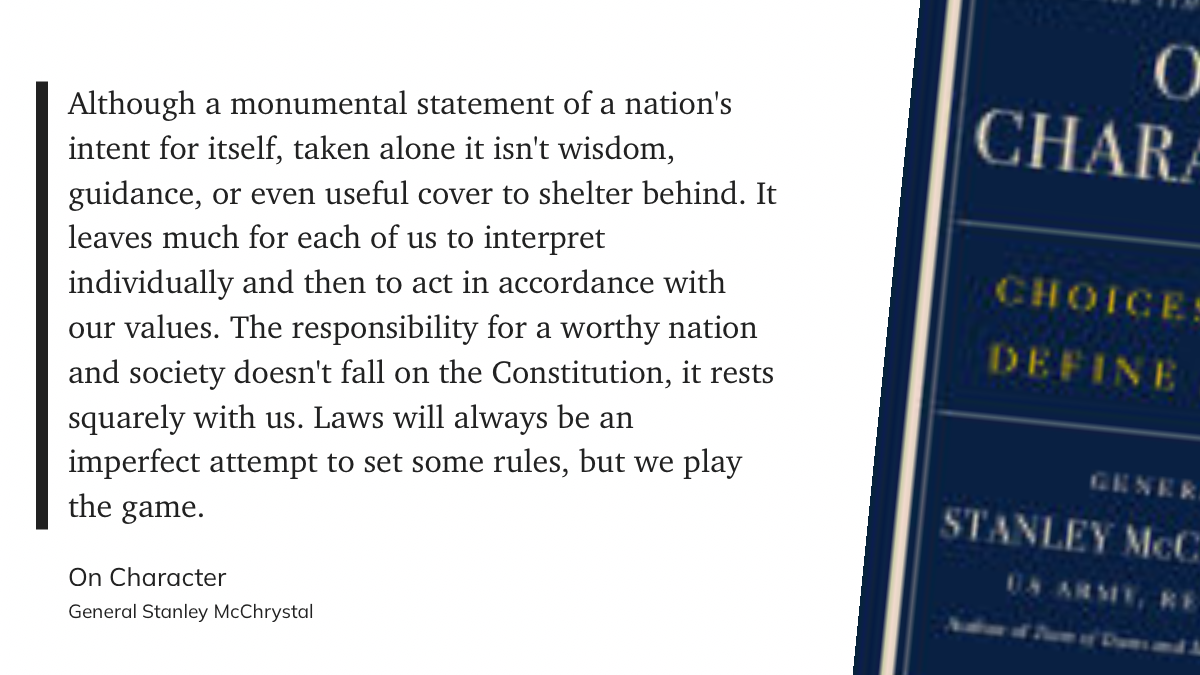
I am currently reading his book On Character and enjoying it very much. McChrystal is clearly a thoughful guy and not easily pigeonholed. I find myself agreeing with most of his takes on the big issues he discusses in the book. Below are some of his thinking, which I found insightful and wise. The quotes are about religion (1), race (2 & 3), and the Constitution (4).
You Know What's Really Scary?
There is a lot of scary realities about America right now. Here are a few such examples.
-
Approximately 42 million people need SNAP benefits to help them get through the month.
-
Roughly 34% of U.S. fourth graders cannot read at a basic level, and gaps between low-income and high-income students are widening (National Assessment of Educational Progress, 2023).
-
The richest 10% of Americans own nearly 70% of all wealth, while the bottom half collectively holds just 2.6% (Federal Reserve), 2023). That’s the widest gap since the Great Depression.
-
The U.S. has experienced over 600 mass shootings each year since 2020, averaging almost two per day (Gun Violence Archive, 2024). Firearms are now the leading cause of death for children in America.
-
Nearly one in three teens report poor mental health most of the time, and suicide is now the second leading cause of death for people ages 10–24 (CDC, 2023)
Current Reading Stack
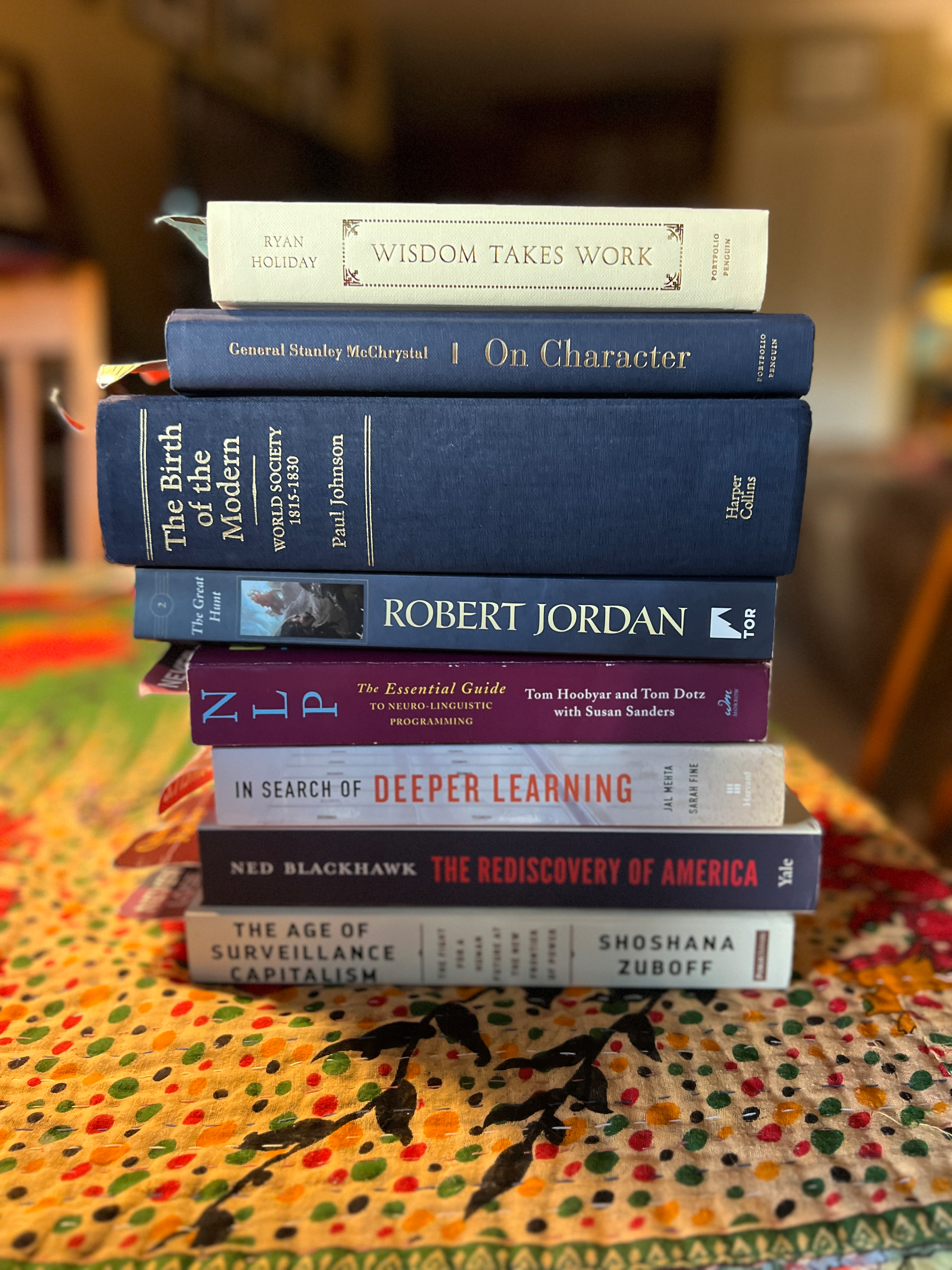
Here is my current reading stack. Most recently started books towards the top, slogs at the bottom. I finished five books this month, all of which I enjoyed. However, a few of my current reads are languishing. For instance, I don’t think I picked up Zuboff’s book more than once this month. I am also not digging into the textbook I started at the end of the summer (not pictured here). This is pretty typical for me though. I dip into four or five books every day and two or three are read every day and allow me to make progress much faster. The Birth of the Modern is a doorstopper and has been sitting on my bookshelf since the 90s, when I got the book off the remainder table at Tower Books. So far I am really enjoying it and I suspect I’ll be done with it early in the new year. The Stanley McChrystal and Ryan Holiday books go well together and I am enjoying them both. However, The Rediscovery of America is a slog and is not as good as I’d hoped. Unlike the Zuboff book though, I am committed to finishing it.
The Sky Does Amazing Things
I’ve had the same commute for about 28 years. It takes me across Portland, from the SW part of town to NE 122nd, just off I-84. The best thing about my drive is coming up over the Marquam Bridge. At the apex of the bridge, when you are heading north on I-5, Mt. Hood is off at about 1 o’clock to the east. Depending on the time of year, I get to pass over the top of the bridge with the sun just coming up. The last couple days have provided some wonderful views of Hood silhouetted against a splash of persimmon, peach, and amber stretched along the horizon. Over the course of my career, I’d say I’ve witnessed about a hundred wonderful moments like these. It happens just rarely enough to feel special, but often enough so that I look forward to the next one. When this commute is no more, I’ll have to seek out these moments elsewhere.

Sunday Favorites
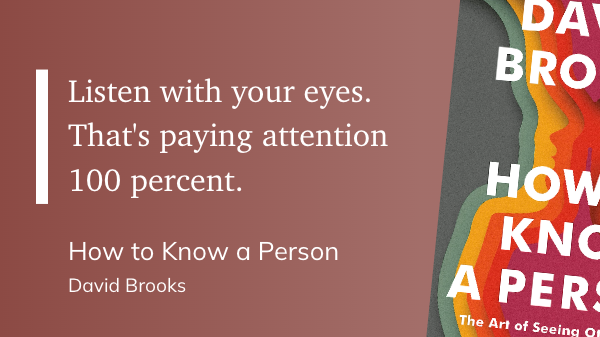
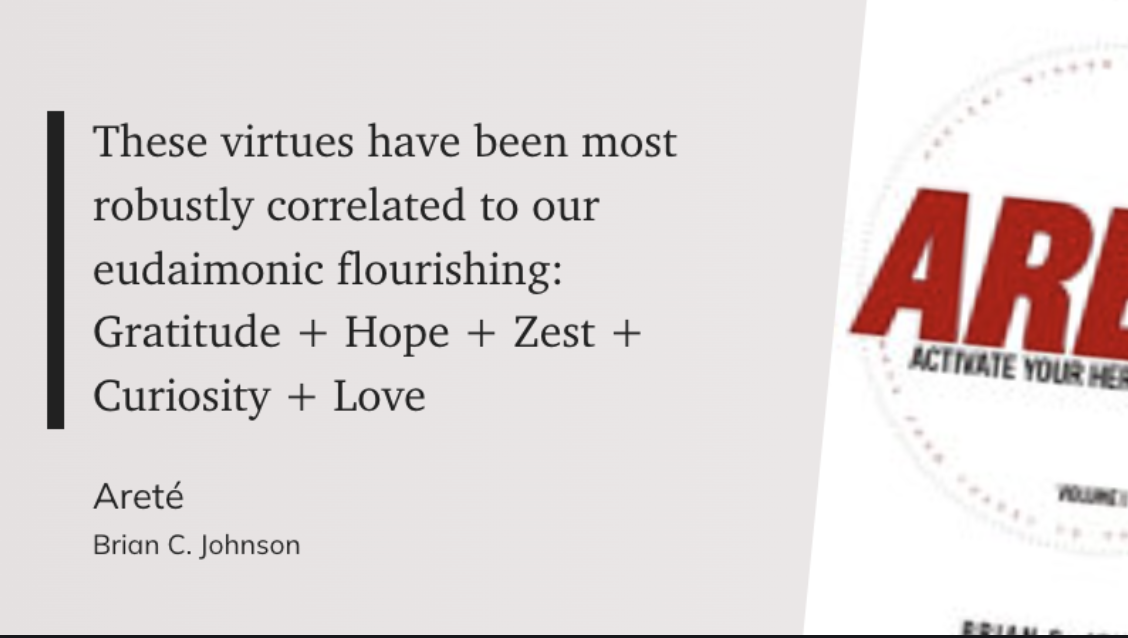
I get emails from Readwise every morning that share quotes I’ve saved while reading. I’ve written about Readwise before and it remains one of my favorite tech subscriptions. I can ‘favorite’ quotes and then on Sundays I get those special quotes sent to me, so I end up seeing them more frequently. Below are a few of my Sunday Favorites, which I was reminded of today.


Sacred Objects
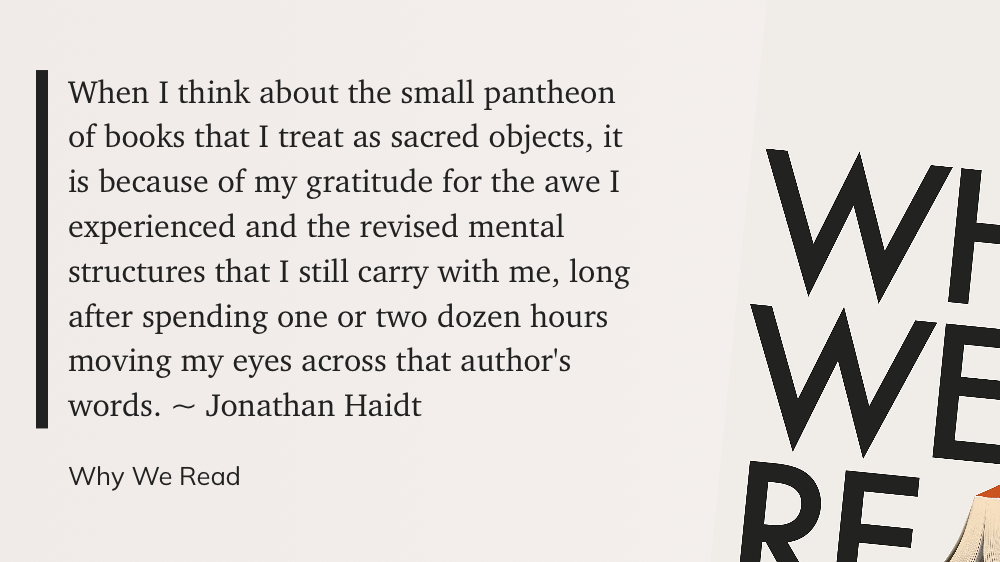
This quote by psychologist Jonathan Haidt expresses an argument for reading that I agree with. If I’ve picked my reads well there are many ideas that give me pause and help me understand both the world and my own views. Every once in a while, books themselves–in their entirety–permanently rearrange the mental structures in my mind. For me, those powerful books include: 1. The Lord of the Rings 2. Eknath Easwaren’s The Dhammapada 3. The Hays translation of Meditations by Marcus Aurelius 4. The Social Construction of Reality by Peter Berger. Ken Wilber’s books, especially A Brief History of Everything, The Marriage of Sense and Soul, One Taste, and Up From Eden were also seminal and profound.
Four New Books
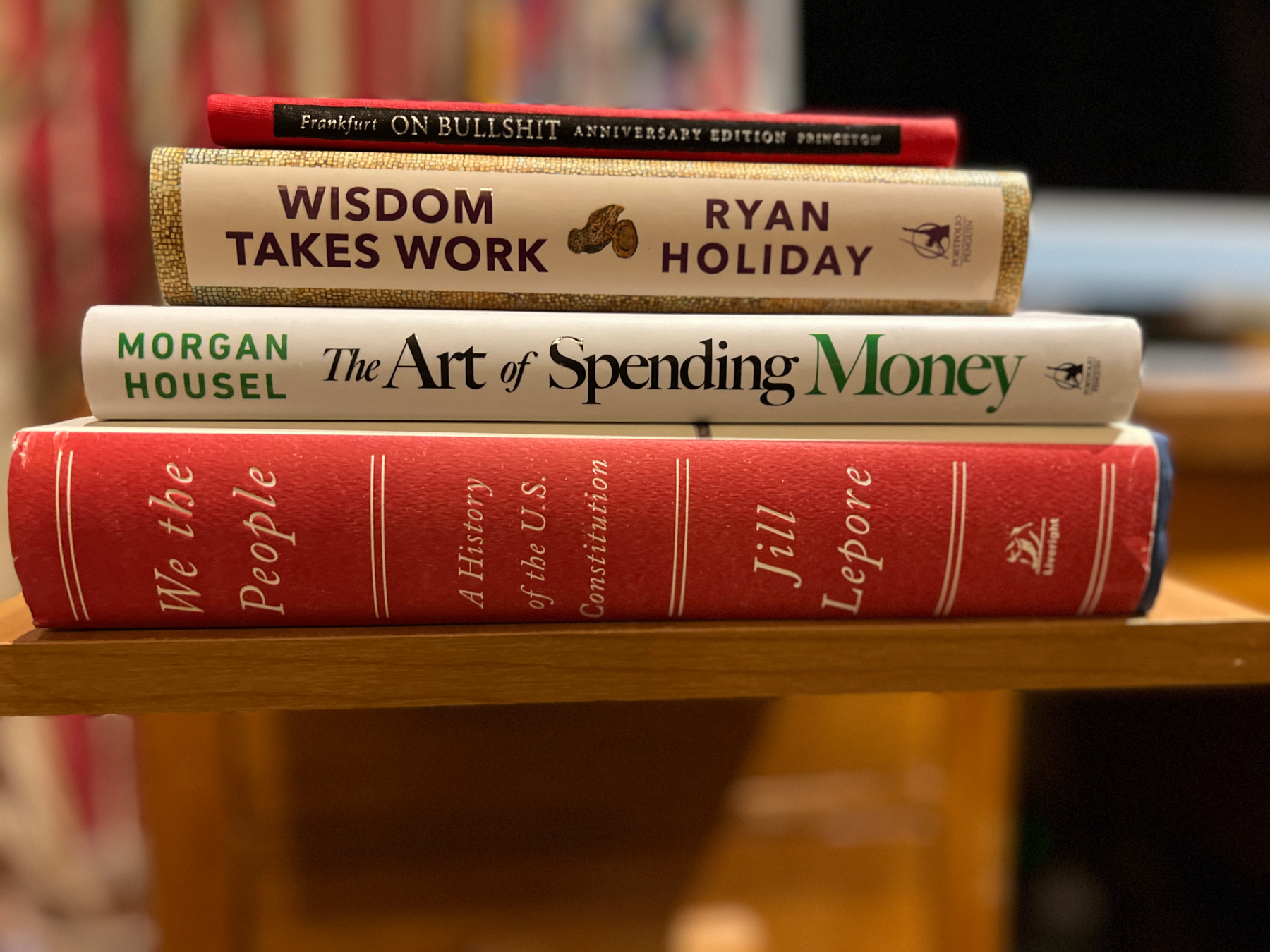
The month is coming to an end and I treated myself again to some new books to add to my To Be Read collection. The Jill LePore book is very new and since I teach AP Gov it seemed like a must read. Her book These Truths is one of the best American history books I have ever read and I recommend it highly. On Bullshit always capatured my attention when browsing, but I never read it. This is the 20th anniversary edition so I suppose it is time to give it a go. At present, one’s bullshit detector needs to be a precise mental machine. The Ryan Holiday book is the last in his book series on the Stoic Virtues. Cannot wait to read it. Holiday’s writing is taut, packed with great stories, and full of wisdom. Morgan Housel’s book is also of very recent vintage. He does a great job of explaining the timeless truths about money and human psychology.
JFK was Overrated
President Kennedy often gets a lot of props from the American public. There are elements of his presidency that I admire, most notably the fact that his rhetoric was often inspirational. However, I believe he is one of the most overrated presidents in modern history. The obvious arguments have to do with his escalation of our involvement in Vietnam and his slowness to support civil rights. In recent years I have come across other examples that call into question his leadership. Some of these have to do with his behavior towards women (see p. 109 of Brian Lamb’s book The Presidents (where today’s quote is from). Another example is the one mentioned below. During the attempt by the Kennedy team to pass civil rights legislation, when they had LBJ at their disposal–the ‘Master of the Senate'-they preferred not to seek his help. Of course, after Kennedy was assassinated, LBJ got both the Civil Rights Act passed in 1964 and the Voting Rights Act passed a year later, proving that Kennedy was foolish in failing to enlist his help.

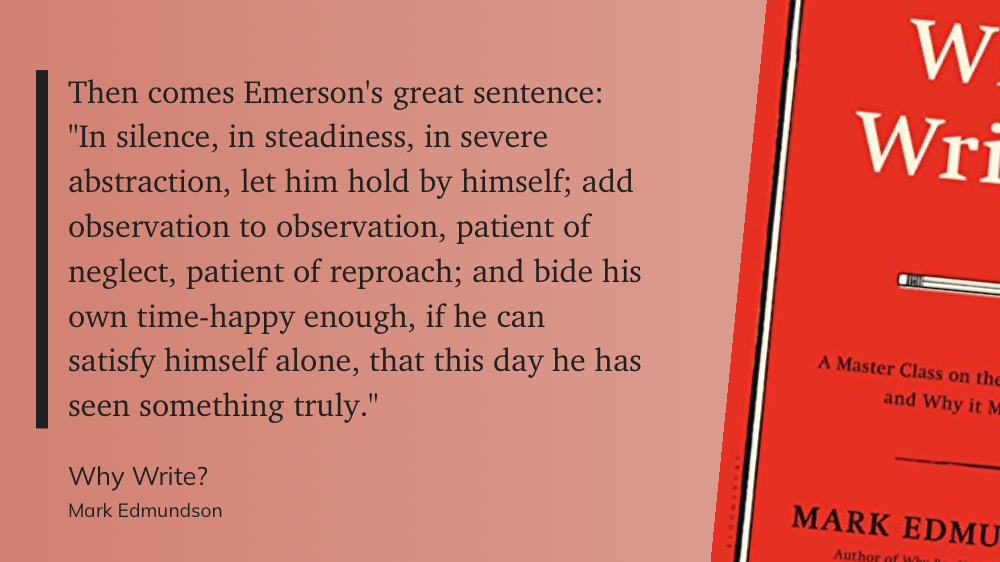
A Great, Idea-Rich Sentence by Ralph Waldo Emerson
I read some Emerson in college, but nothing since. I came across this great sentence reading Mark Edmundson’s book Why Write? I appreciate Emerson’s message that we must tune out the noise to see reality clearly. I also agree that as independent thinkers, we must be willing to earn reproach from others. Our own truth is not a popularity contest. Finally, I agree with the notion that the ultimate reward for seeing clearly is our own satisfaction, not something external such a public recognition. Our time, like Emerson’s, rewards conformity. Thinking independently is challenging, yet worth the struggle.
A Great Reminder from Derek Sivers
I am sharing this not because I have this practice nailed, but because I need to be reminded of it. The little voice in my head is quick to judge, both others and myself. Indeed, it’s like I have a freakin' arrogant know-it-all camped out in my cranium that defaults to criticism and judgement whenever it apprehends something. I suspect this is true for a lot of people. I notice is most when I’m driving. I have gotten better at noticing it, so I’ll take that as a victory. I am hoping that moving forward I get better at taking Derek Sivers’s advice and slow down the automatic reactions in order to give myself both more time to think and more time to react without anger or judgement. Sivers' blog is amazing, btw.

A Reminder from Mr. Thompson
As we get into the latter half of October, that means it is almost time to vote. Most of us don’t have major seats (Governor, House or Senate, for instance) on the ballot. However, these off year elections often have important local issues that we should weigh in on. It is also time to work our voting muscles. In the last presidential election, ‘didn’t vote’ actually beat the two major party candidates. That is abhorrent to me. Even if the stakes seem low, we need to get out there and have our say.

A Great Sentence From Tom Robbins
The late, great Tom Robbins is the author of many great sentences. If you have never read one of his novels, I recommend trying one. His writing is unique, to say the least. This one is from his memoir Tibetan Peach Pie. He is describing his experience with a particular fungi that is found in the wet woods of the Pacific Northwest. Nailed it.

Dandelions
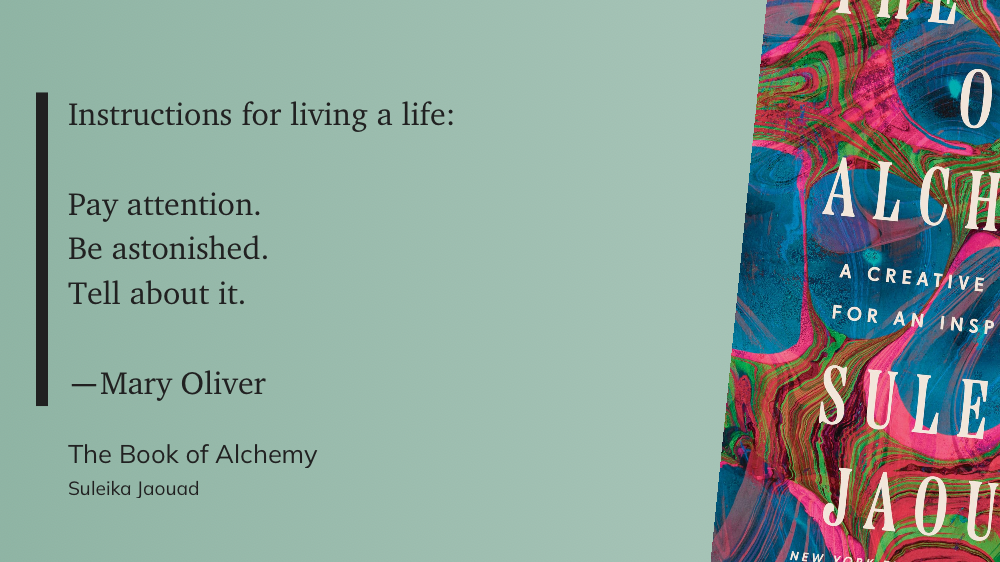
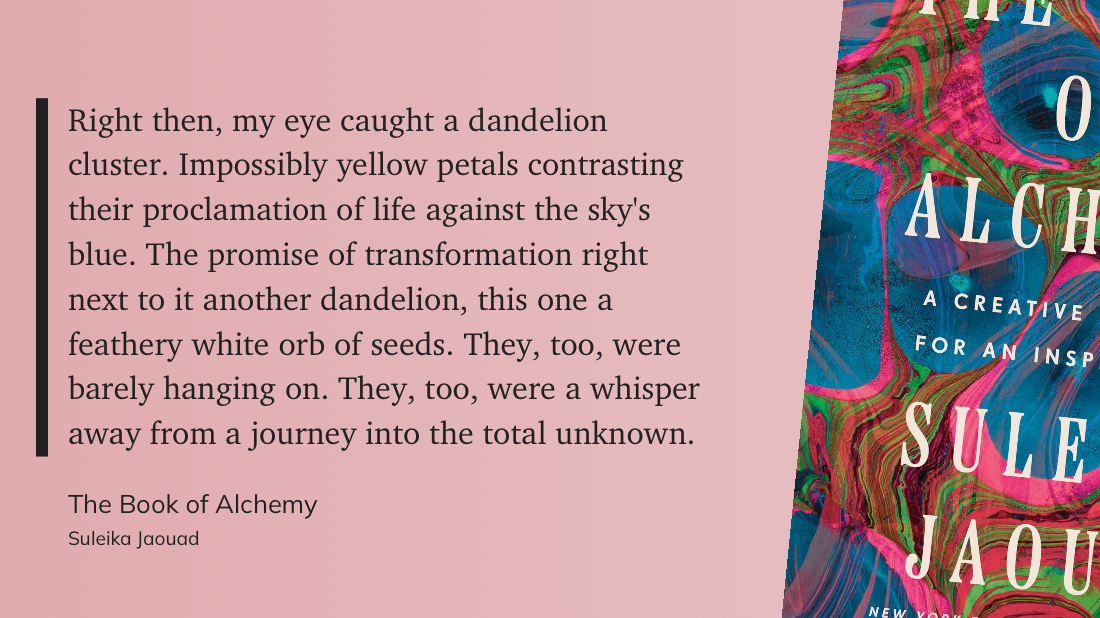
Instead of a simple, beautiful sentence, today I want to share a small beautiful paragraph. This is from a book published this year by Suleika Jaouad, titled The Book of Alchemy. It’s a collection of short pieces in which creative people explore different aspects of the creative process. What struck me about the quote is how it connects an experience we all know — the disintegration of a dandelion cluster — with the inevitable changes we face in our lives. The wind is going to blow — but where will it take our ideas and our dreams? And how will our actions land?
Modern Reminders
I love getting reminders. I need reminders. Productivity guru David Allen famously said, “your brain is for having ideas, not holding them.” I agree 100%. Luckily, I learned a few decades ago that my life ran better when I got things out of my head and onto paper. Back twenty years ago that meant that I still had to open up my planner to see the reminder I had made for myself. Thankfully, life is easier now.
For instance, many people are familiar with and use products such as Apple’s Reminders app to help them offload important details and keep their schedules from falling apart. For whatever reason, that particular option never worked for me, even though I am all in on the Apple ecosystem. It goes to show that we are unique and that what works for several million others, might not work for us.
Appointments and due dates aren’t the only things I want to be reminded of, though. I also want to be reminded of my values, my long term goals, and, as an educator, my philosophy of teaching and learning and what best practices are. Indeed, this is why religious people attend services regularly (or, are supposed to anyway); the spaced repetition helps us remember more deeply what is important. It works for teenagers in high school and it works for adults, too.
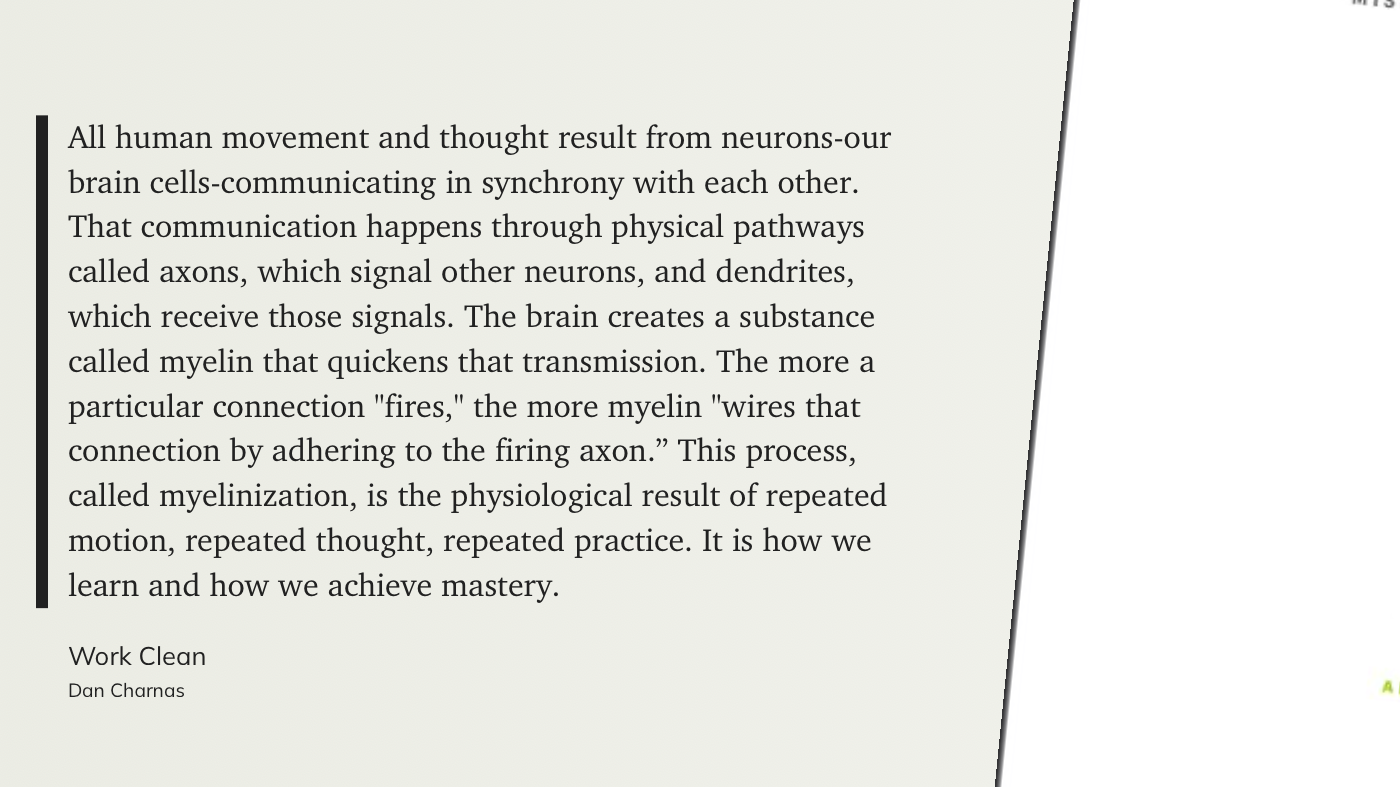
One thing I always thought would work for me would be to have a card deck with important reminders on them. I imagine I could keep them at my desk, or in my car, or in my bag, and every day I could shuffle up the deck and be reminded of a bespoke idea that would be great to review again. Being a nerd, I came up with a list of 60 reminders to help me be true to myself. I also came up with 60 reminders about teaching that I wanted to remind myself about on a regular basis. However, instead of manufacturing two physical card decks, I have discovered I can use the new Daily Pulse email option for ChatGPT Plus subscribers to have Chat go into my two lists in Notion and randomly remind me of two ideas via a morning email. Pretty cool. Now, every morning at 6 I get an email from ChatGPT that is tailored specifically to me and what I want to be reminded about before I start my day. I realize some people are wary of AI, but this sort of use case is exciting to me.
They Can't Scroll Us Away
One of the hardest parts of teaching is covering topics that don’t naturally interest most 16- and 17-year olds. Some folks, mostly those that aren’t actually trying to educate young people, claim that the job of teachers is to make topics ‘interesting.’ This sort of cant grates. The fact is, sometimes young people need to be made aware of realities that—on a Tuesday afternoon in October—they won’t easily engage with. This has always been a dilemma for teachers (portrayed humorously by SNL back in 1992), but it is made even more problematic in the Age of Handheld Distraction. Teens today are used to watching a short video on their smartphones and scrolling past it within seconds if it doesn’t capture their interest. And teachers are not entertainers. Students can’t scroll us away.
The quote below by educator Peps Mccrea resonated with me because it’s true and because it isn’t something teachers hear all that often. If math was intrinsically interesting to 8 year olds, schools wouldn’t be needed. Indeed, algebra is not always a ‘magnet of attention’ for most people, kids or otherwise.
In my case, I recently taught Brutus No. 1, the most famous of the Anti-Federalist arguments against the ratification of the Constitution. It was written in 1788. It comes off as stilted to the modern reader. It is—Hard. To. Read. Of course, the arguments Brutus made about an overpowerful federal government ruled by a strongman is super relevant to teenagers growing up in Portland, Oregon at the moment. That depressing fact of life today helps make the reading relevant. But the point remains: it is not necessarily interesting (as evidenced by the fact that the vast, vast majority of Americans have no idea a) what Brutus’ arguments were and b) who the Anti-federalists were). Indeed, those who do know it most likely learned it in school.
So, the dilemma remains. We have to teach topics that aren’t always going to interest students, that aren’t natural ‘magnets of attention.’ The art of teaching–the perpetual challenge–is figuring out how to make even the dullest topics come alive for as many students as possible.

Get Into What Interests You
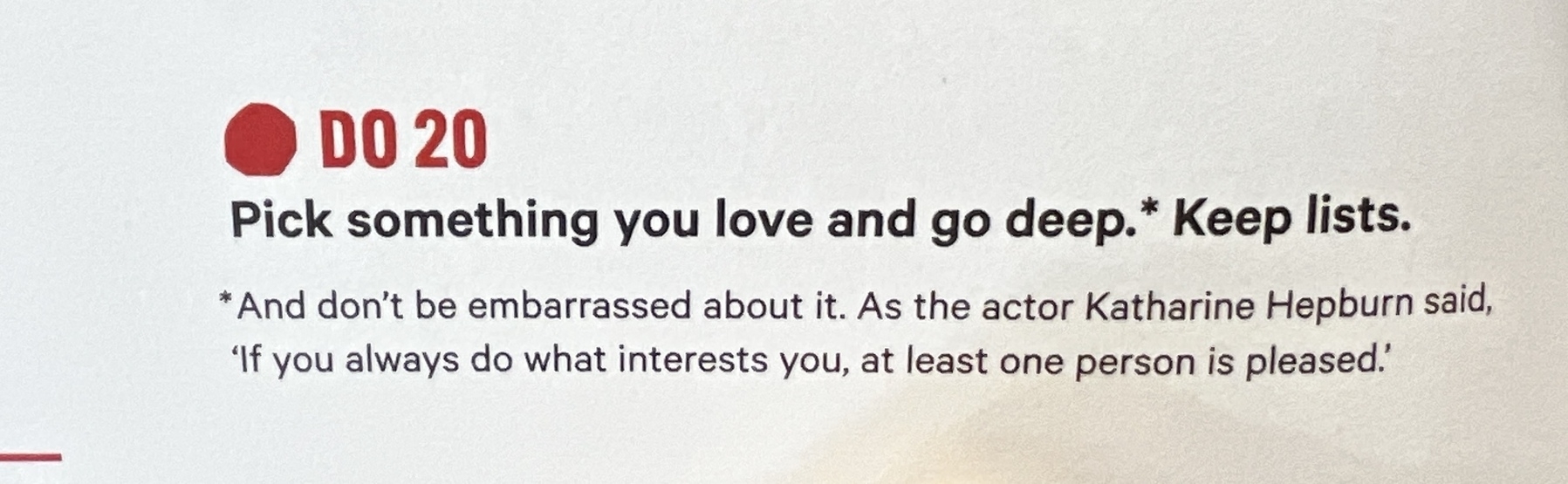
On the way home from work today I had a great chat with one of my oldest and best friends. He was giving me props for blogging, even if ultimately very few people read my posts. I explained I was mostly doing this for myself as a natural outgrowth of my interest in reading and writing. I told him I was enjoying the new habit of trying to post something every day. He shared that he is getting back into Brazilian jujitsu…at 55! He was finding it very rewarding. He also shared his newfound love of Dua Lipa. He knows it is a bit off brand for him, but we both agreed that at this point in our lives we have stopped giving shits about this sort of thing. To paraphrase Mr. Garcia, “we love what we love and we want it that way.” That means he’s got two Dua Lipa concerts to enjoy next week in Seattle. Good for him.
Twenty minutes after our talk I came across the quote below in the excellent book Do/Interesting, which reinforced what we agreed on. Sweet serendipity!