My Reading & Thoughts
Recent Book Haul FTW!
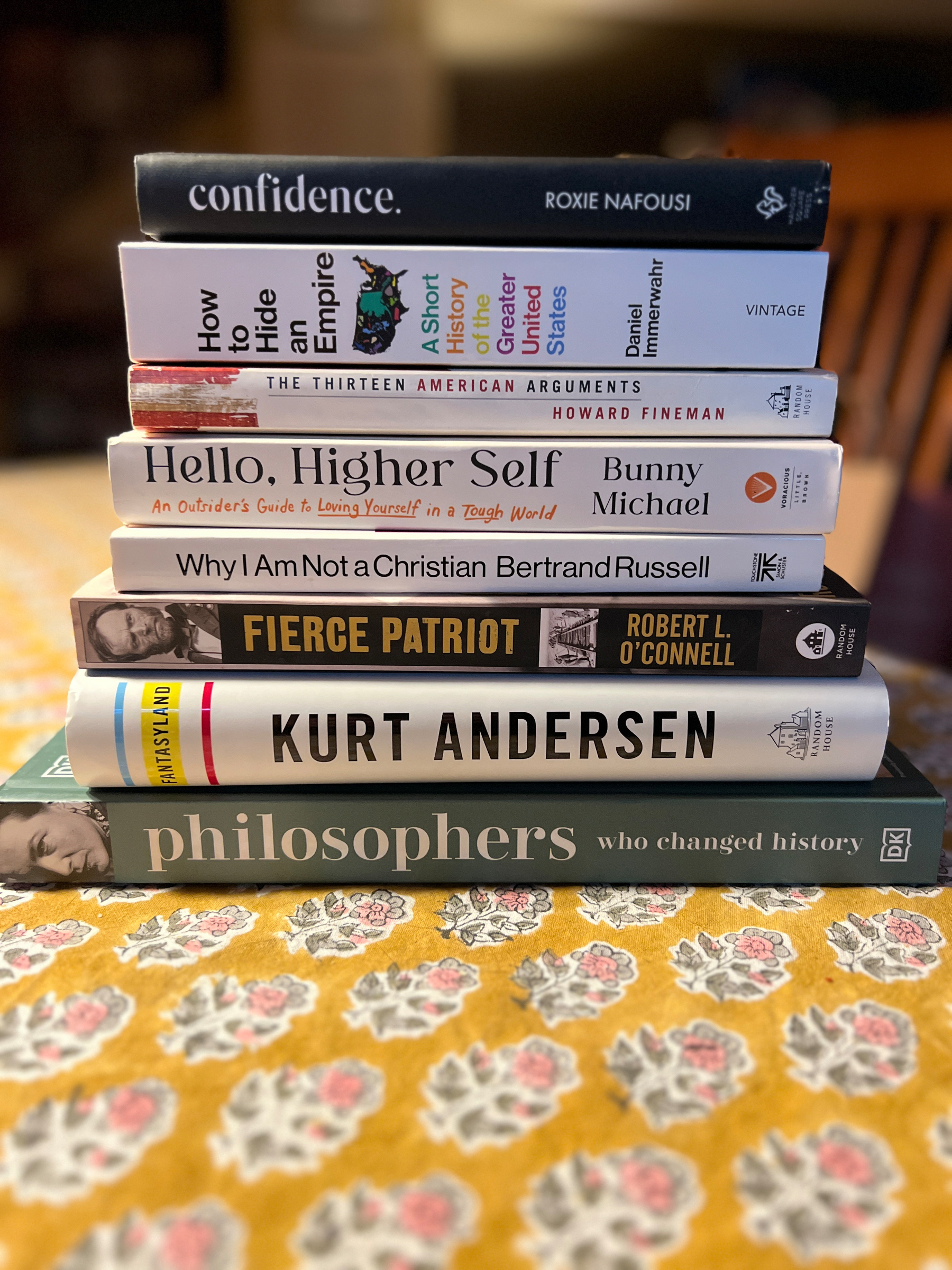
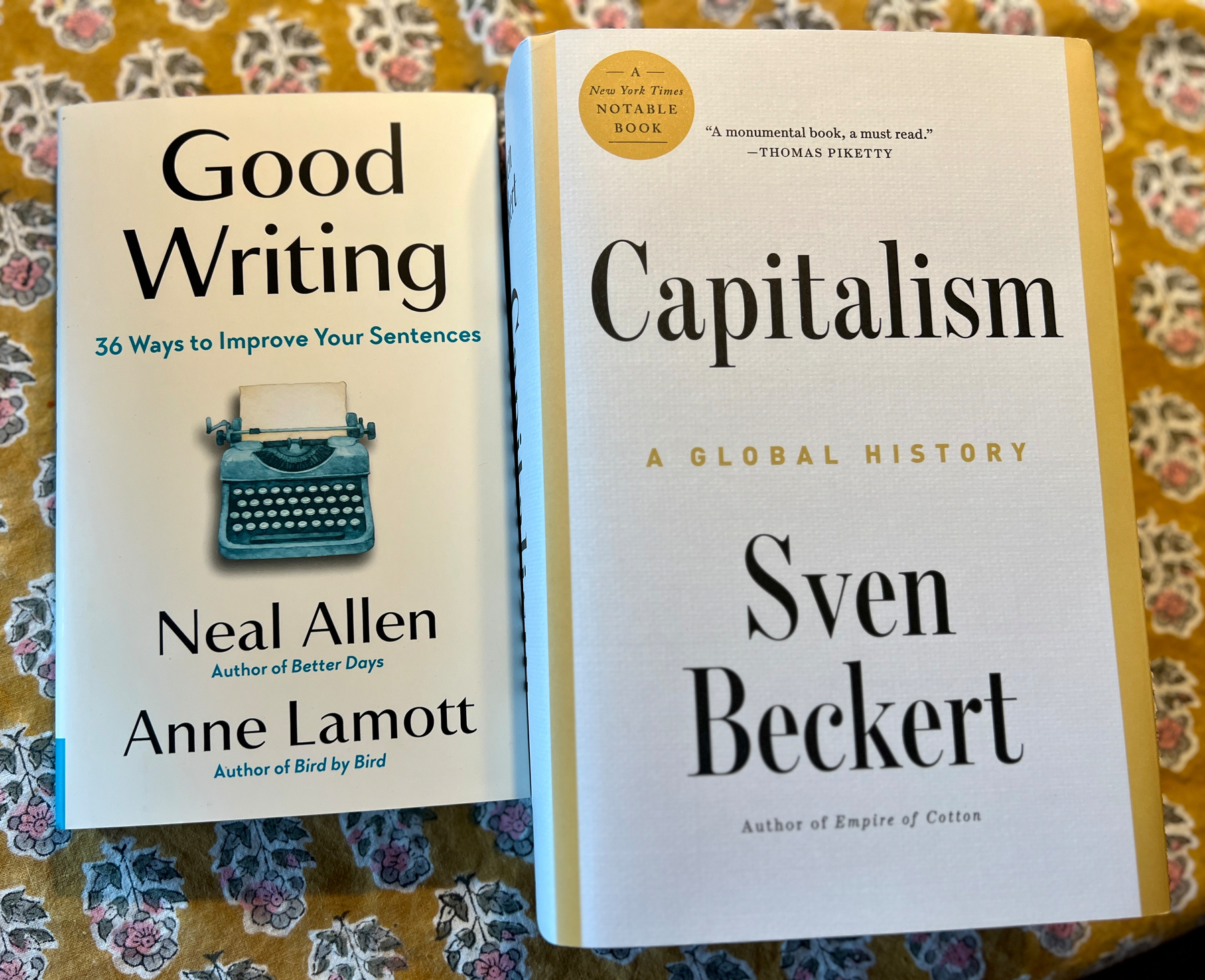
The world is going crazy so I decided to indulge in some book buying. The pile is from a trip to Powell’s, a mecca for Portland book lovers. Six of the eight were used and heavily discounted. The two in the second picture were newer books I got online and are newer releases. All in all, a satisfying haul.
Here is a link to a review of Beckert’s book on capitalism.
Here is a link to a short review of the great Bertrand Russell’s book.
Finally, here is a link to a review of the Sherman biography.
Three Takes on Truth
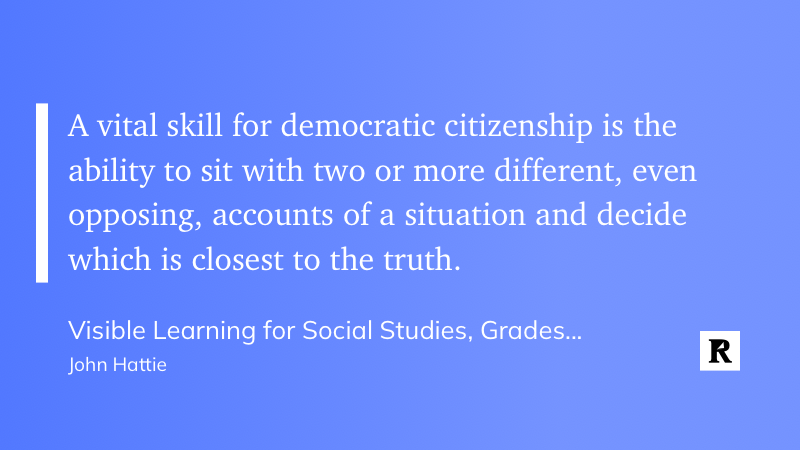
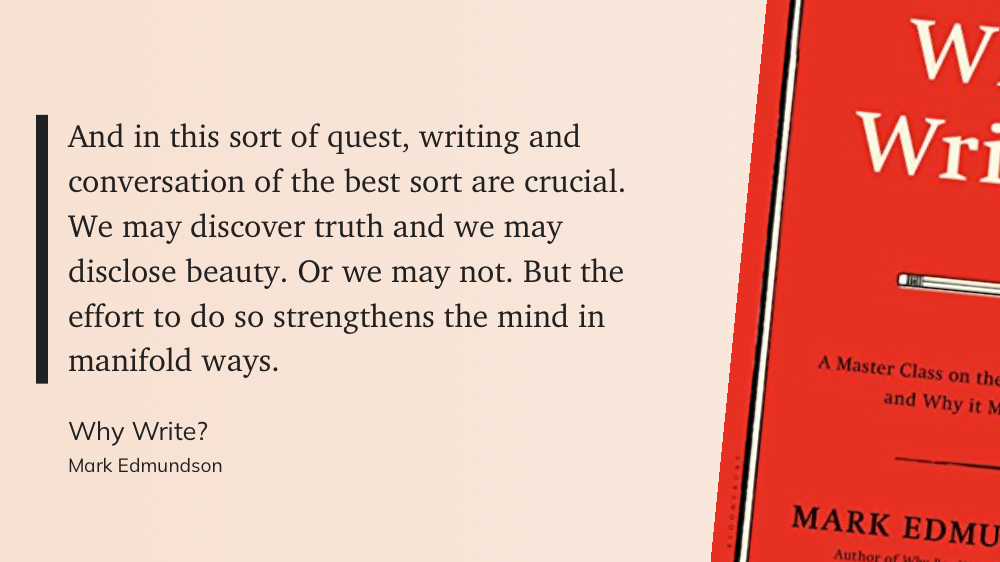
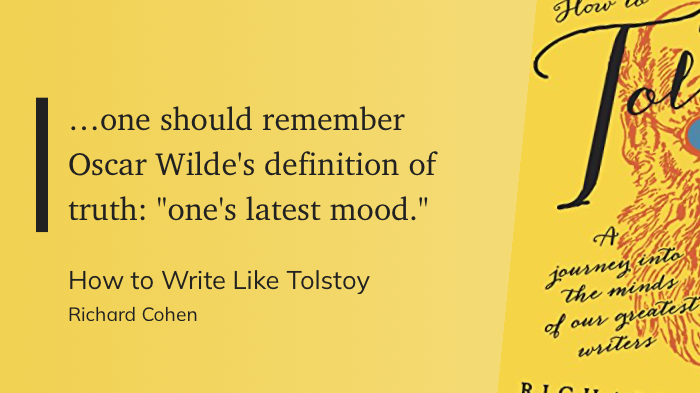
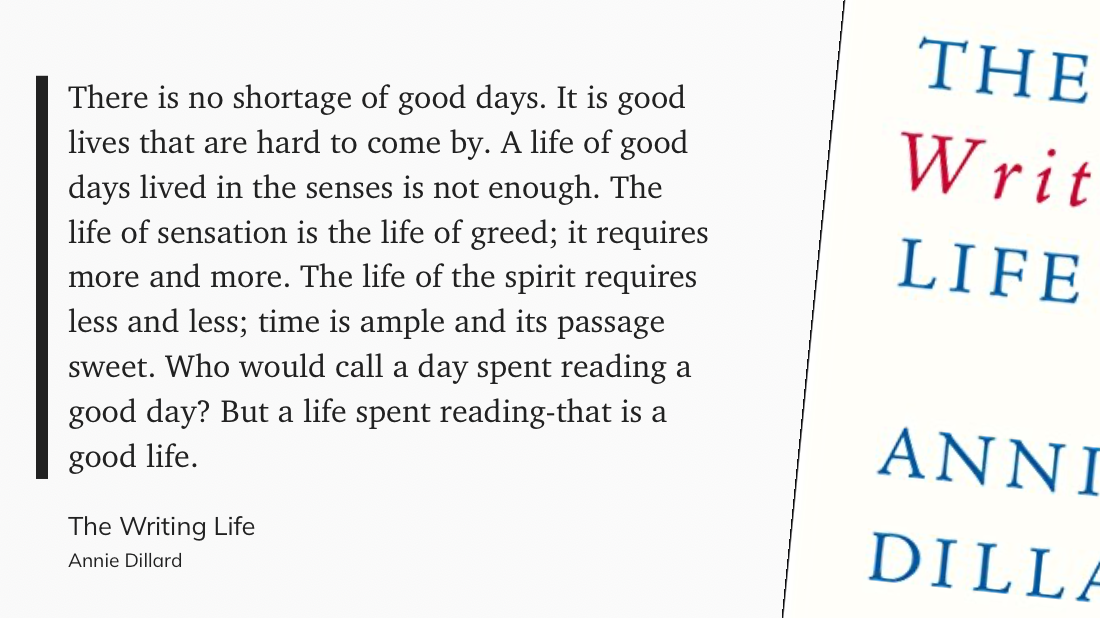
The beauty of collecting quotes and ideas from what I’ve read is being able to see what I have saved that touch on specific subjects. In a time of such blatant lying, I poked around some of the quotes I’ve saved over the years that touch on truth. Below are three.
A Quick Word about Priorities
Last week the faux-king president announced he was going to ask for $1.5 trillion for the military in the next budget cycle. From what I have read, the war in Iran has been costing us roughly $1.5 billion a day. For comparison, Biden’s 2024 budget request for the Pentagon was $850 billion. According to the Education Data Initiative all K-12 public schools spent $981.57 billion in fiscal year (FY) 2024.
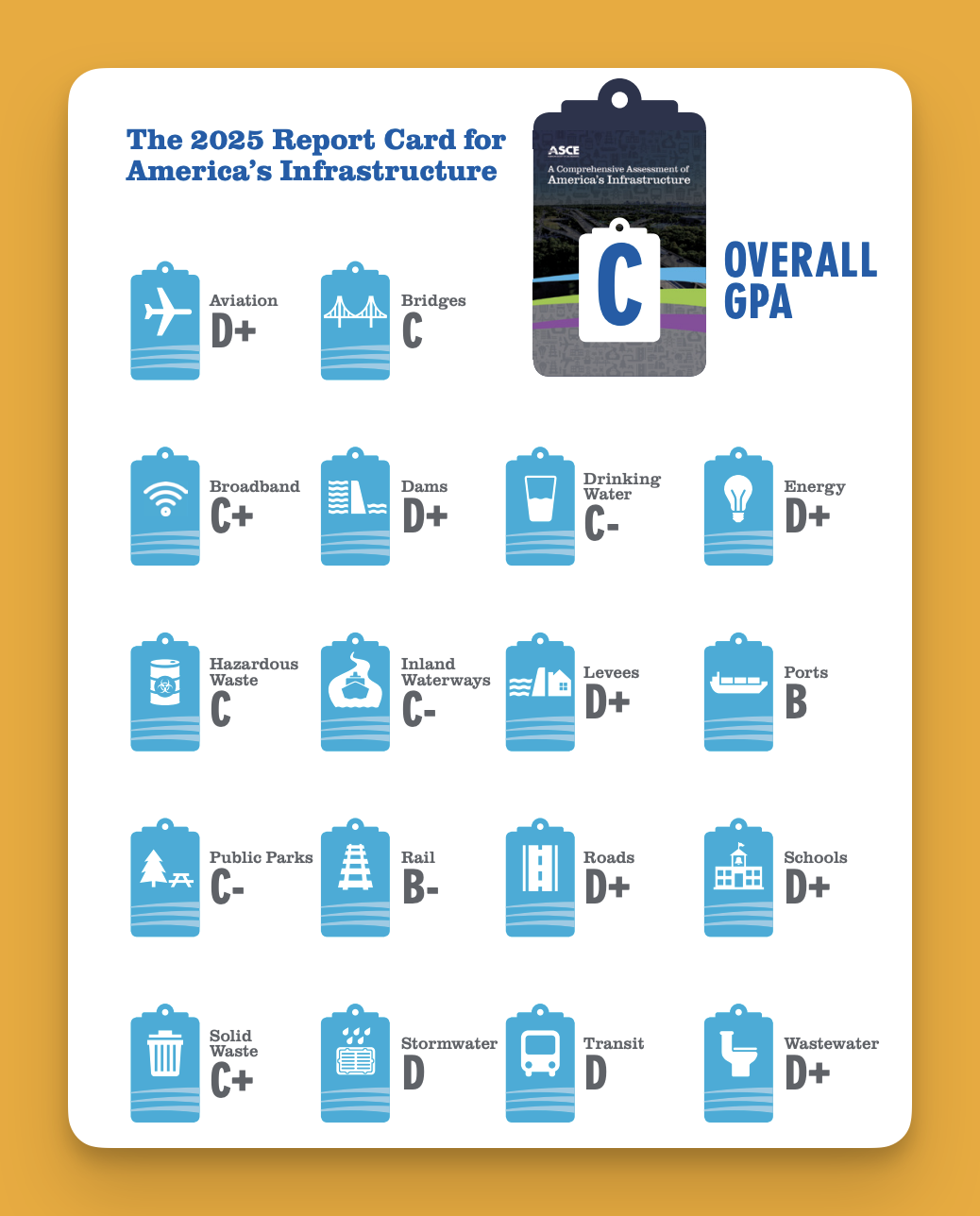
Then the other day I came across this report by the American Society of Civil Engineers. They give U.S. infrastructure an overall grade every year. This year’s report is 225 pages long. See the scorecard below to see how we are doing. I’m sure you aren’t surprised.
The report says we need slightly more than $9 trillion to bring our infrastructure “into a state of good repair.” According to the folks at Morning Brew (who are citing the World Bank), it is also true that every dollar of infrastructure spending leads to $1.50 in economic activity.
But what about all that potential military spending? Sure it’s great for Northrup Grumman, whose CEO Kathy Warden has taken home more than $20 million in each of the last four years. But what about we the people? According to Morning Brew (again, citing a 2022 study by the World Bank), a 1% increase in military spending leads to a 9% decrease in economic activity.
Are we great yet?
The View from Germany and the UK
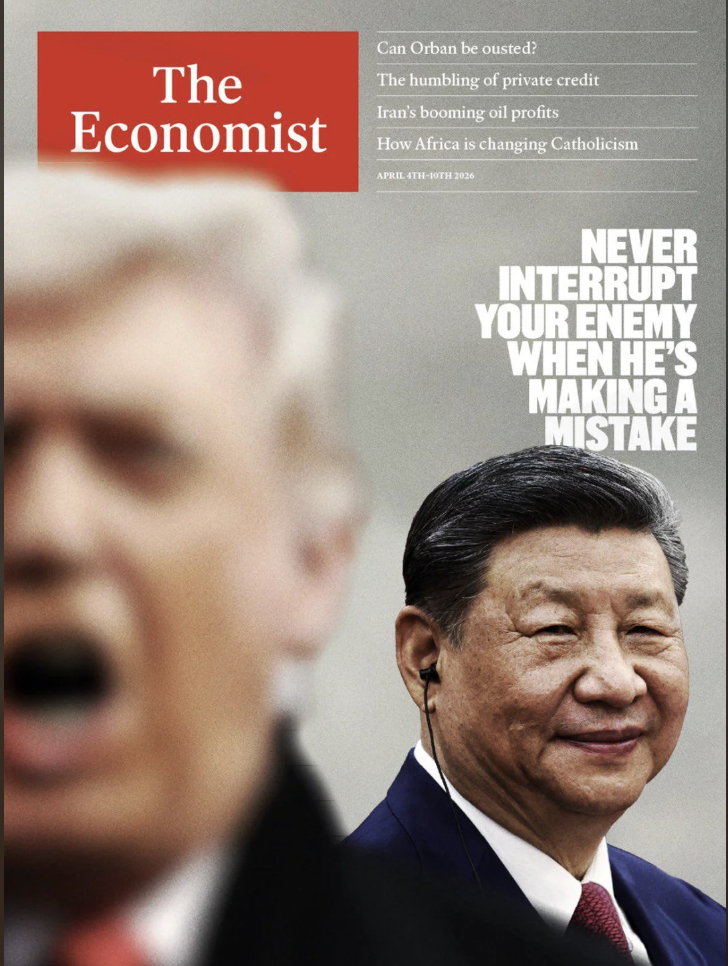
After yesterday’s ‘day late and a dollar short’ address about the Iran War by the faux-king president, I came across two European takes. The first is from the the authoritative German magazine Der Spiegel. The translation below comes from a @Burgerb on Reddit. The second take is the new cover of the great U.K. news magazine The Economist.
Translation from German:
The Strategic Catastrophe of the Iran War
“He appeared tired. When Donald Trump addressed the nation on Wednesday evening to explain for the first time why he had led his people into a war with Iran, he spoke for nineteen minutes and said nothing new. Instead: boasting, threats, exaggeration. He spoke of bombing the Iranians back to the Stone Age—a remarkable strategy for winning the ‘hearts and minds’ of the local population. He said he would destroy the power plants. He would be finished in two or three weeks. He held all the cards. He had won.
Trump again spoke of Venezuela as a shining example for Iran—referring to the kidnapping of the local ruler, Nicolás Maduro. But in doing so, he only illustrated how badly he had misjudged the Iranian regime from the start. At the same time, he called Iran one of the most powerful countries in the world. Yet, even before the war, Iran was at best a middle power. What we saw was the opposite of control. It was the image of a man who has stumbled into an adventure for which he can find no end.
The Reality: There is no regime change, no surrender, not even negotiations. The regime has not become more pragmatic through the war, but more radical. Instead of a containment of the Iranian nuclear program, an expansion could follow the war. And with far inferior means, Iran has shown that it can take the world economy hostage at the Strait of Hormuz. Trump claims that is not America’s problem. Others should take care of it.
The head of the International Energy Agency calls what could follow the greatest energy security threat in the history of the world—worse than the oil shocks of the seventies, worse than Covid, worse than the Russian attack on Ukraine. In the Philippines, there are already four-day weeks. In India, people are once again cooking over wood fires.
With this aimless war, the American empire is not only burning its political capital. It is literally burning its ammunition. Over 850 Tomahawk cruise missiles have been fired—replenishing the arsenal takes years. While America is tied up in Ukraine and actually wanted to focus on the Pacific, it is wearing down its military in the Middle East of all places, where Trump allegedly never wanted to lead his troops again. The Iran war is a strategic catastrophe for the USA.
Imperial powers rarely destroy themselves through defeats. They destroy themselves through overconfidence—through the belief that military superiority alone means power. Rome is the oldest lesson: its legions remained effective until the end. What decayed first were the institutions. The British Empire shows the same pattern, only faster: in the 19th century, the Royal Navy was superior to any other fleet, and yet London got bogged down in too many wars on too many continents. Every single campaign was winnable. Together, they ate up the capital that held the empire together: the finances, the alliances—and the allies' belief that London knew what it was doing.
The United States did not win its global position through battlefields alone. After 1945, they created a system in which others participated voluntarily: institutions, alliances, dollar hegemony, moral credibility. Political capital, saved over generations. Trump is currently gambling it away systematically.
In Europe, Secretary of State Rubio has threatened to “review” NATO after the war ends—the clearest questioning of the alliance by a sitting U.S. Secretary of State in its history. Allies whose bases America wants to use for a war they do not support are insulted as cowards. In the Middle East, Trump publicly boasted that the Saudi Crown Prince had not expected to have to “kiss his ass.” Allies treated this way will not put up with it forever.
While Washington fires off its ammunition and damages its alliances, Beijing only has to wait. The Economist put a smiling Xi Jinping on its cover looking at Trump, with a line attributed to Napoleon: Never interrupt your enemy when he is making a mistake. Xi has built up strategic oil reserves for several months, secured supply chains, and is betting heavily on renewable energies. China’s three largest battery manufacturers are together worth $70 billion more since the start of the war. Trump’s America, the most fossil-fueled government in the Western world, is accelerating the energy transition—in China’s favor. There is a bitter irony at the core of Trumpism: He is obsessed with the decline of America. And he is accelerating it.
And at home? In his speech, Trump explains that America can afford wars—but not childcare, not Medicaid, not Medicare. The cost-of-living crisis was already the dominant issue in the country before the war. Now come rising energy prices. People who can no longer afford life eventually present the bill. In the midterm elections in November.
Trump asked Americans to put the war into perspective. Vietnam lasted almost twenty years, Iraq almost nine. His war has only been running for a good month. You have to read that twice to understand what it means: Don’t worry, there are much worse wars I could lead you into.”
Freedom and Happiness
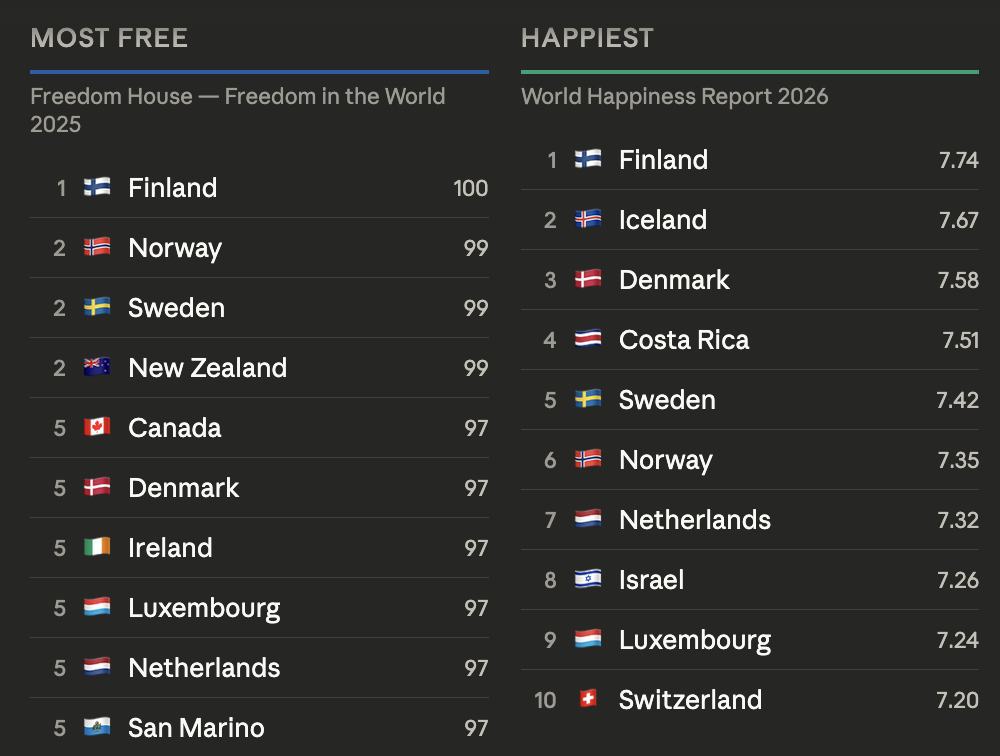
One of the books I am reading now, Neil Howe’s The Fourth Turning is Here, mentions a group called the Freedom House. They are a Washington DC based organization that studies freedom and democracy around the world and I had never heard of them before coming across their work in Howe’s book. According to their website, they are ‘founded on the core conviction that freedom flourishes in democratic nations where governments are accountable to their people.’ They were started in 1941 in order to help ‘raise awareness of the fascist threat to American security and values’ amidst the Nazi aggression that started World War II.
One of the things Freedom House does is rank the nations of the world with respect to the freedom experienced by the people living in those places. Number 1 on the list is Finland. Indeed, three of the top four most free countries in the world are Scandinavian. Not surprising. Canada is sitting pretty at #6. America is labeled ‘free’ but is ranked below more than 60 other countries, and recently earned its lowest rating ever. Hmmmm, I wonder why…
It is worth thinking about where these countries land with regards to the type of political economy they favor.
Below are the top ten lists from Freedom House and from the 2026 World Happiness Report.
My Current Stack
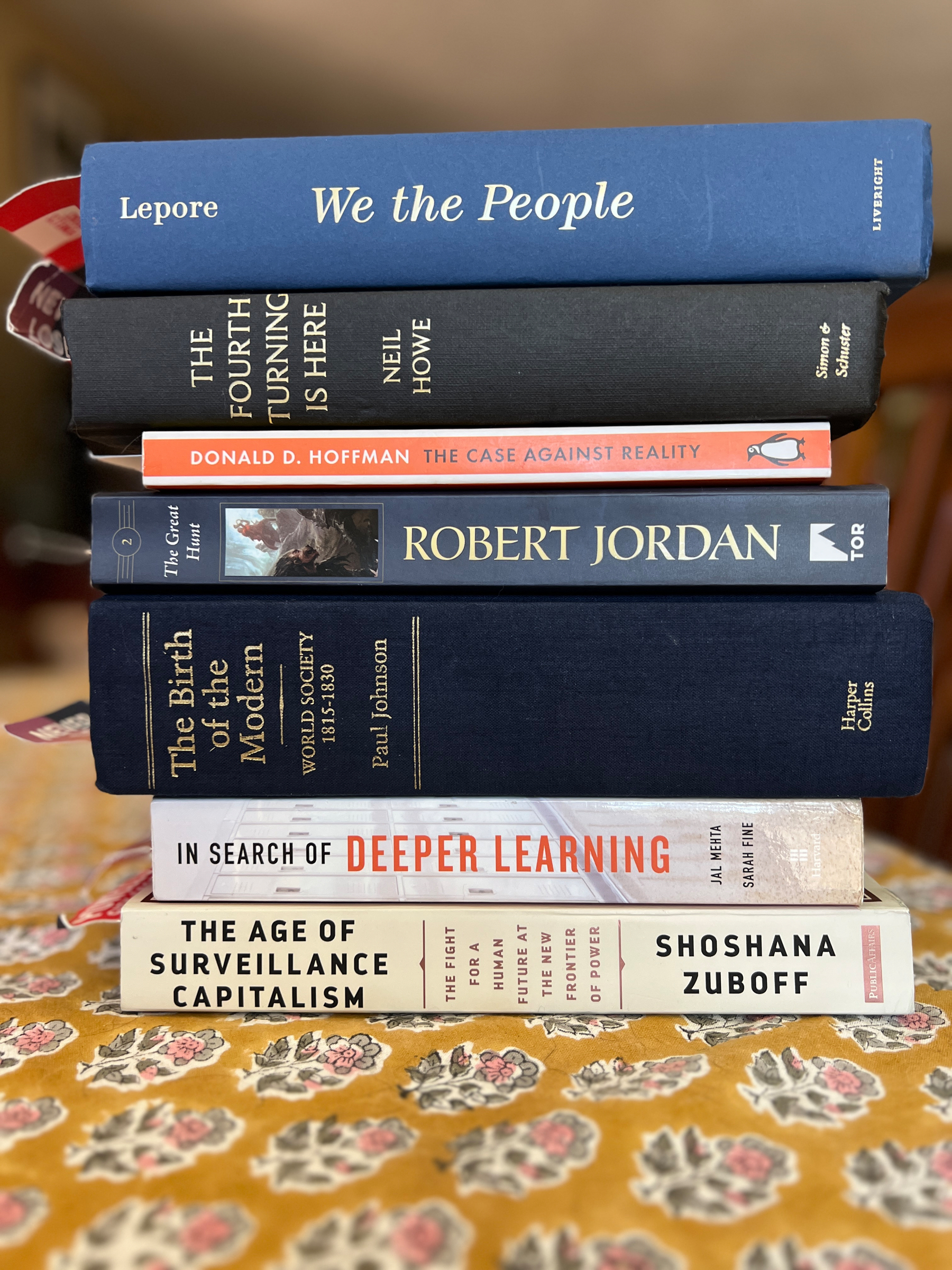
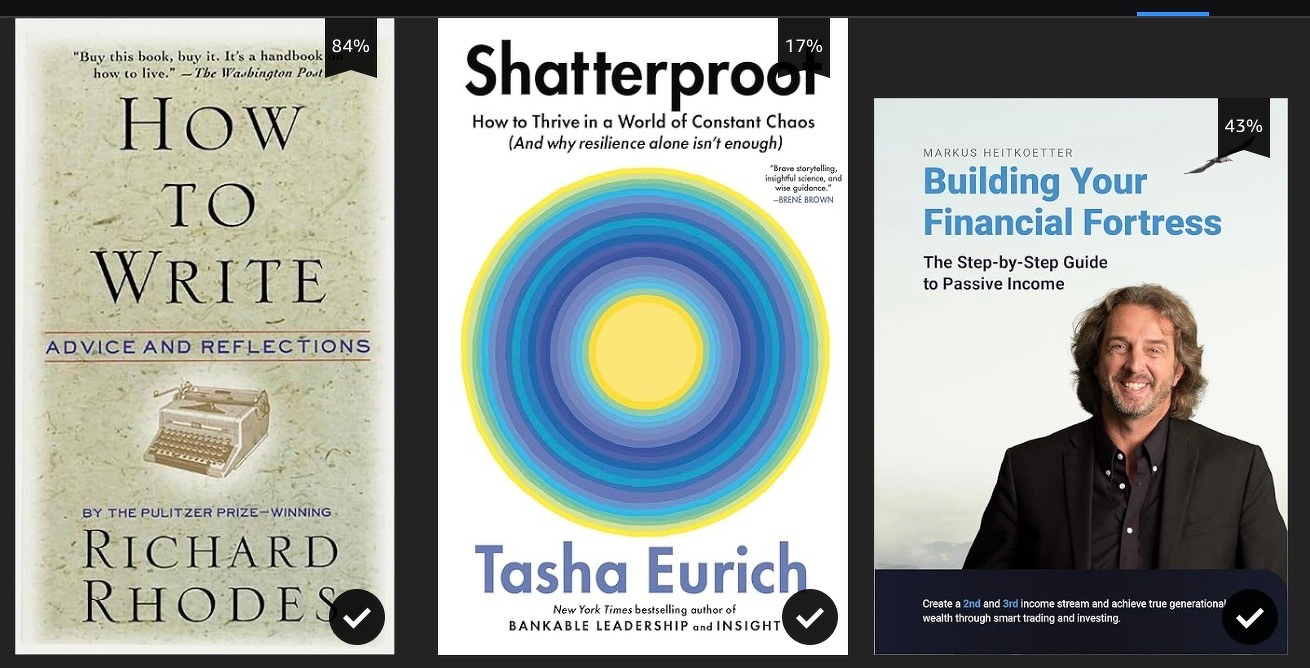
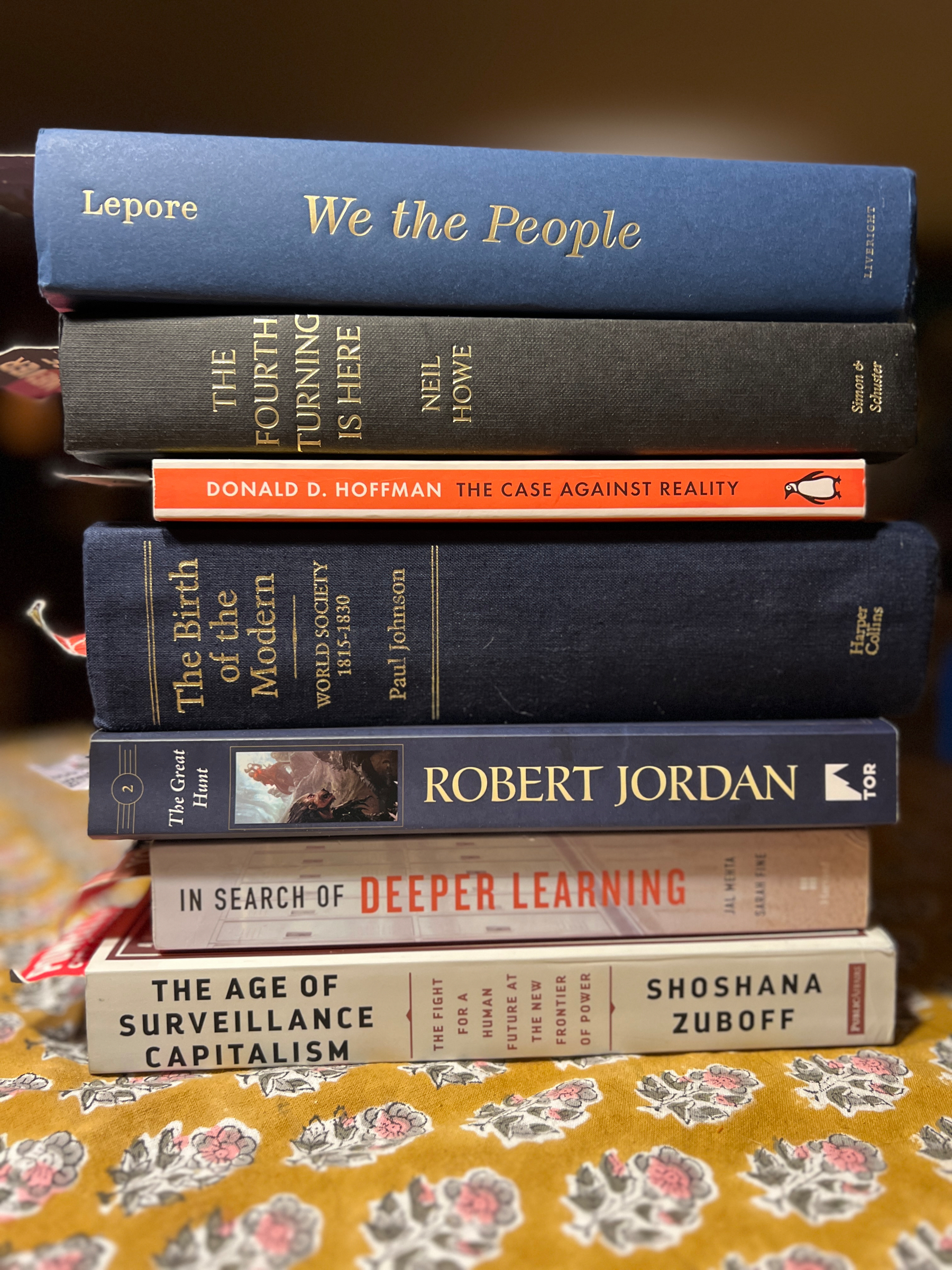
My reading continues to be enjoyable. I finished four books in March and while I continue to slack on The Age of Surveillance Capitalism (too depressing?), I have been making nice progress on the book I’ve been reading the second longest, In Search of Deeper Learning. Paul Johnson’s book should be done by the end of May if my pace continues. His style is so enjoyable that I now have three of his other books in my TBR pile. The Great Hunt is getting a bit exciting, finally. Reading on Kindle continues to be fun. Richard Rhodes' book on writing has been surprisingly good.
A Shoppe Moost Gentil
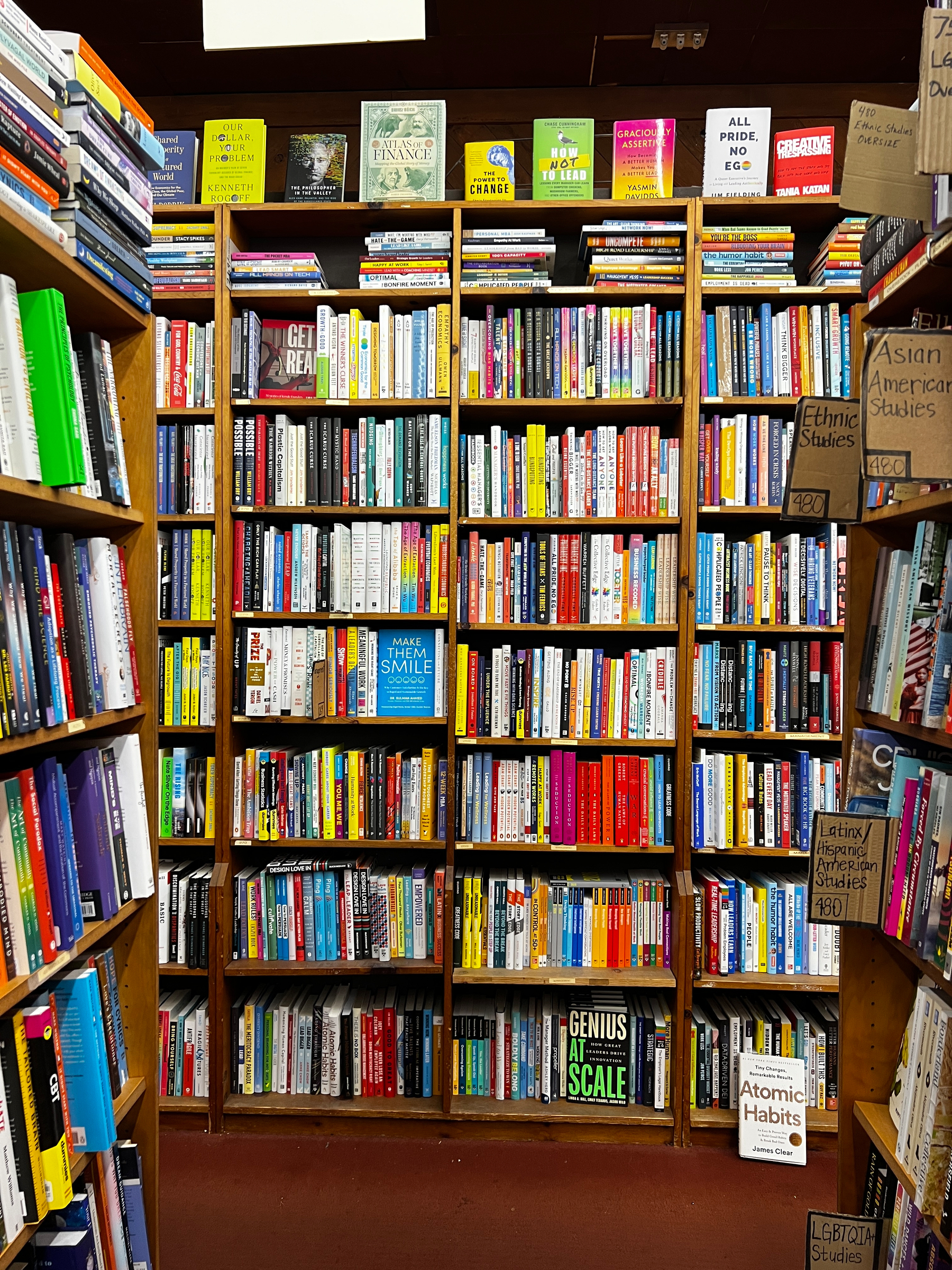
When I am vacationing, checking out local bookstores is a top priority. Recently I was able to enjoy Santa Barbara’s excellent Chaucer Books. The wee one headed to her section and I enjoyed a good 45 minute browse. Lots and lots of new titles, including a bunch of books I hadn’t browsed before, which is saying something since I browse bookstores on the regular. Their history section, in particular, was fantastic. Walked out with one book I hadn’t seen before. 4.5/5 rating all together. Only thing holding back the perfect score was size. Compared to Powell’s or NYC’s The Strand, it has a small footprint.
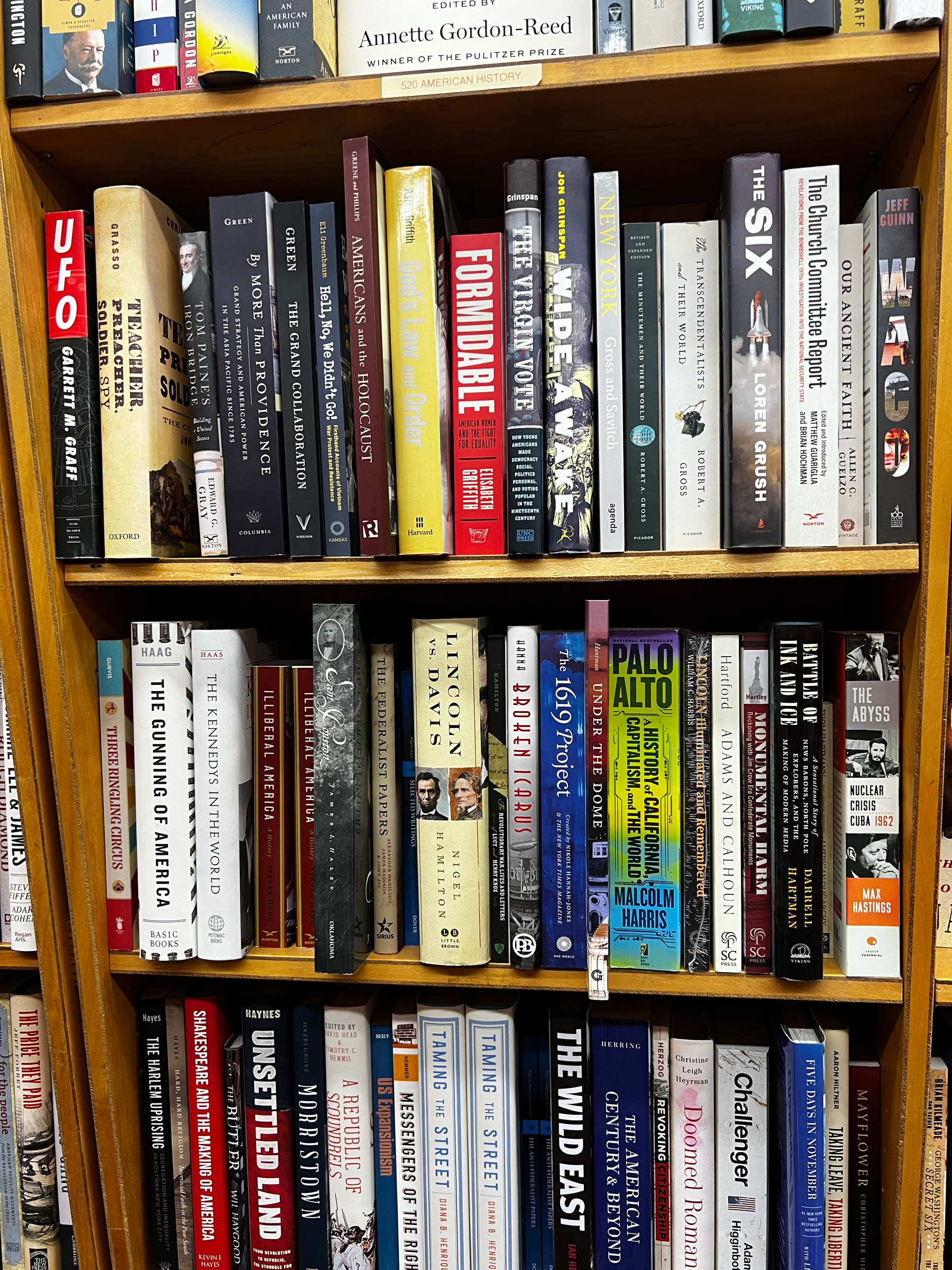
The Possible Connection Between Bodhisattva Guanyin and the Nestorian Christians
I’ve been working my way through a Great Courses class on the Middle Ages, and it sent me down a bit of a rabbit hole I wasn’t expecting: the feminization of Guanyin, the beloved Buddhist “Goddess of Mercy.” As someone who has had Avalokiteśvara on our family altar for twenty years, I found this story interesting.
Guanyin is famously female. But here’s the thing: Guanyin started out as a dude. The original figure — Avalokiteśvara in Sanskrit — was a male bodhisattva, essentially a handsome Indian prince of compassion. Early Chinese Buddhist art reflects this clearly. Indeed, paintings from the Dunhuang caves dating to the tenth century show the figure with a moustache. The full feminization into the graceful, white-robed goddess we recognize today was largely complete by the Song Dynasty, making it a uniquely Chinese transformation.
So why the change? Mostly internal Chinese forces, including the needs of laywomen for a relatable female figure, Confucian social dynamics, and the gradual indigenization of Buddhism as it took root in China. The folk legend of Miao Shan, a compassionate princess who sacrifices herself for her father, became enormously influential in giving Guanyin a distinctly feminine Chinese biography.
But here’s where it gets really interesting and what specifically stoked my initial curiosity about this. Some scholars argue that the Nestorians — a Christian sect that traveled the Silk Road and established a presence in Tang Dynasty China — may have nudged things along. Their veneration of Mary, and specifically stories of holy women who were pure and compassionate intermediaries, may have influenced how Chinese people imagined a female divine figure. The “child-giving” Guanyin, holding an infant in a pose unmistakably reminiscent of the Madonna and Child, likely reflects later Jesuit influence in the Ming Dynasty, but according to professor teaching the Great Courses class I am learning this from, the Nestorians may have planted some earlier seeds. Crazy!
Apparently this is not totally settled among scholars. Nevertheless, the idea that a modern female Buddhist bodhisattva may have transformed from male to female in part due to a small Christian sect that settled in Asia in the 630s is nuts. This is the sort of story that illustrates why I love learning history.
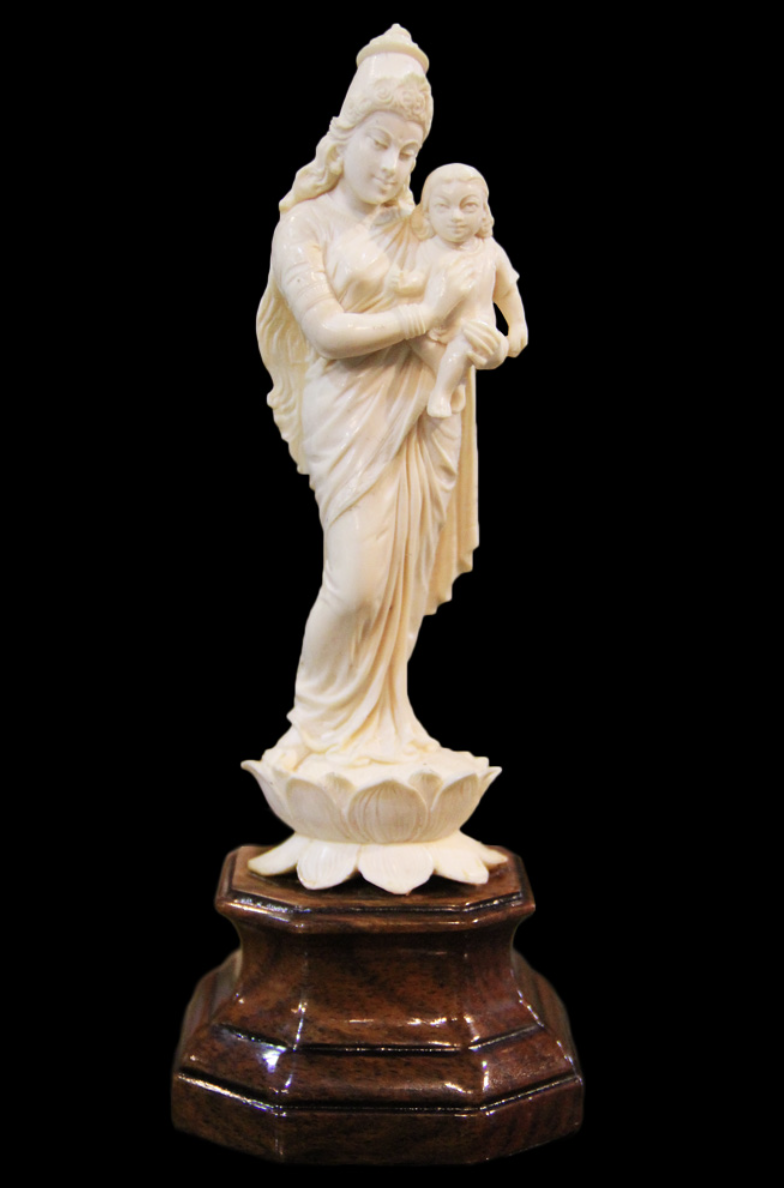
Samuel Taylor Coleridge: Poet, Addict and Underachiever?
I first encountered Samuel Taylor Coleridge the way many fellow Gen Xers did, through a speaker cabinet. Iron Maiden’s Rime of the Ancient Mariner, from their amazing 1984 album Powerslave, is a thirteen-minute epic based on Coleridge’s poem of the same name. It’s definitely a lot of song. The poem it draws from is a lot of poem; over six hundred lines of albatrosses, cursed sailors, and supernatural dread. Indeed, I remember making my Dad listen to it with me, thinking he’d be more likely to enjoy it since it was based on a Coleridge poem. At the time, I was more focused on Steve Harris’s bass lines than on British Romantic poetry, but Coleridge’s name lodged somewhere in the back of my brain.
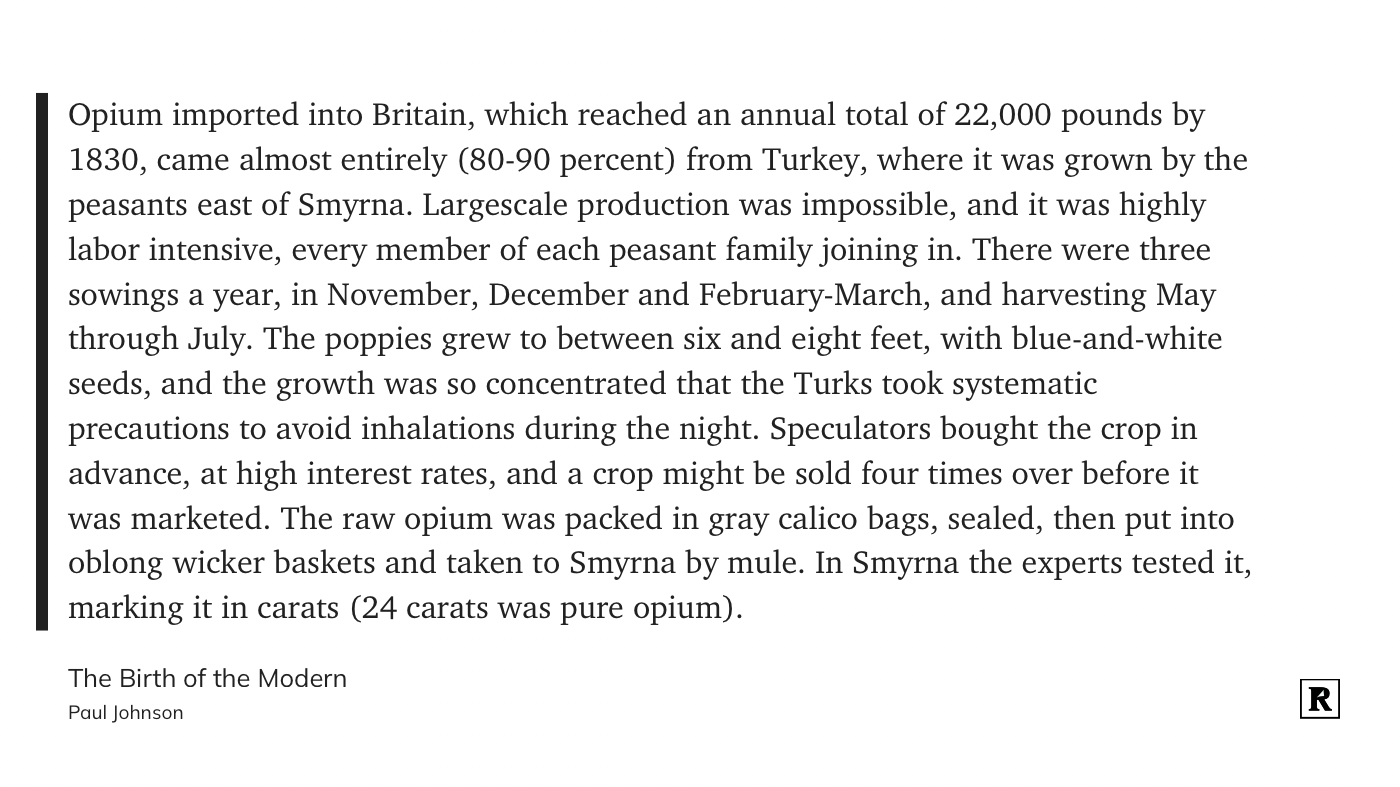
He’s come back around to me recently via Paul Johnson’s The Birth of the Modern, which I continue to happily work through. Johnson covers in great detail the market for opium in Britain in the first decades of the 19th century (see the quote below). Never one to pull punches I’m discovering, Johnson also sketches a rather unflattering portrait of Coleridge. Indeed, his opium addiction is front and center. Apparently Coleridge had developed a serious dependency on laudanum, which in those days was widely available as a tincture. Ostensibly Coleridge used the drug for pain relief, but the habit consumed him. Johnson paints a picture of a man of staggering intellectual gifts who was nonetheless chronically unable to finish what he started. The unfinished poem Kubla Khan is perhaps the most famous example. It is a fragment of fifty-four lines that Coleridge claimed to have composed in an opium-induced dream, only to be interrupted by “a person from Porlock” before he could complete it.
What strikes me about Coleridge is the gap between his potential and his output. By most accounts, he was one of the most brilliant minds of his era — a gifted poet, philosopher, and literary critic. His conversations were legendary. His follow-through, considerably less so. The opium didn’t help. Neither, apparently, did the chaos of his personal life.
History is full of people undone by the distance between what they could have been and what they managed to pull off. F. Scott Fitzgerald, filmmaker Orson Welles, and original Pink Floyd frontman Syd Barret also come to mind in this regard. Coleridge is a particularly affecting case. Water, water everywhere — and yet.
On Other Sources of News
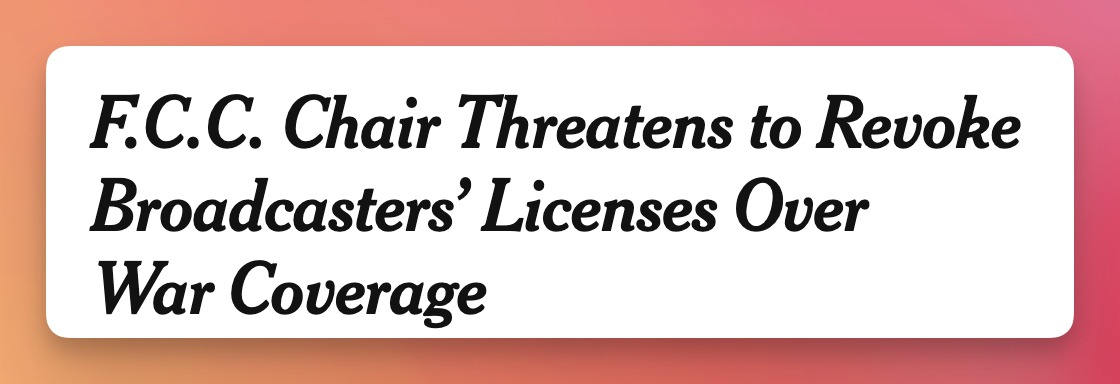
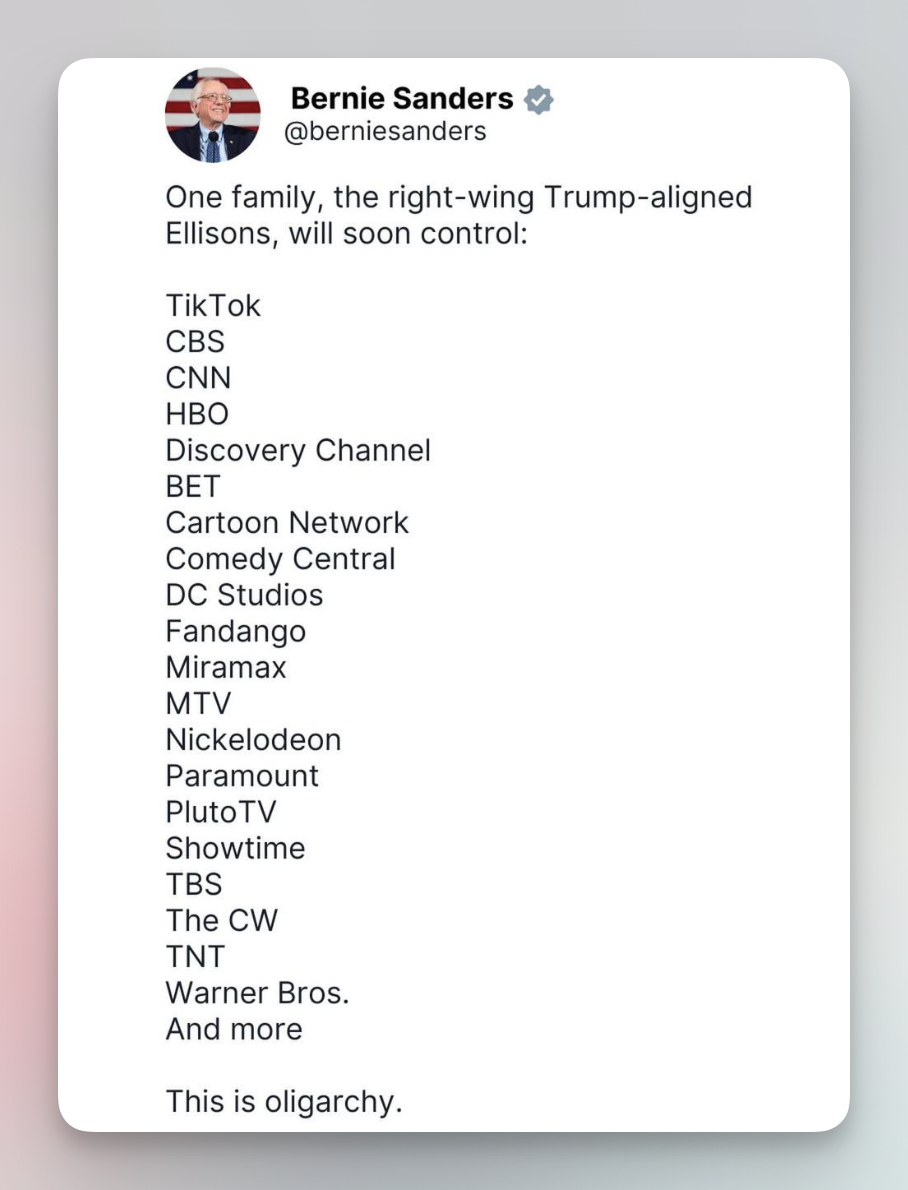
The screenshot below is from today’s New York Times. It is clear as day that the people in charge of the United States government today do not believe in the free press, free speech, or the truth. At this point, calling them authoratarian would be understating it. Bullshit from FCC Chair Brendan Carr, together with the near total domination of American media by right leaning, pro-regime corporations (see Bernie Sanders tweet below and this list of local TV stations in America owned by conservative Sinclair Media), means I am making a concerted effort nowadays to read more news from outside the United States and from indepedent outlets.
A great place to find international newspapers is RefDesk.com . Some sources I plan on reading more often going forward include the BBC, The Sunday Times (London), The Guardian (Manchester, UK), The Christian Science Monitor, as well as Israeli papers.
New Pew Polling on Buddhism in America
The Pew Research Center recently published polling about Buddhism in America. A few interesting facts include the following:
-
As of 2020 only about 1.3% of the U.S. population was Buddhist.
-
American Buddhists are much more likely to live in the West. This isn’t surprising considering the West Coast’s relative proximity to Asia.
-
There is high turnover in that many who are Buddhist converted and many who were Buddhist left the religion.
I, of course, live in the West so I am a typical ‘American Buddhist’ in that regard. I also connect with the fluidity of being Buddhist, as I was raised with no religion and my specific beliefs about Buddhism have evolved over the past 30 years since I intially took refuge in the Three Jewels. In my case, I’ve moved from being more religous to what I’d describe as a ‘secular Buddhist.’
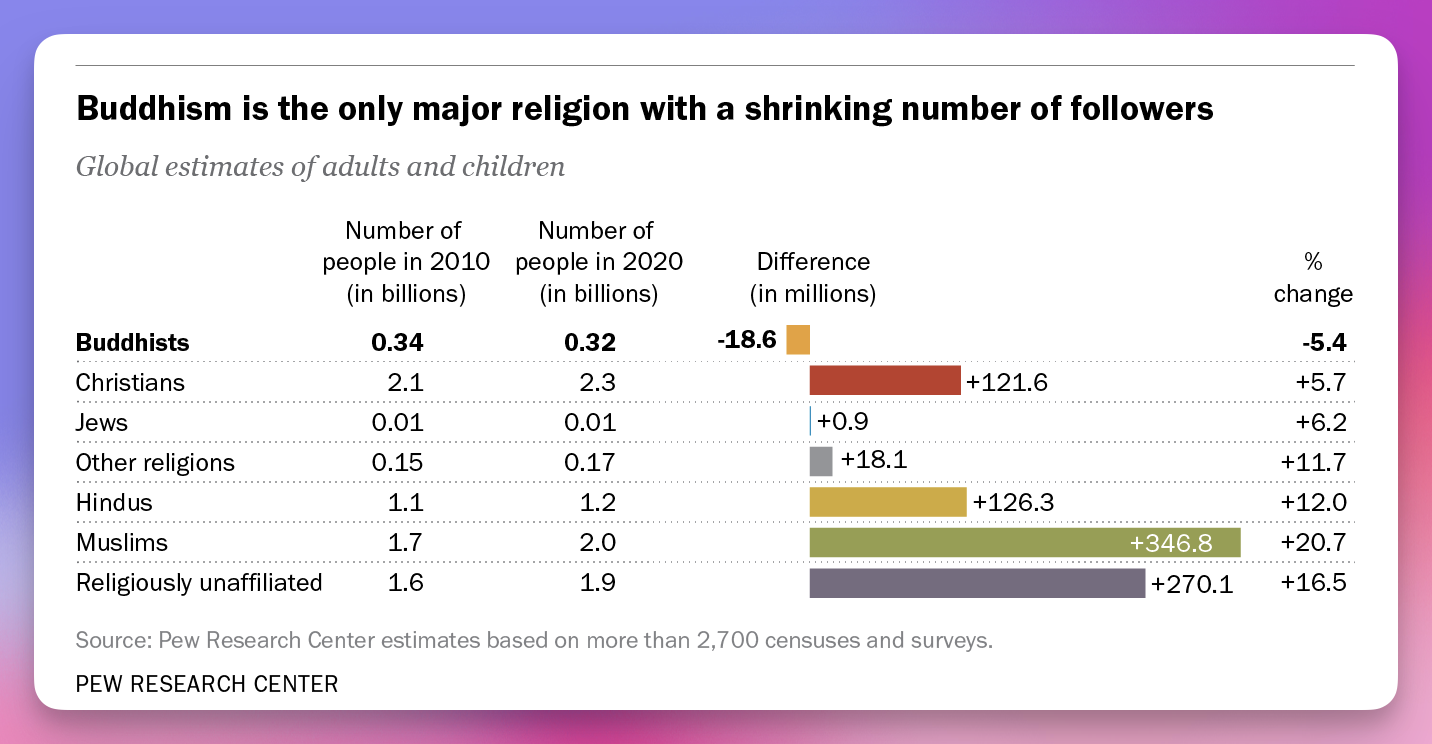
Pew also reports that Buddhism is shrinking world wide. I take heart that ‘religiously unaffiliated’ is a growing group worldwide. Sadly, the theistic religions continue to grow. (See the second image below)
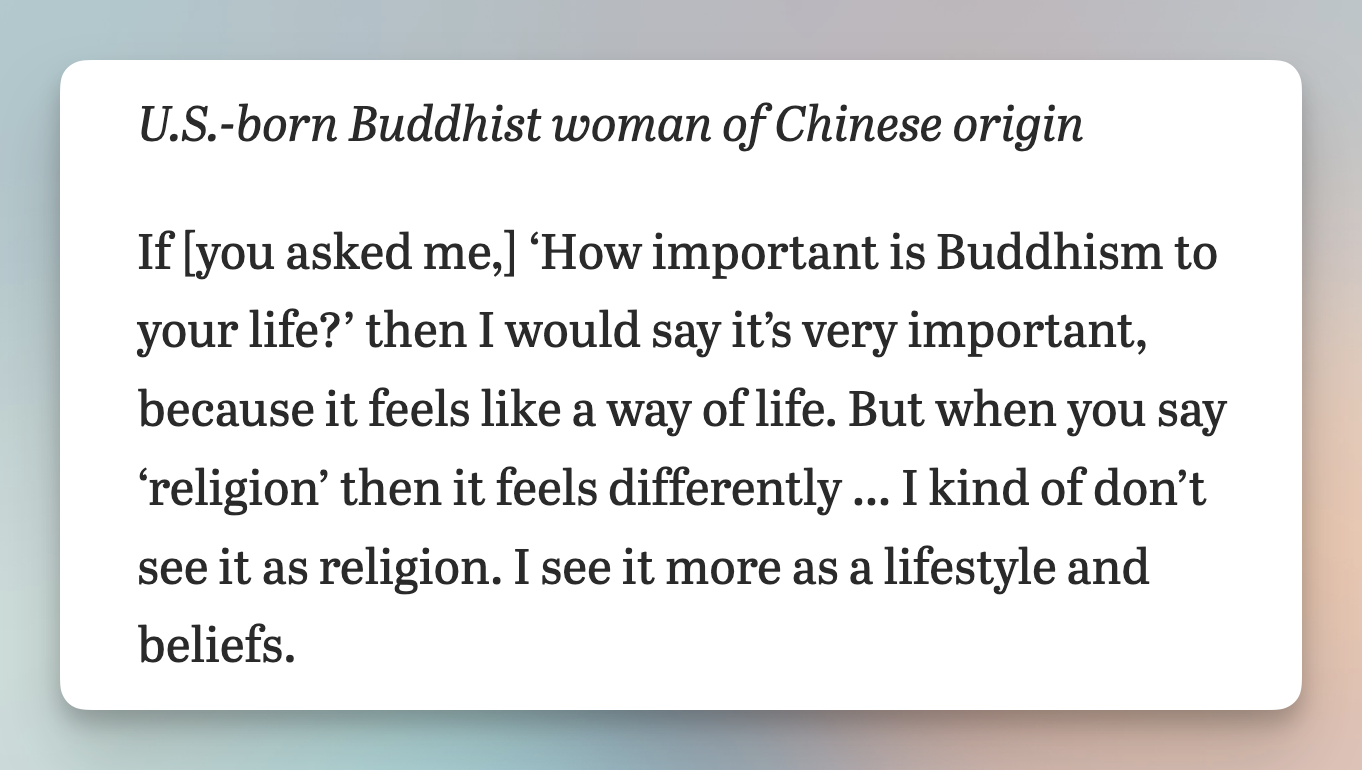
The quote shared below is from Pew’s related focus group interviews.
SCOTUS Case Resources
Supreme Court Justice Ketanji Brown Jackson is visiting my school in the coming days. I decided to read one of her dissent’s to help my students prepare for her visit. I decided to take a look at her dissent in Trump v. CASA (June 2025). I really enjoyed it and am going to do my best to work more SCOTUS opinions (both majority and dissents) into my regular reading.
I have discovered a few websites where one can access decisions and learn more about the Court. They are listed below. Now, more than ever, I believe active citizenship and defense of democracy requires ‘doing your homework’ on the issues that our judicial branch is wrestling with.
-
Oyez (The Best for Context & Audio) A key feature of this site is that It offers a “synchronized” audio player where you can listen to the oral arguments while the transcript scrolls, highlighting which Justice or lawyer is speaking.
-
Cornell Legal Information Institute (LII) This collection includes a curated section for Landmark Decisions organized by topic (e.g., “Powers of the Presidency” or “Civil Rights”)
-
Scotus Blog Another great resource!

Tsundoku
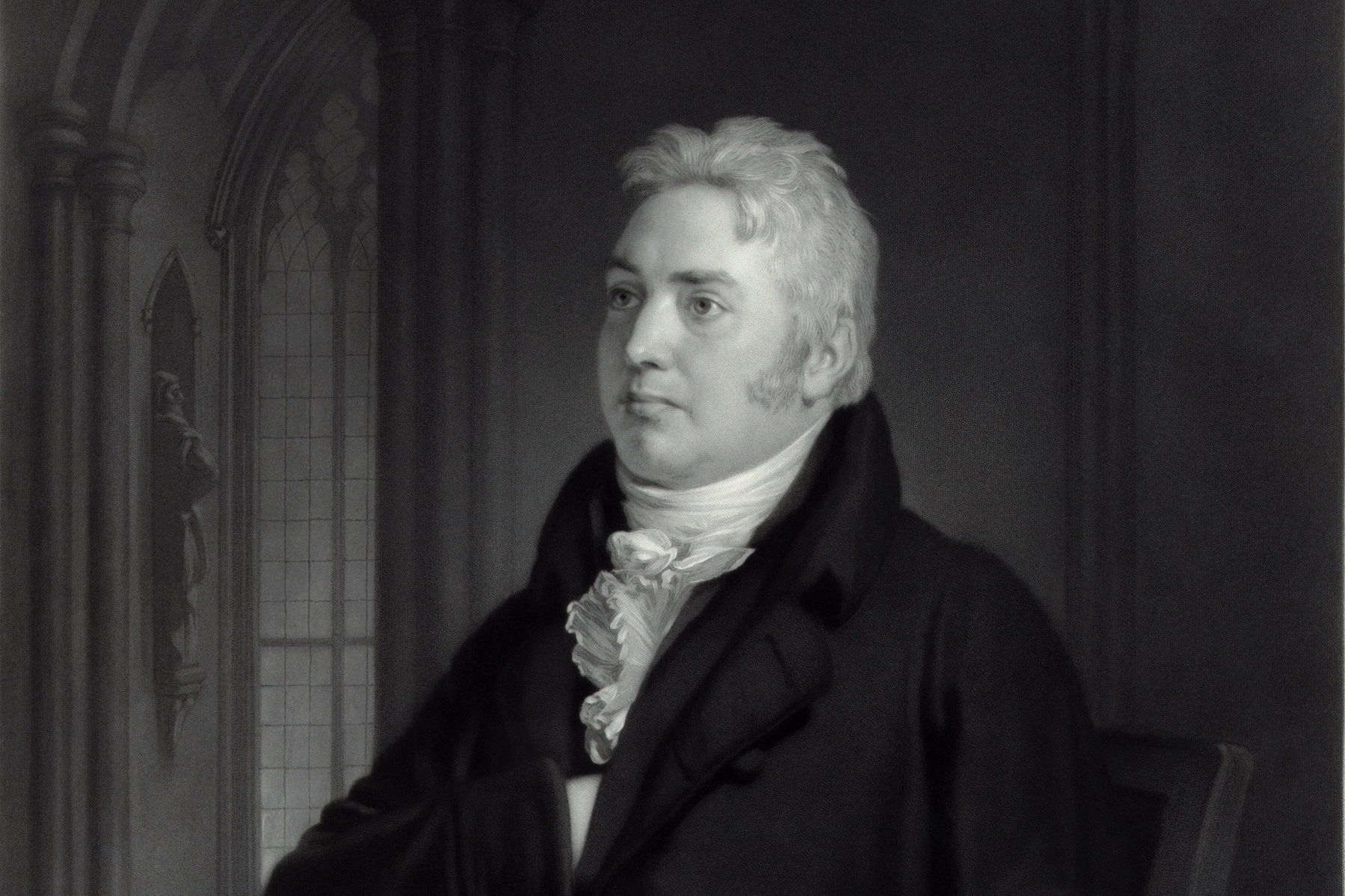
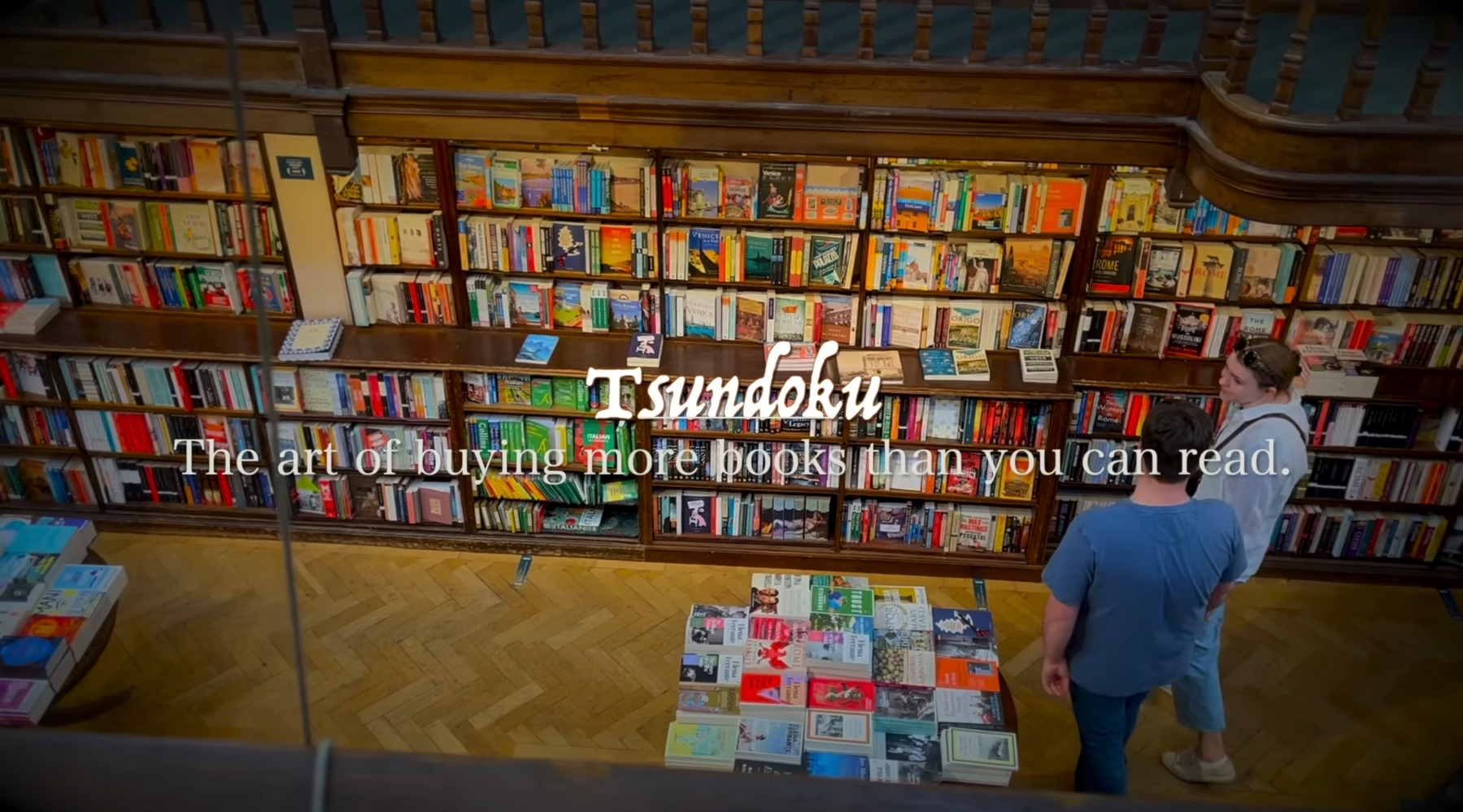
I came across a Japanese word recently (having stumbled upon this video) that I am pretty sure was invented specifically to describe me: tsundoku. It refers to the practice of acquiring books and letting them pile up, unread. The word is a blend of tsunde (to stack things) and oku (to leave for a while), with a nod to dokusho, meaning reading. So: books acquired, stacked, and left to wait. Guilty as charged.
As soon as I had disposable income, I started buying more books than I can reasonably read. My shelves are a mix of the finished, the half-finished, and the optimistically purchased. Some books have been waiting patiently for years. I’ve made peace with this. More than peace, actually — I’ve come to think there’s something genuinely pleasurable about it.
Indeed, in recent years I’ve noticed that I get real joy just from browsing my books. Pulling something off the shelf, flipping through the first few pages, putting it back. There’s something nice about knowing a good book is sitting there waiting for you. It feels like having a really good meal to look forward to, or a good show on the horizon. The reading is coming; just not today. Tsundoku, it turns out, doesn’t carry a negative connotation in Japanese. It’s more of an affectionate acknowledgment of a very human habit. I appreciate that. The west tends to pathologize accumulation (though admittedly, the general behavior can get out of control). The Japanese apparently just gave it a name and moved on.
Consider me a proud practitioner.
When Congress Locked Up a Reporter
Given the current state of affairs between the press and the schmucks in power, it feels like a good time to revisit a lesser-known episode from the 19th century Senate that makes today’s press-versus-politics drama look relatively polite. I came across this in my daily meanderings as an American history and government teacher.
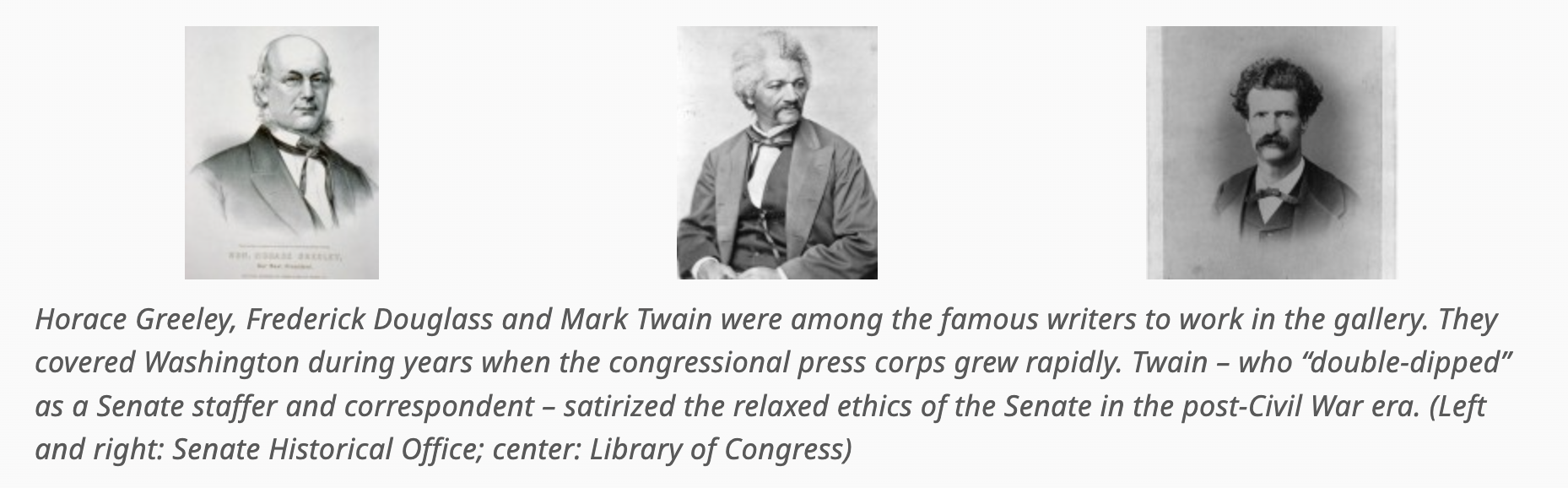
In 1841, during a time of broadening interest in politics, Henry Clay (the bane of my APUSH students’ existence) engineered the creation of the first official Senate Reporters' Gallery: ten front-row seats directly above the presiding officer’s rostrum. It was a small but meaningful acknowledgment that the press had a role to play in a functioning democracy. Progress, right?
Not exactly. The Senate’s relationship with journalists remained deeply adversarial. Leaks were a constant headache for members, and at one point the Senate’s response to a reporter publishing confidential information wasn’t a strongly worded letter or a suspension of credentials — it was confinement. A journalist named Nugent was apparently locked in a committee room for several weeks after refusing to reveal his sources (though they let him out for meals). The Senate’s approach was essentially: sit in there and think about what you’ve done. To his credit, he apparently never gave up his source.
It was, as Senate historians note, not the last time Congress tried to dry up leaks by placing a reporter under a form of house arrest. Meanwhile, earlier in 1839, Democratic-Republican Senator John Niles of Connecticut was doing his best to block reporters from the chamber altogether, denouncing them as “miserable scribblers” making a “miserable subsistence from their vile and dirty misrepresentations” of the Senate’s work. You’ve got to appreciate a good 19th century insult.
The press prevailed, obviously…thankfully. But it has never been easy.
Screenshot below taken from www.dailypress.senate.gov/about/history/
On the Letter J
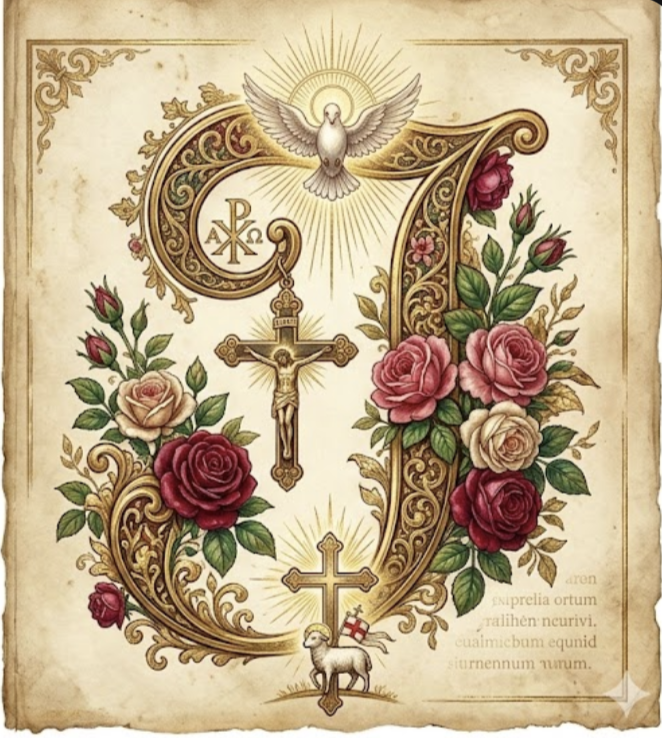
Those that know me know I have a personal interest in the letter J. I recently learned that it was the most recent letter added to the alphabet. It apparently appears after the letter ‘i’ because it started as a flourish to that letter at the end of a Roman numeral, what is known as a swash.
Take “XIIJ”, or 13. In this case the ‘J’ is used in the place of the last ‘I’ to signify that a series of ones has ended. Apparently, ‘i’ and ‘j’ were used interchangeably to write both the consonant and vowel sounds, The first time the two were distinguished as separate letters was in a 1524 text called (in English) ‘Trission’s epistle about the letters recently added in the Italian language’, written by Gian Giorgio Trissino (1478-1550).
Jesus plays a role, too. Distinguishing the soft ‘j’ sound helped Trissino choose how the Greek word Iesus, a translation of the Hebrew Yeshua, should be spelled, and pronounced, the way it is today.
Change takes time though, and as late as the mid-1700s, English lexicographer Samuel Johnson still argued that ‘j’ was merely a variant of ‘i.’
Not surprisingly, the letter ‘j’ is one of the least common letters in English.
A Few Good Zingers
A good insult is rare. My favorite all time insult comes from the great Christopher Hitchens. He once said about the late, not great preacher, Jerry Falwell:
“If you gave Falwell an enema he could be buried in a matchbox.”
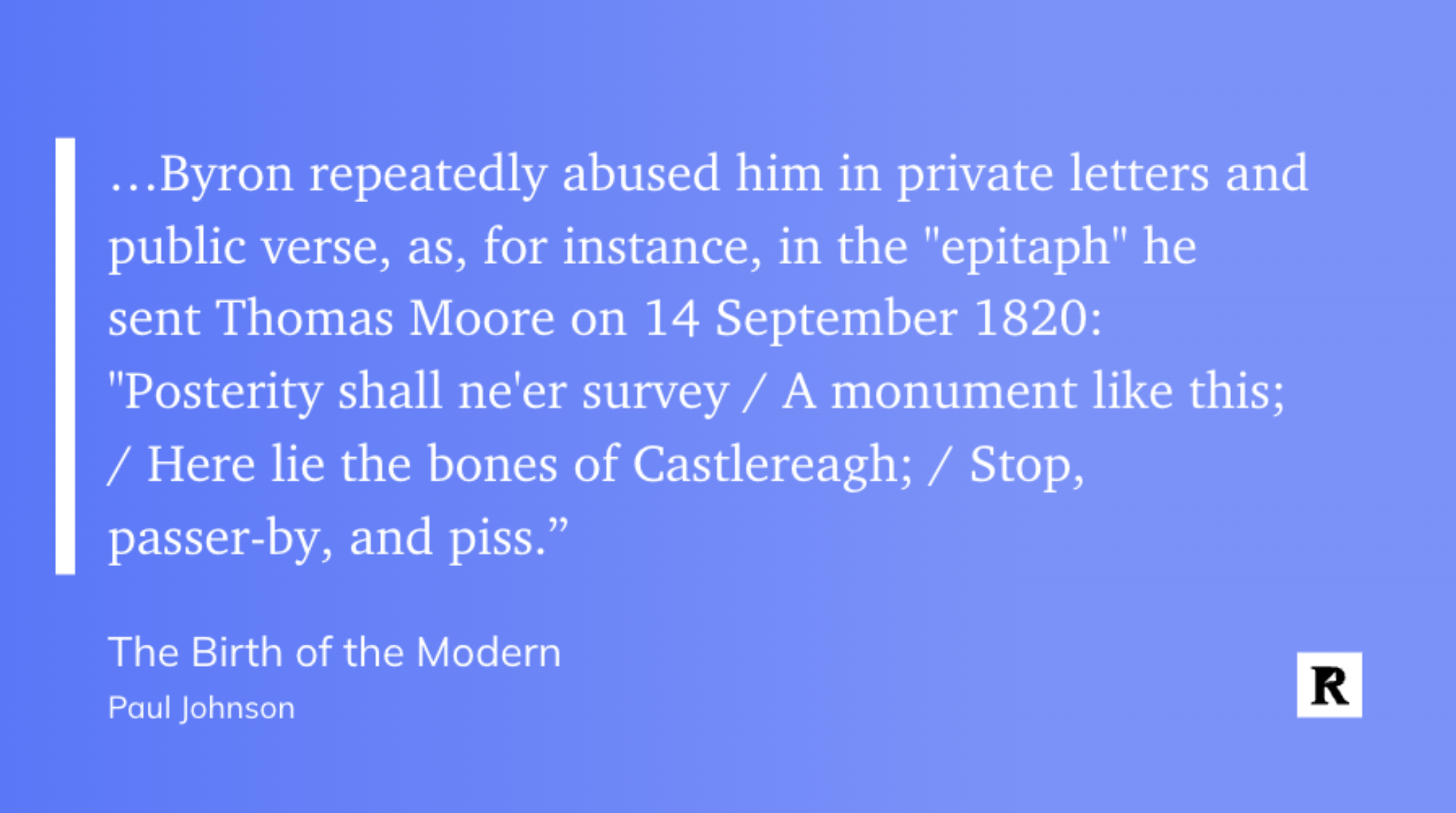
I came across a rather 19th century zinger that I also thought was clever. This one comes from the profligate and licentious poet Lord Byron about British politician Lord Castlereagh. Pretty good as insults go, no?
Current Book Stack
I finished 5 books this month and am really enjoying the new ones I am reading.
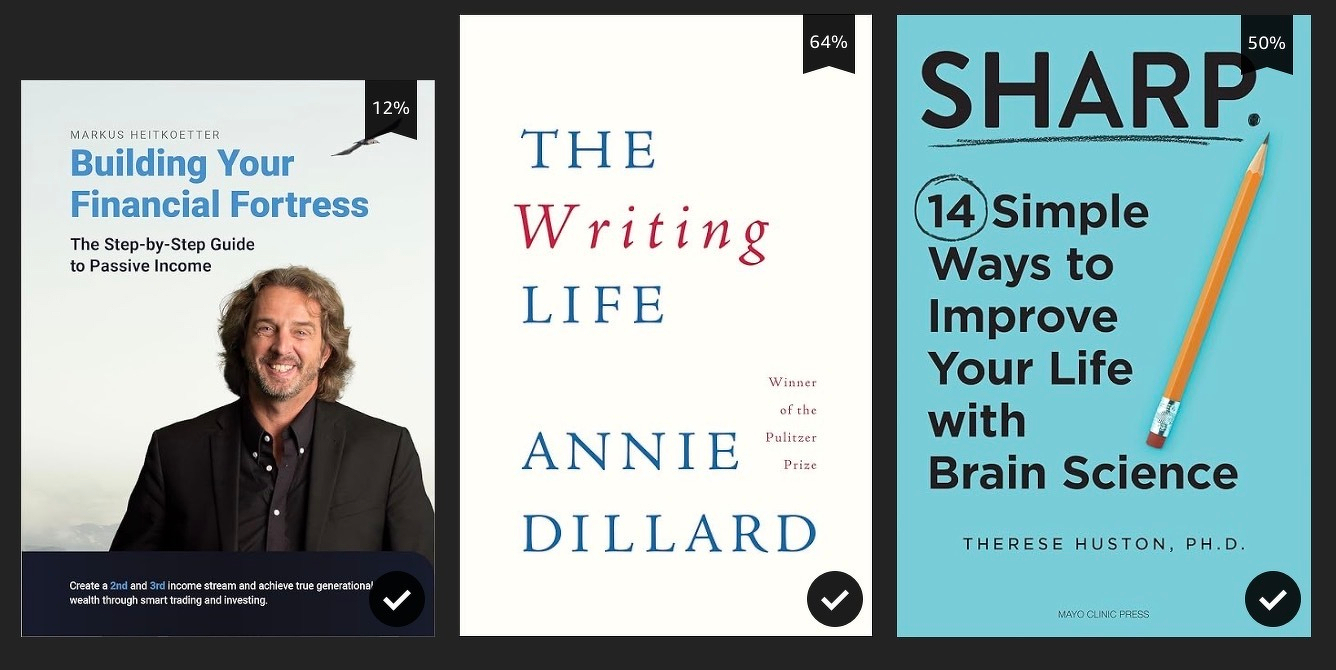
What’s new these days is that I am also reading a few Kindle ebooks on my iPad. My Kindle purchase rule is to buy nothing that costs more than $3.99. That said, I have still managed to acquire 28 at this point. Happy days!
Live Free or Die
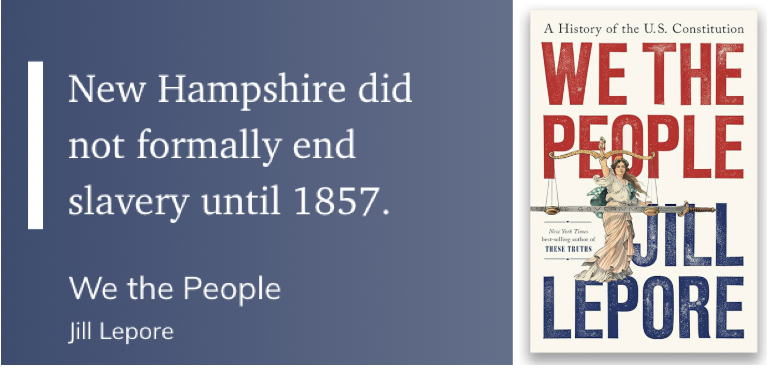
While reading Jill Lepore’s new book about the Constitution, We the People, I came across the quote below about when New Hampshire officially declared that slavery was abolished in the state. It surprised me that a New England state waited so long to do that. I also remembered their strident state motto, “Live Free or Die.”
I decided to put down the book and poke around to find out what happened, as New Hampshire’s motto seemed a bit hypocritical in light of the relatively late 1857 abolition of slavery. For starters, I learned that the phrase came from a letter written by a New Hampshire veteran of the Revolutionary War. His name was John Stark and the full line from the private letter was “Live free or die: Death is not the worst of evils.”
The state didn’t actually adopt the motto until 1945, as World War II was ending. The primary meaning behind the phrase as a state motto had to do with political sovereignty and the abhorance of living under governmental tyranny. But what about individual freedom? Why would a state that so boldly proclaims the importance of liberty wait until such a late date to ban slavery?
Apparently, the New Hampshire state constitution, ratified in 1783, stated ‘all men are born equally free and independent,’ which many assumed abolished slavery. However, no law officially banning the practice was every passed. Slavery faded out over time and by 1840, the census indicated that there was only 1 enslaved person in the state.
The reason they eventually made it official in 1857 had to do with the politics of the time. Their 1857 law explicitly stated ‘No person, because of descent, should be disqualified from becoming a citizen of the state.’ It was a direct response to the terrible Dred Scott decision of that same year in which Roger Taney wrote that black Americans were not and could not become American citizens. That makes more sense.
So, my conclusion after digging a bit deeper is that my initial thoughts of hypocrisy by New Hampshire were not totally warranted. Slavery had disappeared in New Hampshire, but the politics of the tumultuous 1850s encouraged New Hampshire to make it official. Sorry I doubted you New Hampshire!

Three Ways I Am Using AI
I have been an avid adopter of AI, but at the elementary level of chatbots and Notebook LM. Claude Code is not something I’ve played around with yet very much. I thought I’d shard a few ways I have been using AI to either improve my teaching or help with an interest of mine.
-
Asking questions while reading: I really enjoy being able to get context, word definitions, and descriptions of people or events while I am in the middle of reading something. This helps me better understand what I am reading, but I’ve found it also allows me to follow tangents that the book I am reading isn’t necessarily going to satisfy. At this point, I have a Project in ChatGPT called ‘My Reading’ where I ask all my questions. The idea is that the AI will start to understand both what I am reading and what I am interested in and eventually make it’s responses more personal. That said, of late I have been using Gemini and Claude much more than ChatGPT, and I haven’t yet made the equivalent Gems or Projects in those apps.
-
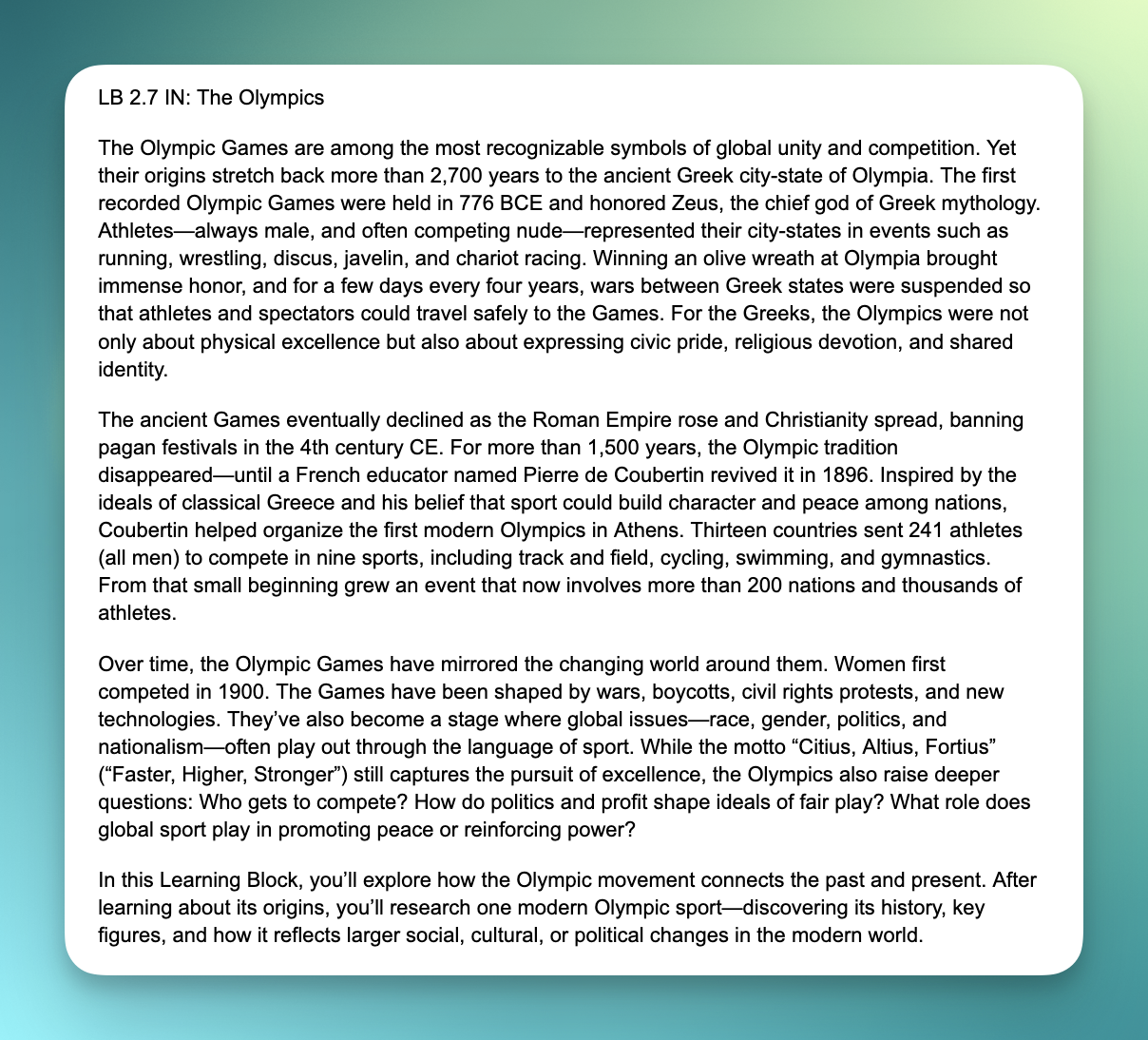
Creating tailored short readings for my classes: I organize my teaching around a specfic framework that includes what called an ‘IN." This is the part of the lesson where I am introducing the topic to the students. Sometimes my INs textual context descriptions. AI is great for producing these because I have gotten good at proving precise prompts that explicitly describe grade level, topic, length, as well as weather or not I want certain key words bolded and then defined. I can also pinpoint the context since I already know where I am going with the lesson. See example below.
-
Diet and excercise evaluation: I have gotten into the habit over the past few years of keeping a Google Doc where I record a few details about my day, including my Oura ring score, when I start and stop my food consumption every day, what food and drink I consume, as well as my steps, mediation details, and exercise details. I have created a custom Gemini Gem that I have called my ‘Health Advisor.’ It knows my health goals and every morning I give my daily log and have it give me a score, along with notes and recommendations for the new day. I love it. Not only does is nudge me to make better choices, but I love that I get a daily score based on a specif rubric that I created (and can tweak anytime I like).
I have other use cases to share, but these are the most important for me at the moment.